How many calories are in a katori of rice?
The short answer
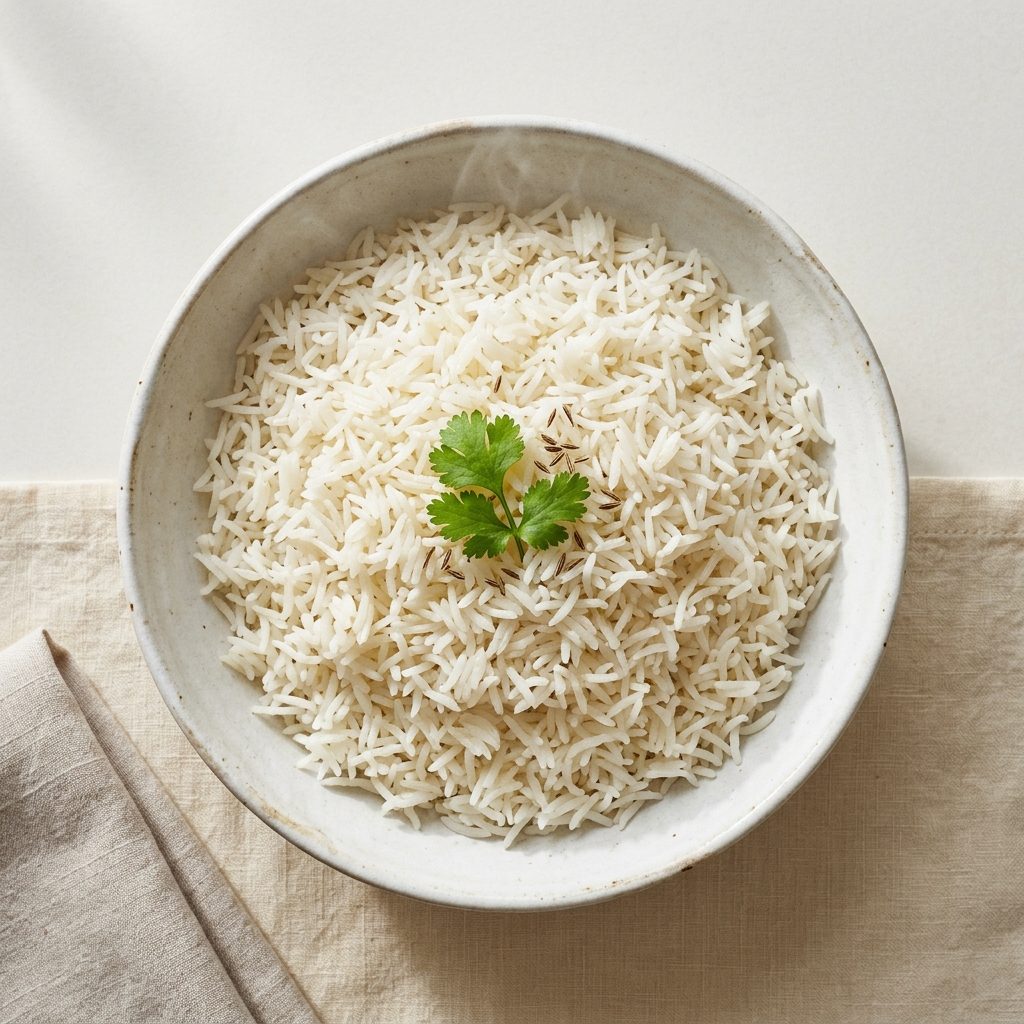
One katori of plain steamed rice, roughly 150 to 200 ml, is usually 130 to 200 calories. The spread comes from how tightly the katori is packed. Basmati, sona masoori and brown rice are all within a few calories of each other. Pulao and biryani run far higher because of the oil.
Key takeaways
- A katori of plain steamed rice is usually 130 to 200 calories, and how firmly it is pressed into the bowl matters more than the variety.
- Raw rice roughly triples in weight when cooked, so 100 grams of cooked rice is only about a third of the dry grain.
- Basmati, sona masoori and brown rice all sit near 340 to 360 calories per 100 grams dry. Choosing between them is about fibre and satiety, not energy.
- Jeera rice, pulao and biryani are higher because of added ghee or oil, not because of the rice.
- Rice is easy to over-serve because it is spooned rather than counted. Serve into a katori first, then log the katori.
Rice takes more blame than any other food in an Indian diet, and most of the blame is misplaced.
One katori of plain steamed rice is usually 130 to 200 calories. That is a wide band for a food with one ingredient, and the reason is not the rice. It is the bowl, and how hard someone pressed the rice into it.
What a katori of rice actually holds
The standard steel katori in most Indian homes holds roughly 150 to 200 ml. Filled loosely with plain steamed rice, that is somewhere around 100 to 150 grams of cooked grain, which lands at 130 to 200 calories.
Pack the same katori tightly and press it down, the way rice gets moulded before it is turned out onto a plate, and you can fit half again as much in. Same bowl, same rice, meaningfully different number.
This is the whole reason a single authoritative figure for a katori of rice is a fiction. If you want to shrink your own range, calibrate once: fill your katori the way you normally would, tip it onto a scale, and note the weight. That one measurement makes every rice entry you ever log more honest.
The cooked versus uncooked trap
This is the single biggest error in rice logging, and it is easy to make without noticing.
Rice absorbs water as it cooks. Raw rice roughly triples in weight, so 100 grams of dry grain comes out at around 280 to 300 grams cooked, depending on the variety and how much water it drank.
Dry rice sits at roughly 340 to 360 calories per 100 grams. Cooked rice, having tripled in weight without gaining any energy, sits at roughly 120 to 140 calories per 100 grams.
Those two numbers describe the same rice. Confusing them is how a 180 calorie serving gets logged as 500. If a database entry does not tell you whether it means raw or cooked, assume nothing and check, because the error is close to three times, not ten percent.
The safest habit is to log rice in portions rather than grams. A katori, a serving spoon, a plate. Portions do not have this problem because a katori is always a katori of cooked food.
Basmati, sona masoori and brown rice
People switch varieties expecting a calorie change and are usually disappointed.
| Rice | Dry, per 100 g | What actually differs |
|---|---|---|
| Long grain basmati | Roughly 340 to 355 | Lower glycaemic response, separate grains, aged for aroma |
| Sona masoori | Roughly 345 to 360 | Softer, absorbs more water, common in the south |
| Brown rice | Roughly 340 to 360 | Bran intact, more fibre, slower to eat |
| Parboiled rice | Roughly 340 to 360 | Firmer texture, holds shape |
They are all, functionally, the same energy. Rice is starch, and starch is starch.
What does differ is fibre, chewing time and how full you feel afterwards. Brown rice and older aged basmati tend to leave people satisfied on less, which changes intake without changing the number on the label. That is a real benefit. It is just a different mechanism from the one people assume they are buying.
Where the calories actually come from
Plain rice is one of the leanest carbohydrates in an Indian kitchen. Then we cook it properly.
- Plain steamed rice. No added fat. This is the baseline.
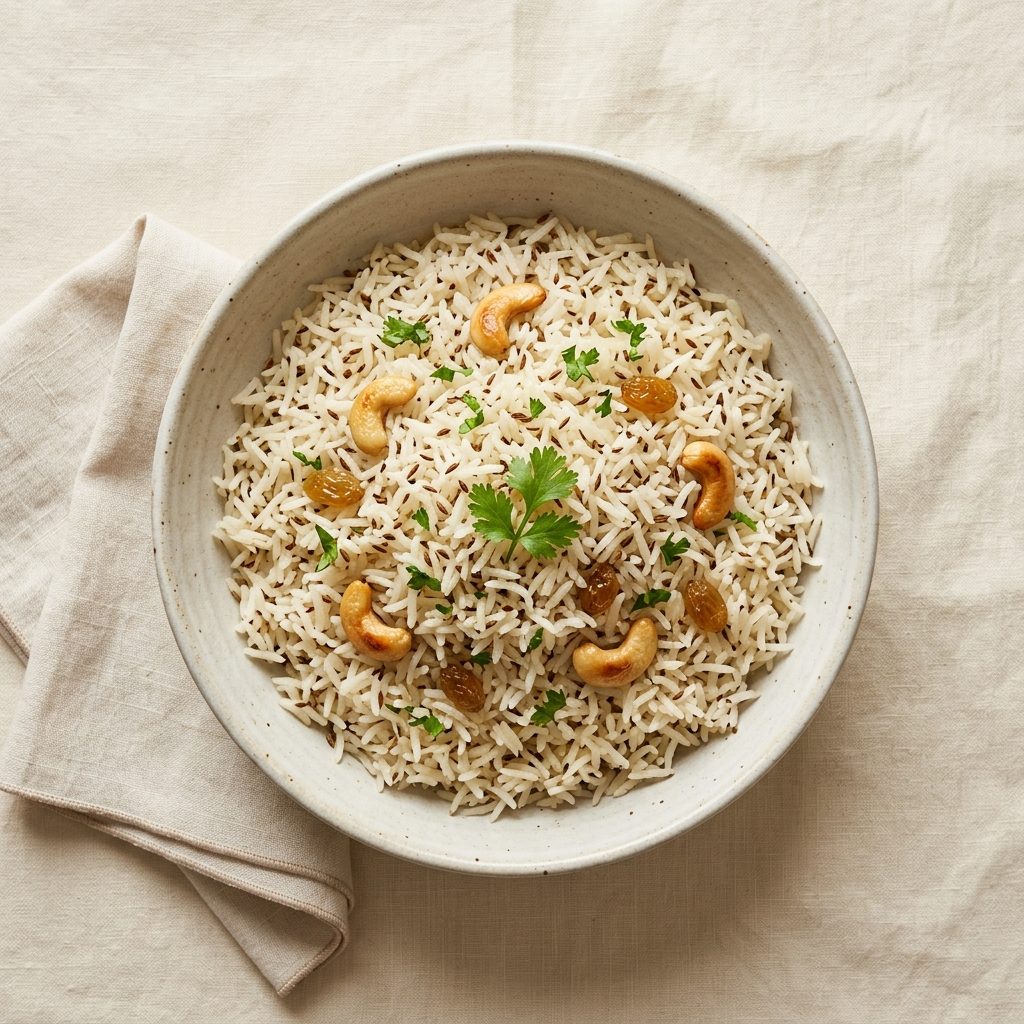
- Jeera rice. A tempering of ghee or oil with cumin. A tablespoon of ghee spread across four servings adds roughly 30 calories per katori. Modest, but not nothing.
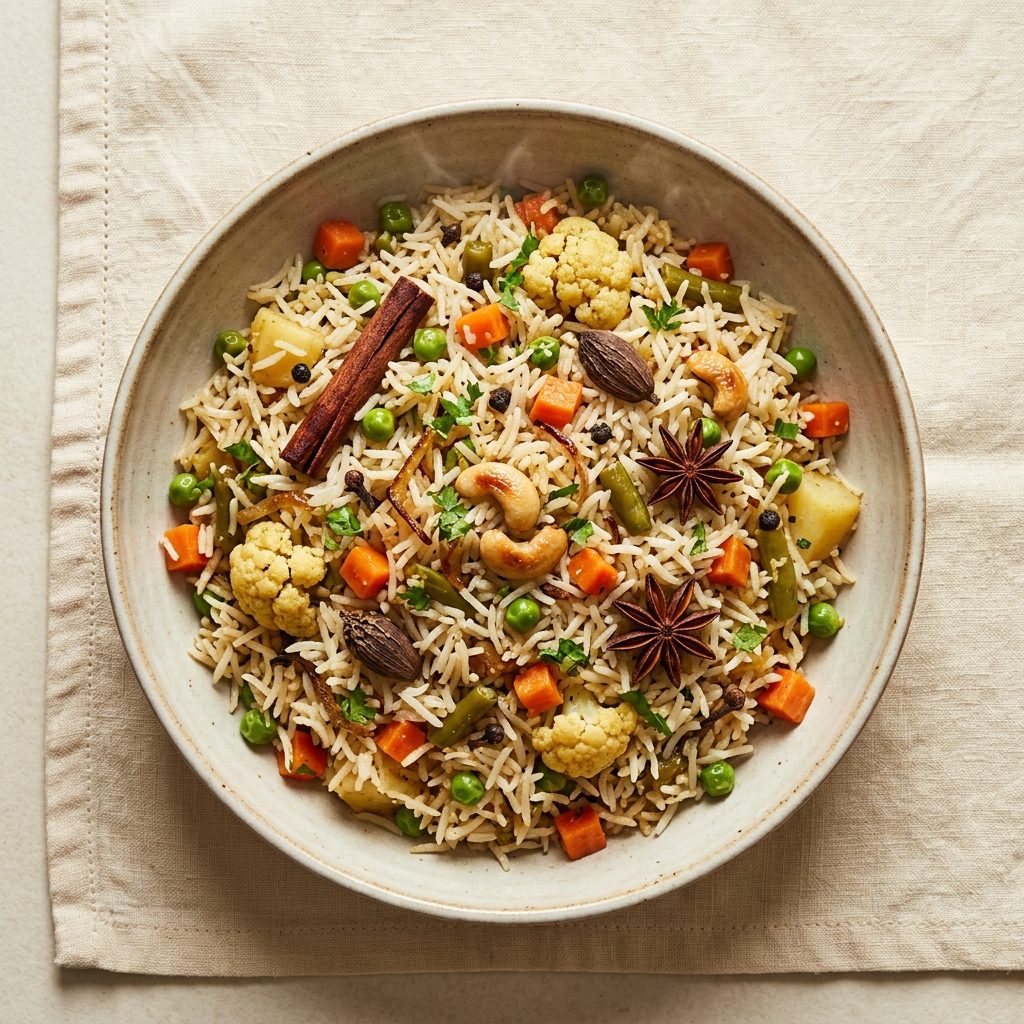
- Vegetable pulao. Rice sauteed in fat before the water goes in, so every grain carries a film of oil. Usually 250 to 350 per katori.
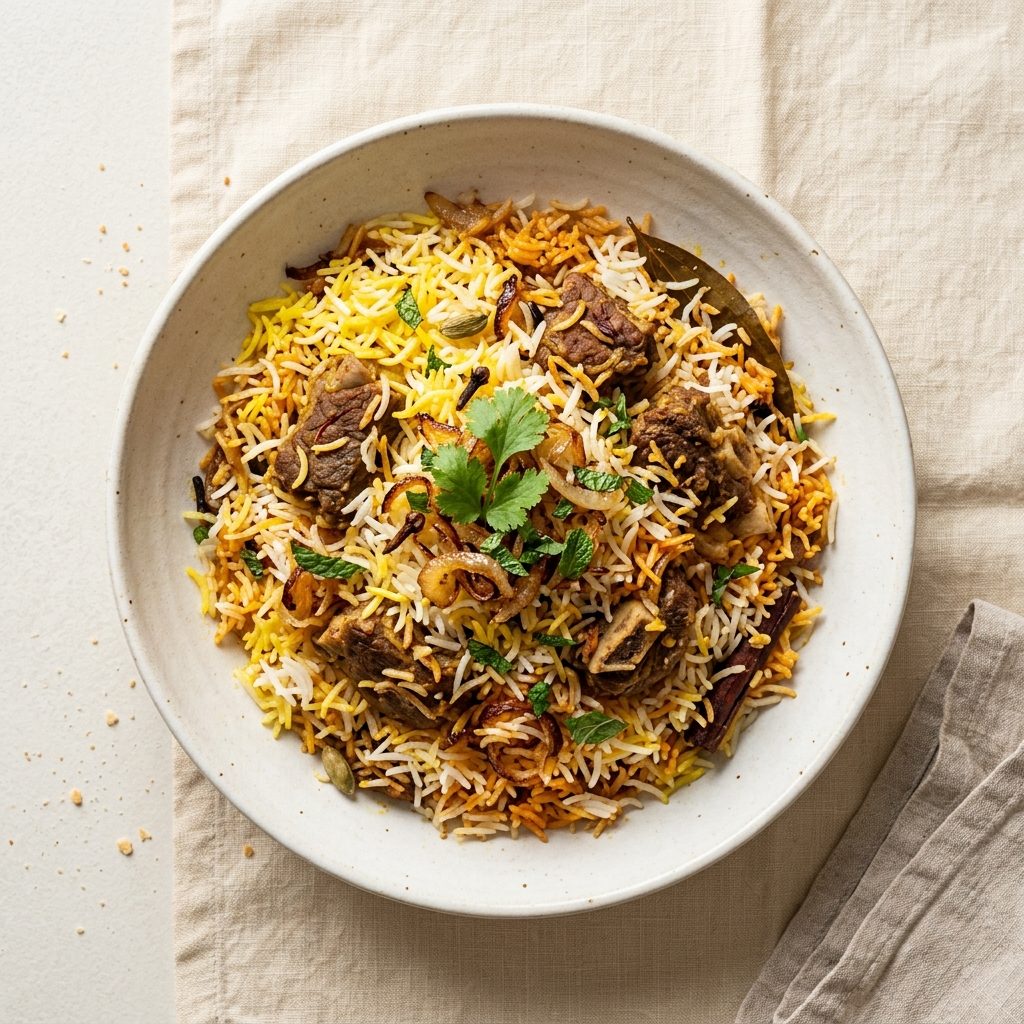
- Biryani. Layered with ghee, fried onions, meat and often a rich marinade. A restaurant plate of hyderabadi biryani commonly lands between 500 and 800 calories, sometimes higher.
Notice the pattern. In every case the rice is the constant and the fat is the variable. If you want the biryani, have the biryani, and log it as a plate rather than trying to reconstruct it from grains of rice. Composite dishes do not decompose cleanly, which is covered in the guide on how to count calories in Indian food.
The cooling rice question
You will have seen the claim that cooling cooked rice and reheating it converts some starch into resistant starch, lowering the calories absorbed.
The effect is real and it is small. Studies suggest a modest reduction, in the range of a few percent to perhaps ten in the most favourable conditions. That is smaller than the error in how you fill your katori.
Cook rice however suits your kitchen. Do not build a plan around it, and be suspicious of anyone selling a technique on the back of it.
Rice or roti, the question everybody actually asks
A medium roti and a small katori of plain rice sit in a broadly similar calorie band. There is no winner hiding in the numbers.
Roti holds a little more protein and fibre for the same energy because whole wheat keeps its bran. Rice is easier to over-serve, because a serving spoon does not count itself the way a fourth roti does. That is the honest difference, and it is behavioural rather than nutritional. The roti side of the comparison is laid out in how many calories are in a roti.
South Indian households eat rice at nearly every meal and have done for centuries. The problem was never the grain.
How to log rice without a scale
Three habits, and none of them involve weighing anything at the table.
- Serve into a katori first, then onto the plate. The katori is your measuring device. Once rice goes straight onto the plate from the pot, the portion is a guess forever.
- Log the unit, not the gram. One katori of steamed rice, one serving spoon, one plate of biryani. A food log built for Indian kitchens converts those for you, so the arithmetic never reaches the dinner table.
- Be consistent in the same direction. If your katori entry runs slightly low every day, your weekly trend still tells you the truth. Consistency beats accuracy, every time.
Rice is not the villain
The number you are looking for is 130 to 200 for a plain katori, and roughly double that once ghee, fried onions and layering enter the picture.
That is enough to plan with. Two katori of rice with dal and sabzi is an ordinary lunch that fits inside almost any sensible target. A plate of biryani is a bigger meal, and knowing that lets you build the rest of the day around it rather than around regret.
Log the katori. Eat the chawal.
Calorie figures on this page are typical ranges, not lab values. Indian recipes vary enormously between kitchens, so a number that is right for one house is wrong for the next. Sehat keeps a confidence level and a source note on every entry rather than pretending a single figure is the truth. This is general information, not medical advice.
Common questions
How many calories are in one katori of rice?
A standard steel katori holding roughly 150 to 200 ml of plain steamed rice is usually 130 to 200 calories. The variation comes from bowl size and how tightly the rice is packed. A loosely filled small katori sits at the bottom of that band, a heaped one at the top.
Is brown rice lower in calories than white rice?
Barely. Dry brown rice and dry white rice both sit near 340 to 360 calories per 100 grams. Brown rice keeps the bran, so it carries more fibre and takes longer to eat and digest, which helps with fullness. The benefit is satiety and micronutrients, not a lower calorie count.
Does 100 grams of rice mean cooked or uncooked?
It matters enormously and most databases do not say. Raw rice roughly triples in weight as it absorbs water, so 100 grams of dry rice becomes around 280 to 300 grams cooked. Logging cooked rice against an uncooked entry can overstate the meal by close to three times.
How many calories are in a plate of biryani?
A restaurant plate of biryani usually lands somewhere between 500 and 800 calories, and mutton or heavily ghee-cooked versions go higher. The rice is the smaller part of that. Most of it is the oil or ghee the rice is layered with, plus the meat and fried onions.
Is rice or roti better for weight loss?
Neither wins on calories alone. A medium roti and a small katori of plain rice land in a similar range. Roti carries slightly more protein and fibre per calorie, and rice is easier to over-serve because it is spooned. Whichever one you eat, portion it deliberately and both work.
Dishes mentioned
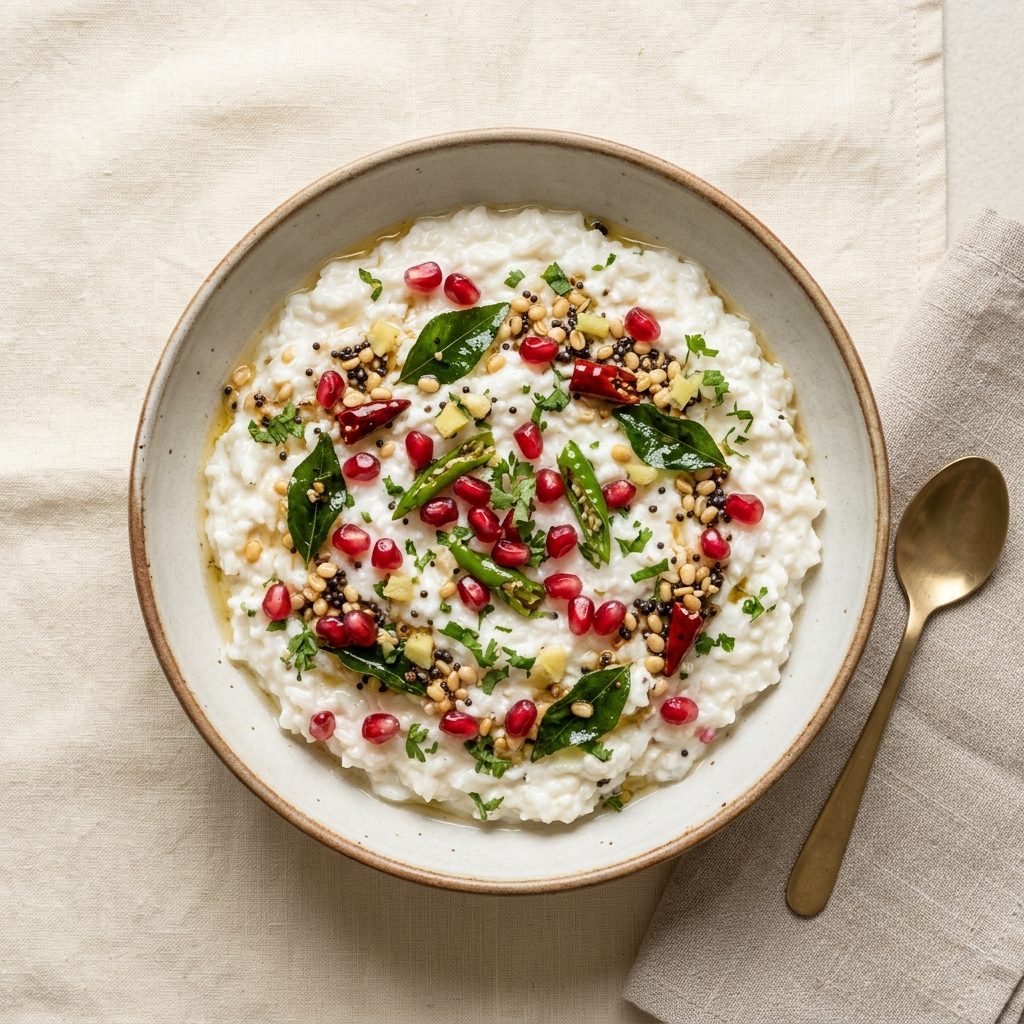
In the app
All of this, without the arithmetic.
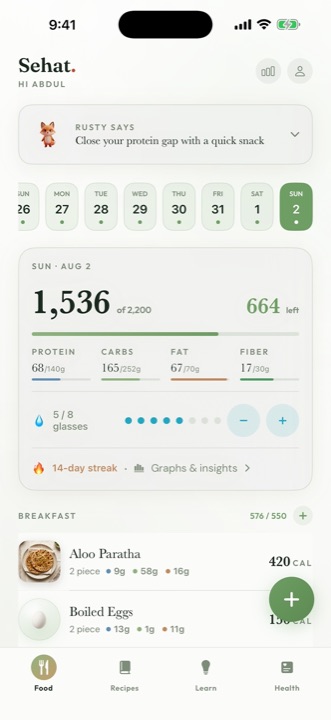
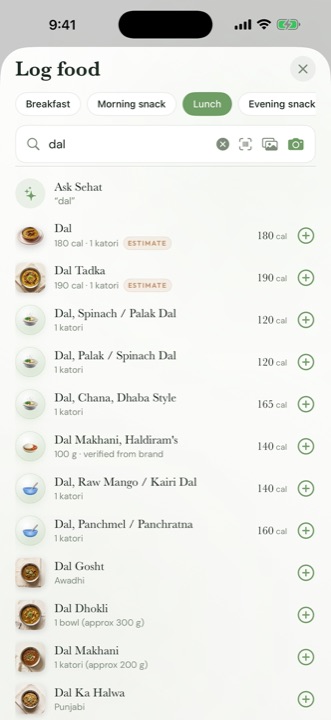
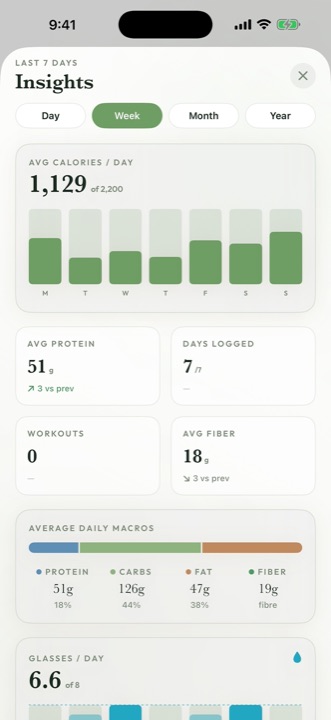
The world's most complete Indian calorie counter.
Over 10,000 foods and spellings.
Log dal, roti and biryani by voice, in Hinglish, in the portions your kitchen actually uses. An AI coach reads your day and guides you. No coaches. No calls. No spam.
Download free on the App StoreAndroid is on the way.
Calorie tracking
How many calories are in a roti?
A plain home roti runs 80 to 110 calories. Why the range is wide, how atta and size change it, and how phulka, tandoori roti and laccha paratha compare.
Calorie tracking
How to count calories in Indian food
A practical method for tracking dal, roti, sabzi and biryani without weighing anything. Portions, honest ranges, and the four habits that make a log actually stick.
Indian food
A practical guide to Indian portion sizes
What a katori, a karchi and a plate actually hold, how to calibrate your own bowl with water, and what one serving of dal, sabzi, rice and curd looks like.