A practical guide to Indian portion sizes
The short answer
Indian portions are measured in household units. A standard steel katori holds roughly 150 to 200 ml, which is one serving of dal, sabzi or curd. A serving spoon of cooked rice is 60 to 80 g, and a roti is one piece. Calibrate your own katori once with water and every entry after that stays consistent.
Key takeaways
- A standard steel katori holds roughly 150 to 200 ml, which is one serving of dal, sabzi, curd or kheer.
- Thali katori run smaller at around 100 to 150 ml, and a deep dinner bowl can hold 250 ml or more.
- Calibrating your own katori with water and a measuring cup takes two minutes and never needs doing again.
- One serving spoon of cooked rice is roughly 60 to 80 g, while a katori of rice packs tighter at 120 to 180 g.
- Portion size is regional. A Gujarati thali serves many small katori across a meal, a Punjabi dinner serves fewer and bigger.
- Log a unit and a quantity, two roti or one katori dal, and let the per-dish gram conversion happen underneath.
Ask three people how much dal they eat in a day and you will get three answers. One katori. A small bowl. Bas thoda sa.
All three are describing a real portion. None of them means the same volume.
Indian kitchens have run on household measures for generations, and those measures are consistent enough to track against once you know what yours hold. This is a reference for exactly that. What the common units are, roughly how much each carries, and how to pin down your own in about two minutes.
The units an Indian kitchen actually runs on
Five units cover almost everything served in an Indian home.
| Unit | Typically holds | Usually used for |
|---|---|---|
| Katori | 150 to 200 ml | Dal, sabzi, curd, raita, kheer |
| Roti or chapati | One piece | Breads of every kind |
| Karchi or serving spoon | 60 to 80 g of cooked food | Rice, pulao, dry sabzi |
| Plate | 250 to 400 g | Biryani, khichdi, pulao, pav bhaji |
| Glass | 200 to 250 ml | Chaas, lassi, juice, milk |
Two more turn up often enough to matter. The tablespoon, roughly 15 ml, is how chutney, pickle, ghee and cooking oil get served. And the piece, for samosa, idli, kebab, laddoo and anything else a kitchen produces one at a time.
How much a katori actually holds
A standard steel katori holds somewhere between 150 and 200 ml, and that is the single most useful number on this page.
But katori is a shape, not a fixed size. The ones sold in a set of six with a thali sit at the small end, around 100 to 150 ml, because a thali carries many little portions at once. The everyday bowl in a north Indian kitchen tends to run 180 to 200 ml. The deep bowl someone reaches for when serving rajma at dinner can hold 250 ml or more.
That spread is why two people can both log one katori of dal and be describing servings that differ by half again.
Calibrate your own katori once, with water
This takes two minutes and you never have to repeat it.
- Take the katori your household actually serves dal in. Not the smallest one in the cupboard, the one that gets used every night.
- Fill it with water to the level you would serve to, which is usually a little below the rim.
- Pour it into a measuring cup or a marked bottle.
- Note the number. That is your katori.
Do the same for your everyday glass and your serving spoon if you want to be thorough. Most people find their katori is larger than they assumed, which is quietly useful information.
Then set that volume wherever you track and forget about it. Your bowl does not change size.
Why the same dish looks so different in two houses
Portion size is regional, and it is also personal, and both effects are large.
A Gujarati thali serves many small katori across the course of a meal. A Punjabi dinner serves fewer, bigger bowls. In a south Indian home, rice is the base and sambar or rasam is ladled over it rather than served beside it, so the katori is not really the operating unit at all. In a Bengali house, courses arrive in sequence, so the plate at any one moment looks modest while the meal total is not.
The dish itself varies too. Dal in one kitchen is thin enough to drink and in another it is thick with cream and butter. Same name, same bowl, very different serving. This is one of the reasons a per-dish calorie figure is honestly a range rather than a fact, which the guide to counting calories in Indian food goes into properly.
What one serving looks like, dish by dish
Serving sizes are not universal, but there are patterns worth knowing.
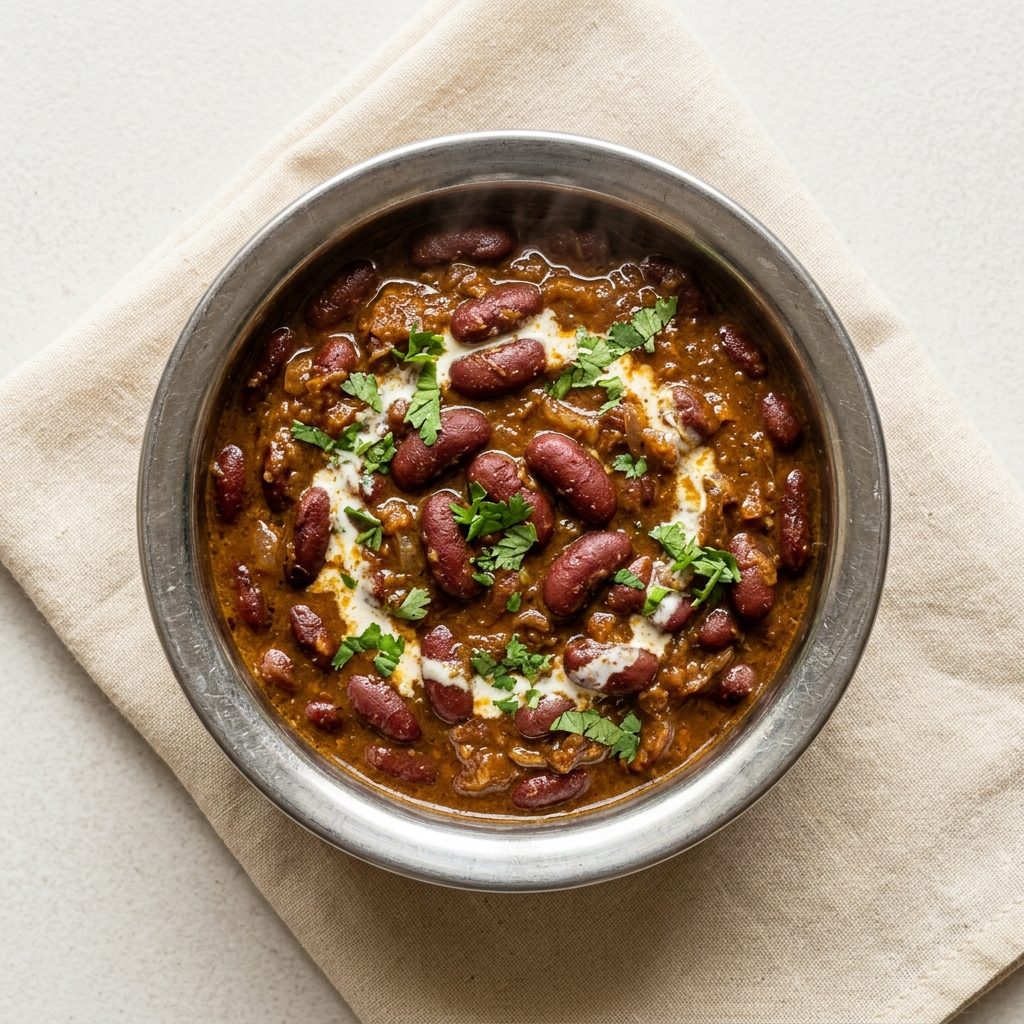
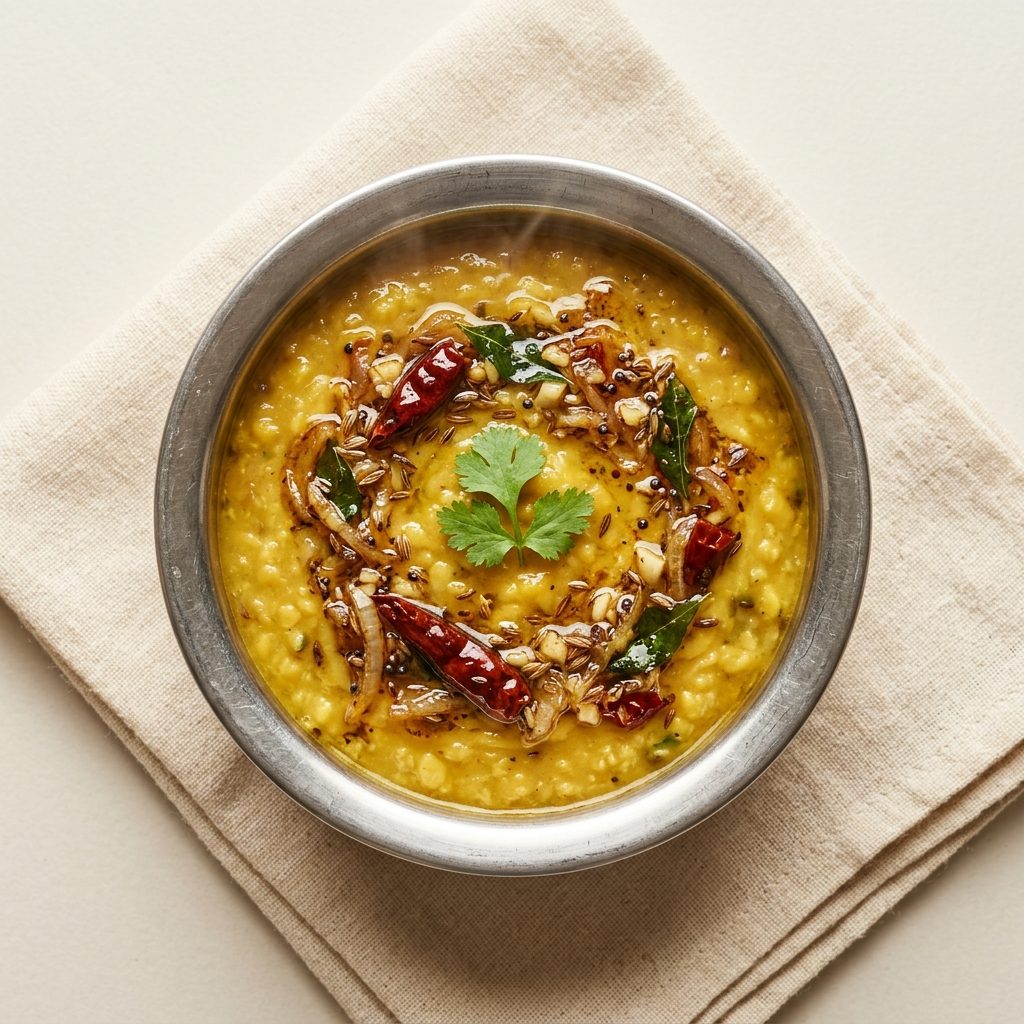
Dal. One katori, 150 to 200 ml, roughly 150 to 200 g. Most people eat one to two katori at a meal. Dal tadka and rajma come in the same bowl even though rajma is considerably denser. There is more on how the dal itself changes the picture in the dal nutrition guide.
Sabzi. One katori for a gravy sabzi. A dry sabzi like bhindi or jeera aloo is more often served with a serving spoon, one to two spoons, around 80 to 120 g.
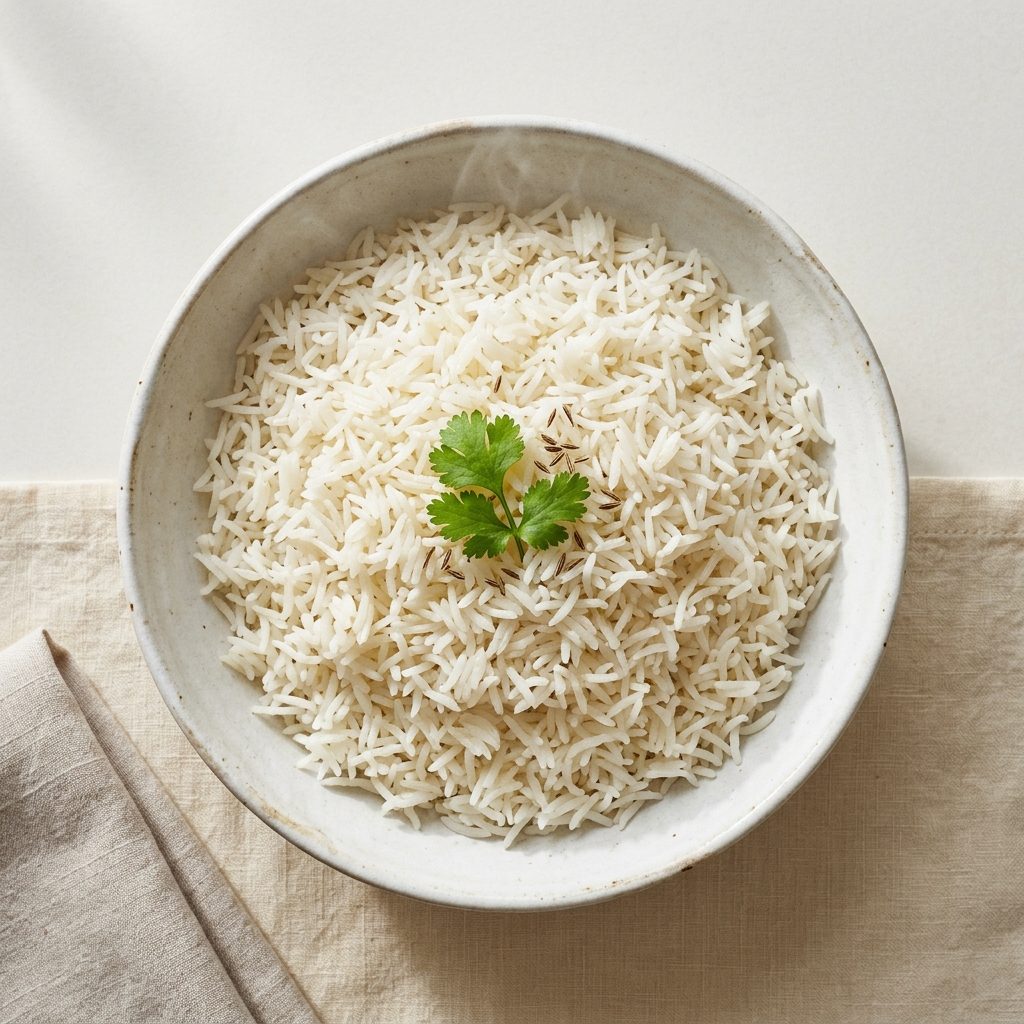
Rice. One serving spoon of cooked rice is roughly 60 to 80 g. A katori of steamed rice packs tighter, usually 120 to 180 g, because the grains compress. A plate of biryani is a different animal, often 300 g or more.
Curd. One katori, around 150 g. Raita is the same bowl with more water and vegetables in it, so it weighs about the same and carries less.
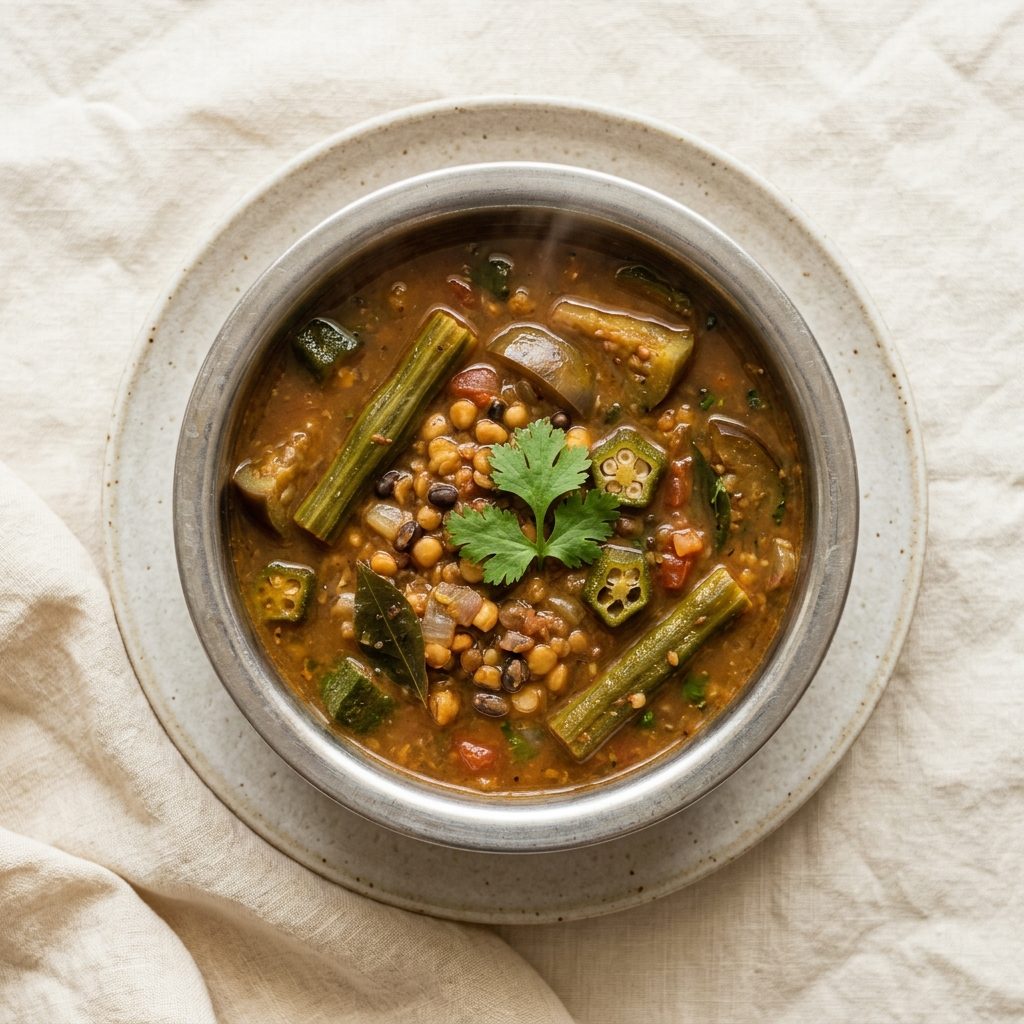
Sambar and rasam. Ladled over rice rather than served beside it, usually one to two ladles. A ladle is close to half a katori.
Bread and rice sit at opposite ends of the difficulty scale
Rotis are the easiest thing in an Indian log, because the kitchen has already portioned them for you.
One roti is one roti. Your household rolls to a consistent size because the same person makes them on the same board with the same belan. That consistency is worth more than precision. The piece on roti calories breaks down how size and flour change the number.
Rice is the opposite. It is spooned, so the portion is decided in the moment, and a second helping does not announce itself the way a fourth roti does. If rice is your staple, serving yourself once and leaving the pot on the counter does more for accuracy than any measurement will.
The portions people forget
Three things slip out of almost every log, and none of them are the main dish.
- Cooking oil and ghee. A tablespoon is about 15 ml and carries roughly 120 calories. A generous tadka holds two.
- Drinks. A glass of lassi, a sweetened chaas, three cups of chai with sugar across a working day.
- The top-up. The half katori someone adds to your plate while you are talking. Serve yourself once, or log it after. Either is fine. Pretending it did not happen is what breaks the trend.
None of this is a reason to eat less of anything. It is just the difference between a log that reflects your day and one that quietly runs low every day.
How portion logging works in practice
You log a unit and a quantity, not a weight. Two roti. One katori dal. One serving spoon rice. One glass chaas.
The conversion from that portion into grams and then into calories happens underneath, because a good Indian food database stores a gram conversion per dish rather than one number for every bowl. A katori of thin moong dal and a katori of dal makhani do not weigh the same and should never convert the same. Sehat carries a default portion and its own gram conversion for every dish for exactly this reason, so you name the portion and the arithmetic is somebody else’s problem.
Voice makes it quicker still. Aaj lunch mein do roti aur ek katori rajma takes four seconds to say and forty to type.
When a scale is genuinely worth using
There are three cases where weighing pays off, and all three are one-time jobs.
- Calibration week. Weigh your usual servings for a few days so your portions stop being guesses. Then put the scale away.
- Batch cooking. If you cook a big pot on Sunday and eat from it four times, weigh the pot once and divide by the number of servings. That single number carries the whole week.
- A meal you eat constantly. Get your everyday breakfast right once and it is right for a year.
Outside those, a scale adds effort without adding much signal.
Your kitchen already has a measuring system
The katori in your cupboard has held the same volume for as long as you have owned it. So has your glass, your serving spoon, and the size your household rolls a roti.
Learn what they hold, once. After that, portions stop being the hard part of tracking and become the boring part, which is exactly where you want them.
Calorie figures on this page are typical ranges, not lab values. Indian recipes vary enormously between kitchens, so a number that is right for one house is wrong for the next. Sehat keeps a confidence level and a source note on every entry rather than pretending a single figure is the truth. This is general information, not medical advice.
Common questions
How many ml is one katori?
A standard steel katori holds roughly 150 to 200 ml. The small ones that come in a thali set are closer to 100 to 150 ml, and a deep dinner bowl can reach 250 ml. Fill yours with water and pour it into a measuring cup once to know exactly which size you own.
How much dal is one serving?
One katori, which works out at roughly 150 to 200 g of cooked dal depending on how thick it is. Most people eat one to two katori at a meal. A thin moong dal and a heavy dal makhani served in the same bowl do not weigh the same, which is why gram conversions have to be stored per dish.
How much rice is one serving in India?
One serving spoon of cooked rice is roughly 60 to 80 g. A katori packs tighter, usually 120 to 180 g, because the grains compress against the sides. A restaurant or wedding plate of biryani is far larger, often 300 g or more, and is better logged as one plate than as a count of spoons.
Do I need to weigh Indian food to track it?
Not routinely. Weighing for a few days at the start is useful to learn what your household servings actually hold, and weighing a batch-cooked pot once is worth the effort. After that, household units stay consistent enough that a scale adds work without adding much signal.
Is a katori the same size everywhere in India?
No. Katori is a shape rather than a standard size. Thali sets use small bowls of 100 to 150 ml because a thali carries many portions at once. Everyday north Indian kitchens often use 180 to 200 ml. Regional serving styles differ too, so measure the bowl your own house uses.
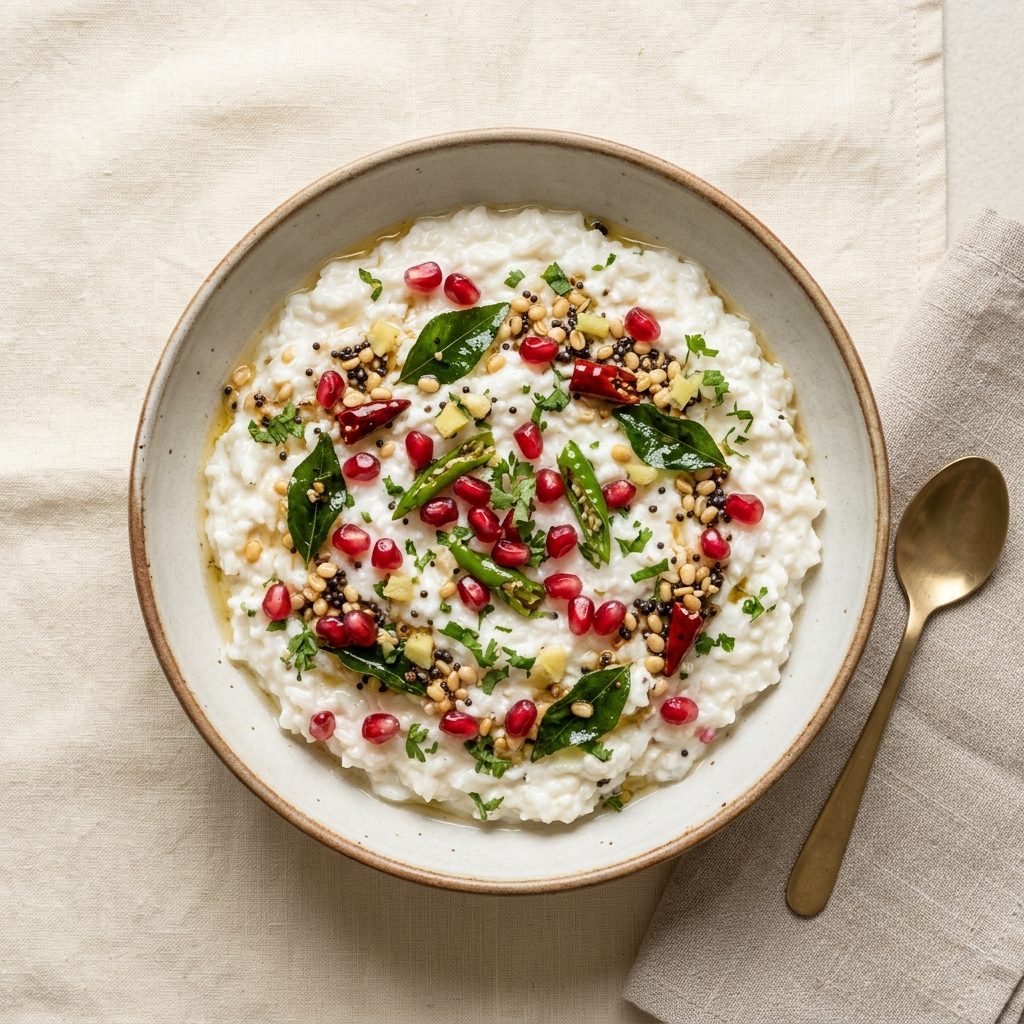
Dishes mentioned
In the app
All of this, without the arithmetic.
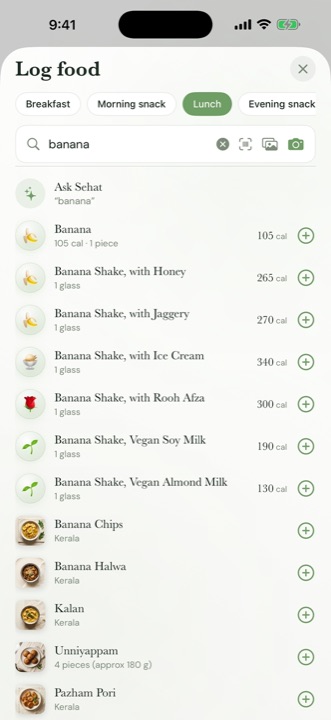
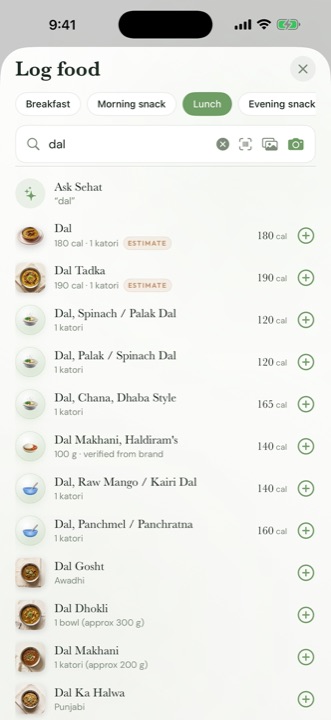
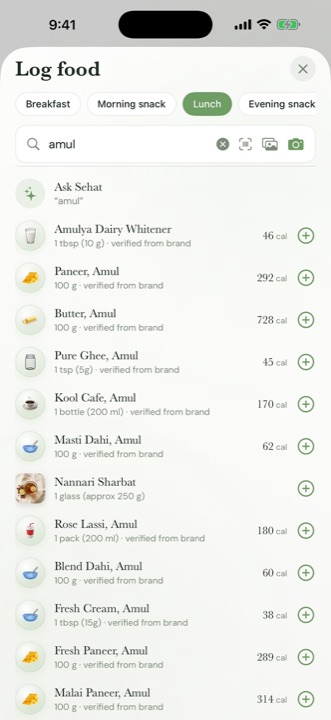
The world's most complete Indian calorie counter.
Over 10,000 foods and spellings.
Log dal, roti and biryani by voice, in Hinglish, in the portions your kitchen actually uses. An AI coach reads your day and guides you. No coaches. No calls. No spam.
Download free on the App StoreAndroid is on the way.
Calorie tracking
How to count calories in Indian food
A practical method for tracking dal, roti, sabzi and biryani without weighing anything. Portions, honest ranges, and the four habits that make a log actually stick.
Nutrition
A guide to dal, and what is actually in your katori
Toor, moong, masoor, chana, urad, rajma and chole compared on protein, fibre and calories. Why dal makhani sits higher, and what a katori really gives you.
Calorie tracking
How many calories are in a katori of rice?
One katori of plain steamed rice is usually 130 to 200 calories. Why cooked and uncooked weight confuses everyone, and where pulao and biryani get heavier.