How many calories are in a roti?
The short answer
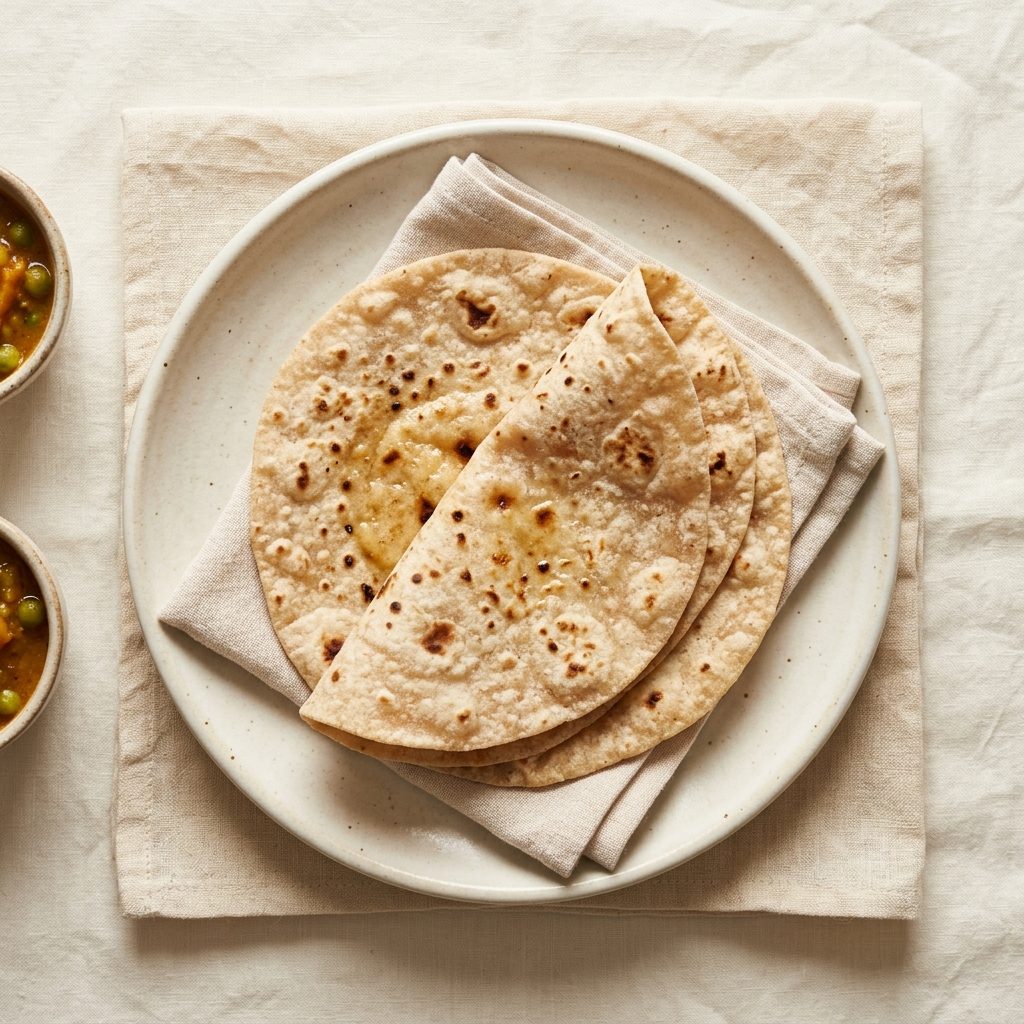
A plain home-made roti is typically 80 to 110 calories, which comes from roughly 20 to 30 grams of dry atta. A tandoori roti is larger and denser at around 110 to 150, and one brushed with ghee can reach 150 or more. Laccha paratha sits far higher.
Key takeaways
- A plain home-made roti is typically 80 to 110 calories, driven almost entirely by how much dry atta went into the dough ball.
- A 6 inch roti and an 8 inch roti are not close. Area scales with the square of the diameter, so the bigger one can hold nearly twice the flour.
- A tandoori roti is usually 110 to 150 calories, and one brushed with ghee can reach 150 or more.
- Bajra and jowar rotis are not lower in calories than wheat. They are rolled thicker, so a piece often lands slightly higher.
- Log rotis as pieces, not grams. Your own roti size is consistent week to week, which is all a trend needs.
It is the most searched nutrition question in Indian households, and it gets answered badly almost everywhere. Someone tells you 71. Someone else says 104. A third site is very confident about 120.
They are all describing different rotis.
A plain home-made roti is typically 80 to 110 calories. That is the honest band, and the rest of this page is about why the band exists and how to work inside it.
Where the 80 to 110 range comes from
A roti is atta, water and heat. That is the whole recipe, so the calories track one thing almost perfectly: how much dry flour went into the ball.
Whole wheat atta carries roughly 330 to 350 calories per 100 grams. A normal home roti uses somewhere between 20 and 30 grams of that. Do the arithmetic and you land at 66 to 105, and then a little oil on the tawa or a smear of ghee nudges the top end past 110.
So the range is not an app hedging its bets. It is a real spread between a small phulka in one house and a hefty roti in another, and no database can close it without standing in your kitchen.
A 6 inch roti and an 8 inch roti are not close
This is the part people underestimate. A roti is a circle, and area grows with the square of the diameter.
An 8 inch roti has roughly 1.8 times the surface of a 6 inch one, rolled to the same thickness. In calories that is the difference between about 80 and about 145. Two extra inches across is not a rounding error, it is nearly an extra roti.
Which is why the useful habit is not looking up a number. It is knowing your own roti. Most households roll to a consistent size because the same person makes them on the same board with the same belan. Once you know whether yours is a small phulka or a broad one, your log stops drifting.
The roti family, compared
Roti is a category, not a dish. The word covers pieces that differ by a factor of three.
| Bread | Typical range per piece | What drives it |
|---|---|---|
| Plain phulka or chapati | 80 to 110 | Dry atta weight and diameter |
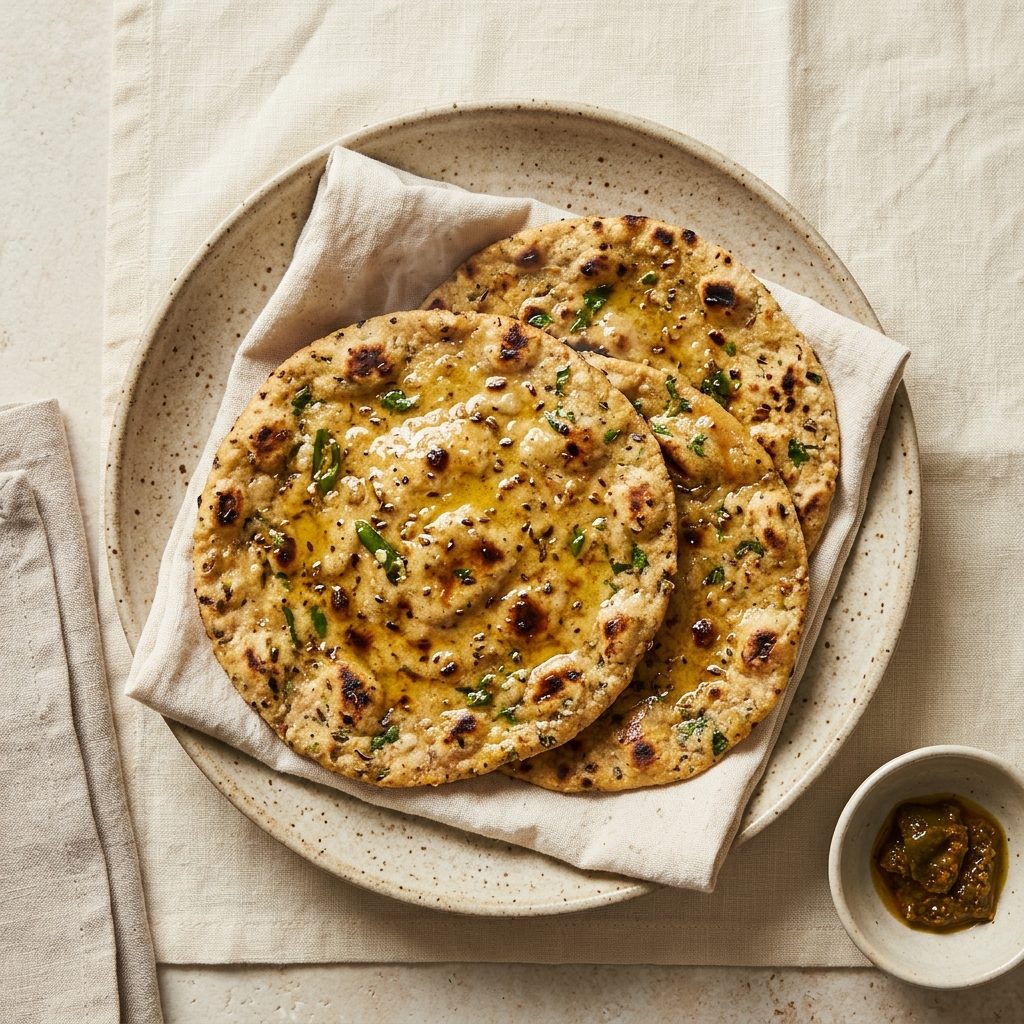
| Missi roti | 120 to 170 | Besan in the dough, often oil too |
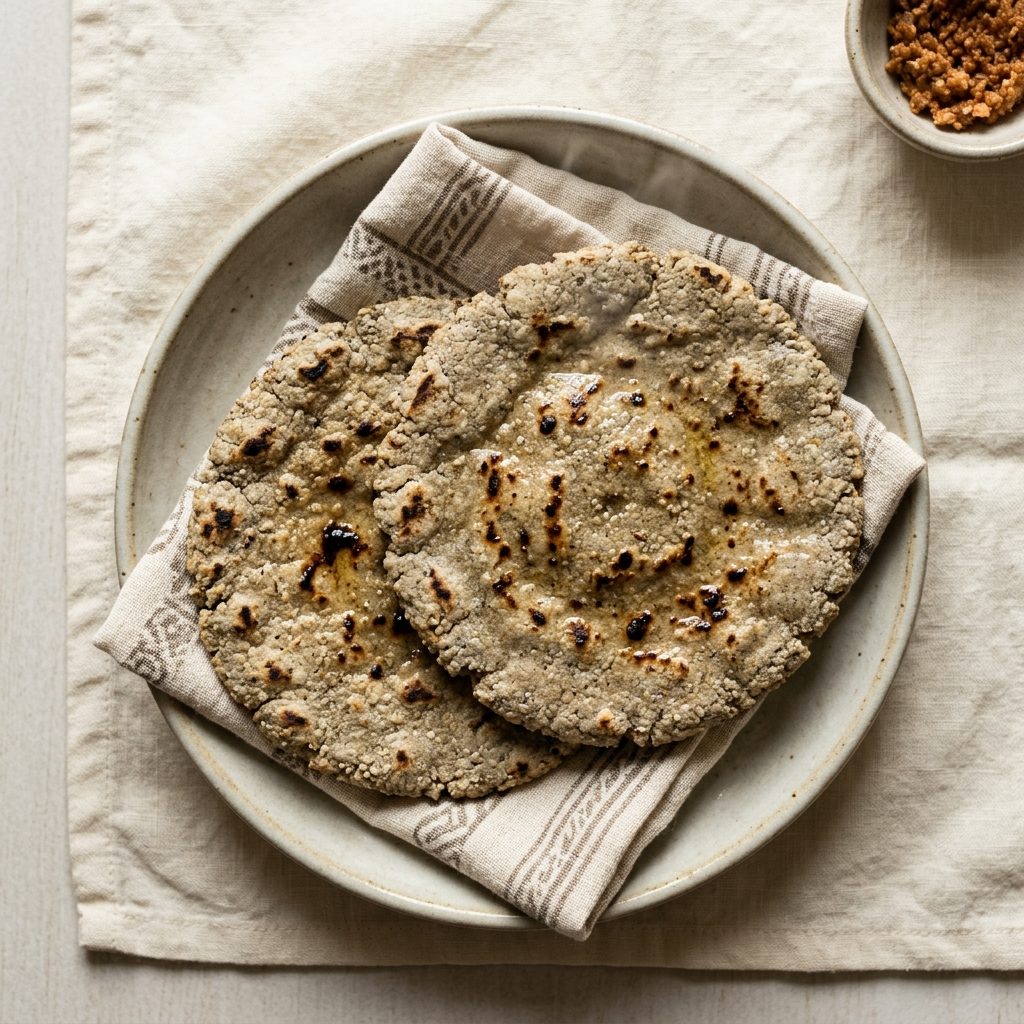
| Bajra or jowar roti | 90 to 130 | Rolled thicker, heavier flour |
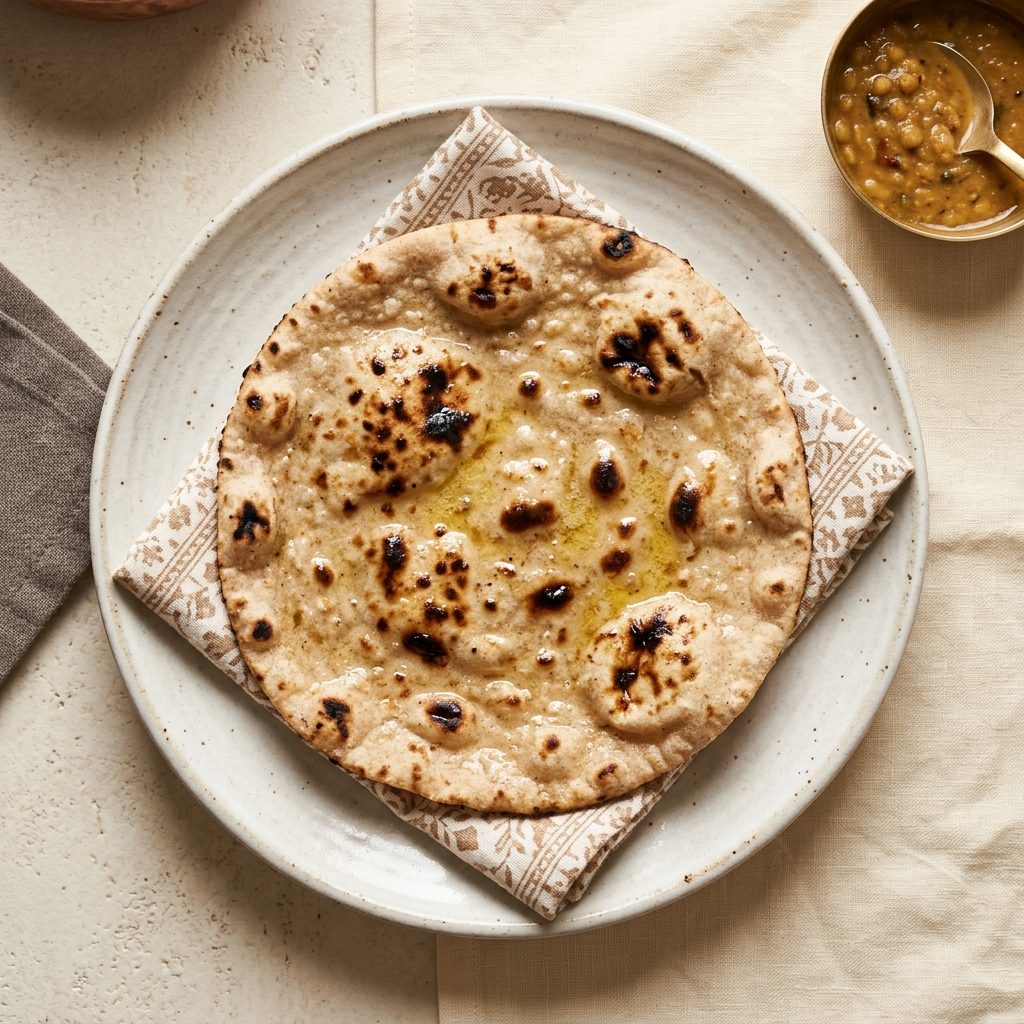
| Tandoori roti | 110 to 150 | Larger, denser dough |
| Tandoori roti brushed with ghee | 150 or more | The brush, not the bread |
| Plain paratha | 150 to 250 | Fat folded into the layers |
| Laccha paratha | 200 to 300 | More layers, more ghee |
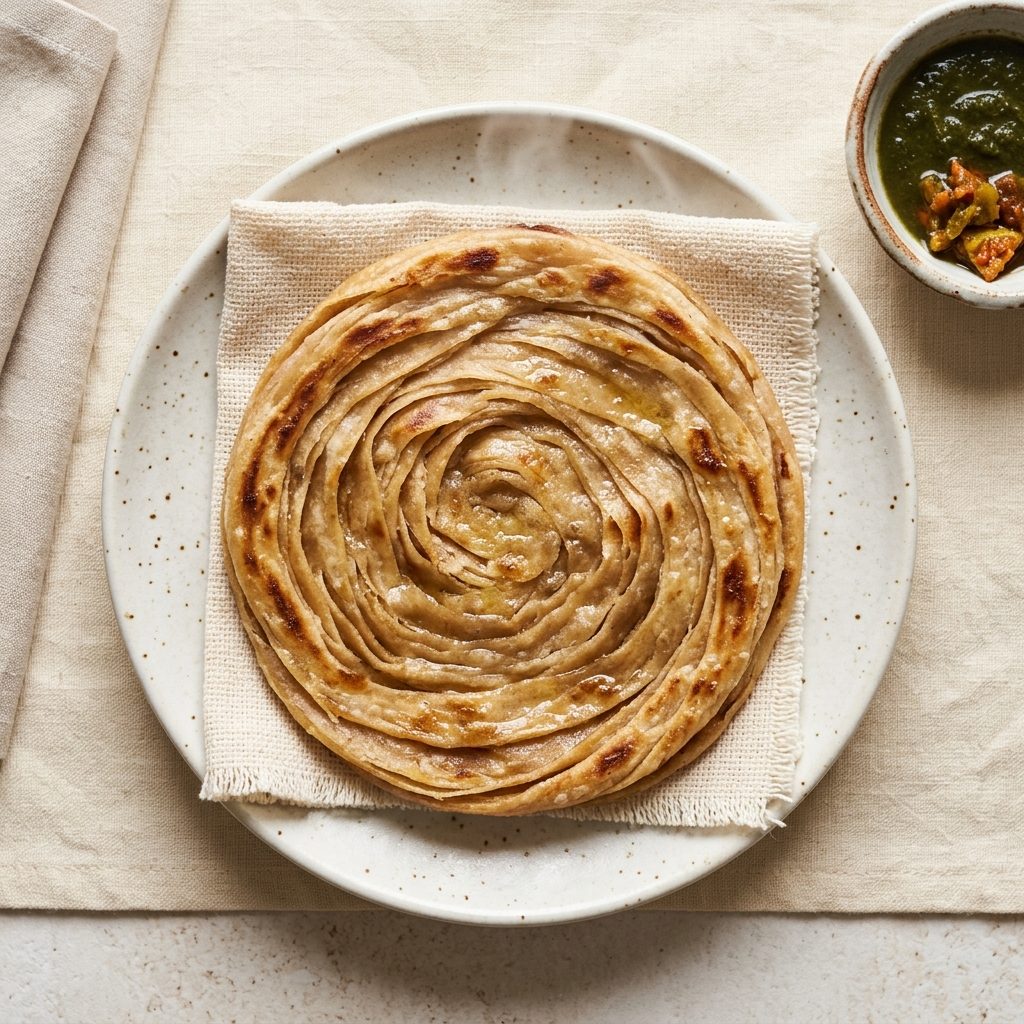
A phulka is the lightest of the lot because it is cooked dry and puffed on an open flame with no fat at all. A laccha paratha is the same flour with ghee laminated between every layer, which is why it can carry three phulkas worth of energy in one piece.
Multigrain, bajra, jowar and ragi
Millet rotis are excellent food. They are not low-calorie food, and the marketing around them blurs the two.
Bajra, jowar, ragi and multigrain blends all sit in roughly the same 330 to 360 calories per 100 grams band as wheat atta. Swapping flours does not reduce energy. What it changes is fibre, mineral content, and how long the meal keeps you full, which matters, but through appetite rather than arithmetic.
There is one practical catch. Millet doughs have no gluten, so they are patted out thicker and smaller. A bajra roti is often heavier than the wheat roti it replaced. If you switched flours and your log did not move, this is usually why.
Roti or rice
The comparison people actually want is not roti versus roti. It is roti versus chawal, and the answer is less dramatic than either camp claims.
A medium roti and a small katori of plain steamed rice land in a broadly similar range. Roti gives you a little more protein and fibre for the same energy because whole wheat keeps the bran. Rice is easier to overshoot, because it is served with a spoon and the second helping does not announce itself the way a fourth roti does.
Pick whichever one your family eats and your stomach likes. Then control the quantity, which is the only variable that ever mattered. There is more on the rice side of this in the guide to how many calories are in a katori of rice.
Log rotis as pieces, not grams
Nobody weighs dough. You do not need to.
Rotis are one of the few foods that come pre-portioned by the kitchen, which makes them the easiest thing in an Indian log to track well. Log two roti. Log three roti. The unit is the piece.
If you want to calibrate once, do it like this:
- Weigh the flour you use for one normal batch, say 250 grams.
- Count how many rotis that batch produced, say ten.
- That is 25 grams of atta per roti, and roughly 85 calories before any fat.
Do that once and you never think about it again. This is also why a good Indian food log takes portions as units rather than grams. Saying do roti aur ek katori dal is faster than any keypad, and it is closer to the truth than a number you invented at the table.
Do not forget the fat that arrives after the tawa
The bread is rarely the reason a log is wrong. The ghee is.
A teaspoon of ghee is roughly 40 to 45 calories. The smear that goes on a hot roti is often closer to two. Four rotis a day treated that way is 150 to 350 calories that never made it into the log, every single day.
This is not an argument against ghee. It is an argument for logging it. Decide once whether your house serves rotis plain or ghee-brushed, apply it consistently, and your weekly trend stops lying to you. The same principle covers the other quiet leaks in a food diary, which are collected in the piece on calorie tracking mistakes.
What the number is actually for
You are not trying to know that your roti was 94 calories. You are trying to know whether four of them plus a katori of dal tadka fits the day you planned.
For that, a range is enough. Use 80 to 110 for a plain home roti, add for ghee, add more for tandoor and layers, and log the piece rather than the gram.
Then go eat the roti.
Calorie figures on this page are typical ranges, not lab values. Indian recipes vary enormously between kitchens, so a number that is right for one house is wrong for the next. Sehat keeps a confidence level and a source note on every entry rather than pretending a single figure is the truth. This is general information, not medical advice.
Common questions
How many calories are in 2 rotis?
Two plain home-made rotis come to roughly 160 to 220 calories with nothing on them. Add half a teaspoon of ghee to each and you are closer to 220 to 280. The spread depends on how large your household rolls them and whether any fat touches the tawa.
Is roti better than rice for weight loss?
Neither is better on calories alone. A medium roti and a small katori of plain rice land in a similar range. Roti carries more fibre and protein per calorie because of the whole wheat, and rice is easier to over-serve because it is spooned rather than counted. Both work in a deficit.
How many calories are in a tandoori roti?
A tandoori roti is usually 110 to 150 calories. It is rolled larger and thicker than a home chapati, which is most of the difference. Restaurants often brush the surface with ghee or butter before serving, and that single brush can push the piece past 150.
Are multigrain and bajra rotis lower in calories?
No. Multigrain, bajra, jowar and ragi flours sit in roughly the same calorie band as whole wheat atta, around 330 to 360 calories per 100 grams. They differ in fibre, micronutrients and how full they leave you, not in energy. Millet rotis are often rolled thicker, so a piece can be slightly higher.
Does roasting a roti on ghee add many calories?
Yes, more than most people expect. A teaspoon of ghee is roughly 40 to 45 calories, and a generous smear is closer to two teaspoons. Four ghee-brushed rotis a day quietly adds 150 to 350 calories, which is often the entire gap between a working deficit and a stalled one.
Dishes mentioned
In the app
All of this, without the arithmetic.
The world's most complete Indian calorie counter.
Over 10,000 foods and spellings.
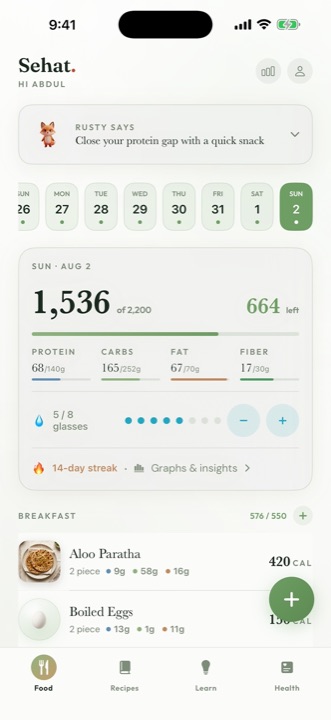
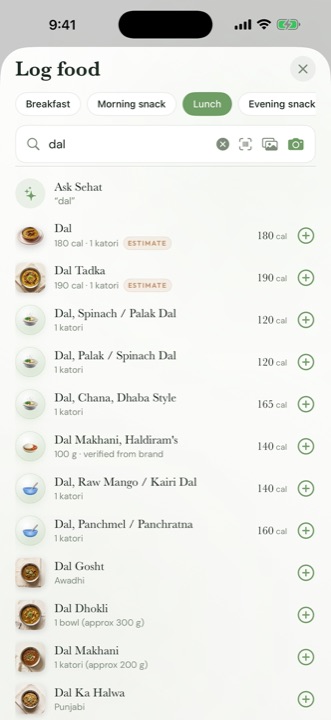
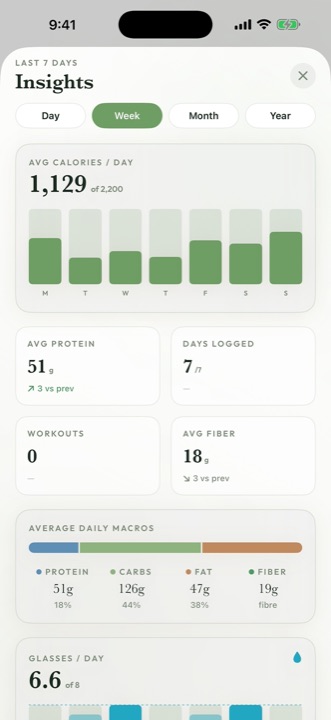
Log dal, roti and biryani by voice, in Hinglish, in the portions your kitchen actually uses. An AI coach reads your day and guides you. No coaches. No calls. No spam.
Download free on the App StoreAndroid is on the way.
Calorie tracking
How to count calories in Indian food
A practical method for tracking dal, roti, sabzi and biryani without weighing anything. Portions, honest ranges, and the four habits that make a log actually stick.
Calorie tracking
How many calories are in a katori of rice?
One katori of plain steamed rice is usually 130 to 200 calories. Why cooked and uncooked weight confuses everyone, and where pulao and biryani get heavier.
Macros
Carbs in Indian food, and how many you actually need
Which Indian staples are carb-dense, how roti, rice, poha and upma compare, and the honest answer for anyone eating two rotis with every meal.