Carbs in Indian food, and how many you actually need
The short answer
Indian food is carb-forward because grains carry the volume on the plate. Carbohydrate is not the reason weight changes, total calories are. Most people do well on roughly 40 to 50 percent of calories from carbohydrate, and someone eating two rotis with every meal almost never needs to change that.
Key takeaways
- Carbohydrate carries 4 calories per gram, the same as protein, so carbs are not calorically expensive on their own.
- A plain home-made roti is typically 80 to 110 calories, and a standard katori of cooked rice usually lands in a similar range.
- Glycemic load matters more than glycemic index because it accounts for how much of the food you actually eat.
- Carbohydrate around training is the one timing decision worth making. The rest of the day is far less sensitive than the internet suggests.
- Low-carb Indian eating is entirely possible, but for most people it solves a problem they do not have.
Somewhere in the last decade, carbohydrate became the villain of Indian dieting. Give up rice. Cut the roti to one. Chapati is poison after 7 pm.
Almost none of this survives contact with the evidence. Carbohydrate carries 4 calories per gram, exactly the same as protein and less than half of fat. It is the cheapest macro on the plate, calorically speaking.
What is true is that Indian food is carb-forward by design, and that the carb-dense items are the easiest to over-serve. Those are different problems, with different fixes.
Which Indian staples are actually carb-dense
The volume on an Indian plate almost always comes from a grain. That is the design.
The carb-dense list, roughly in order of how much they contribute to a typical day:
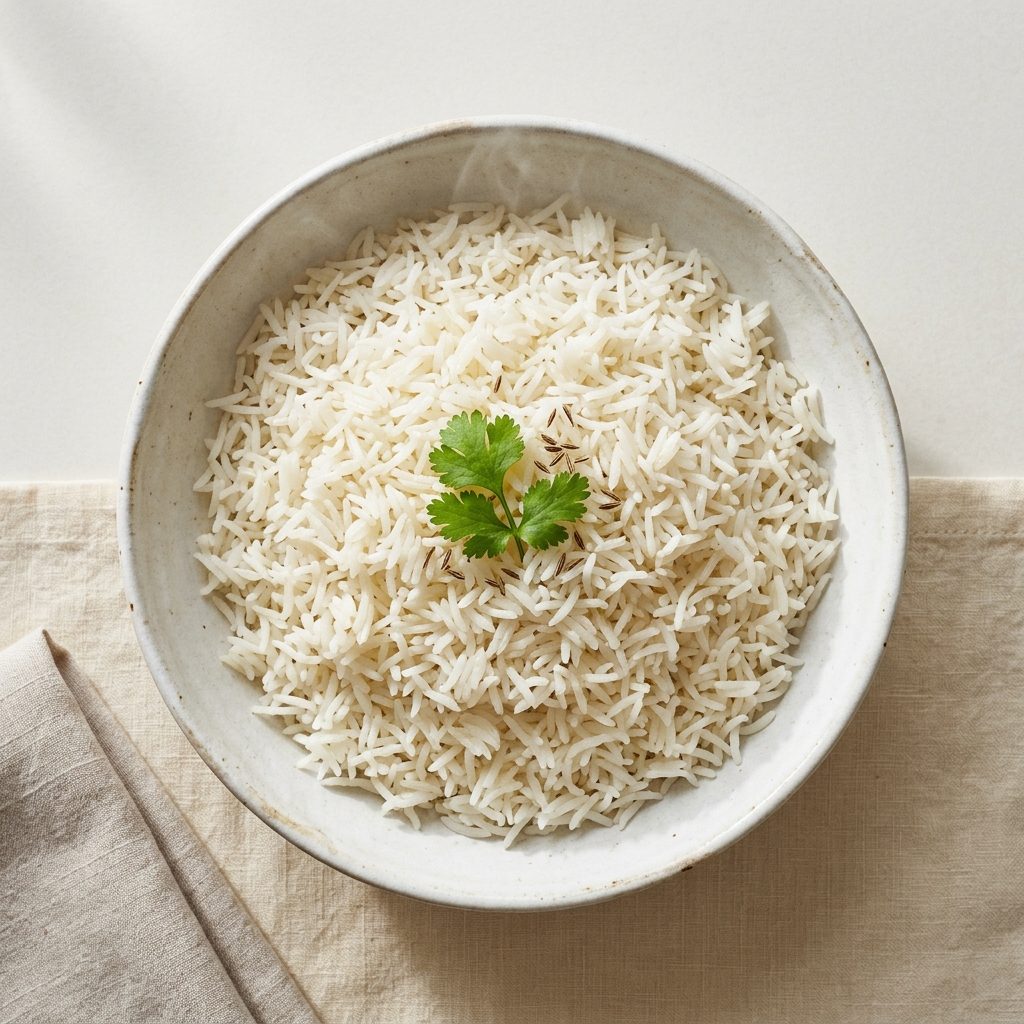
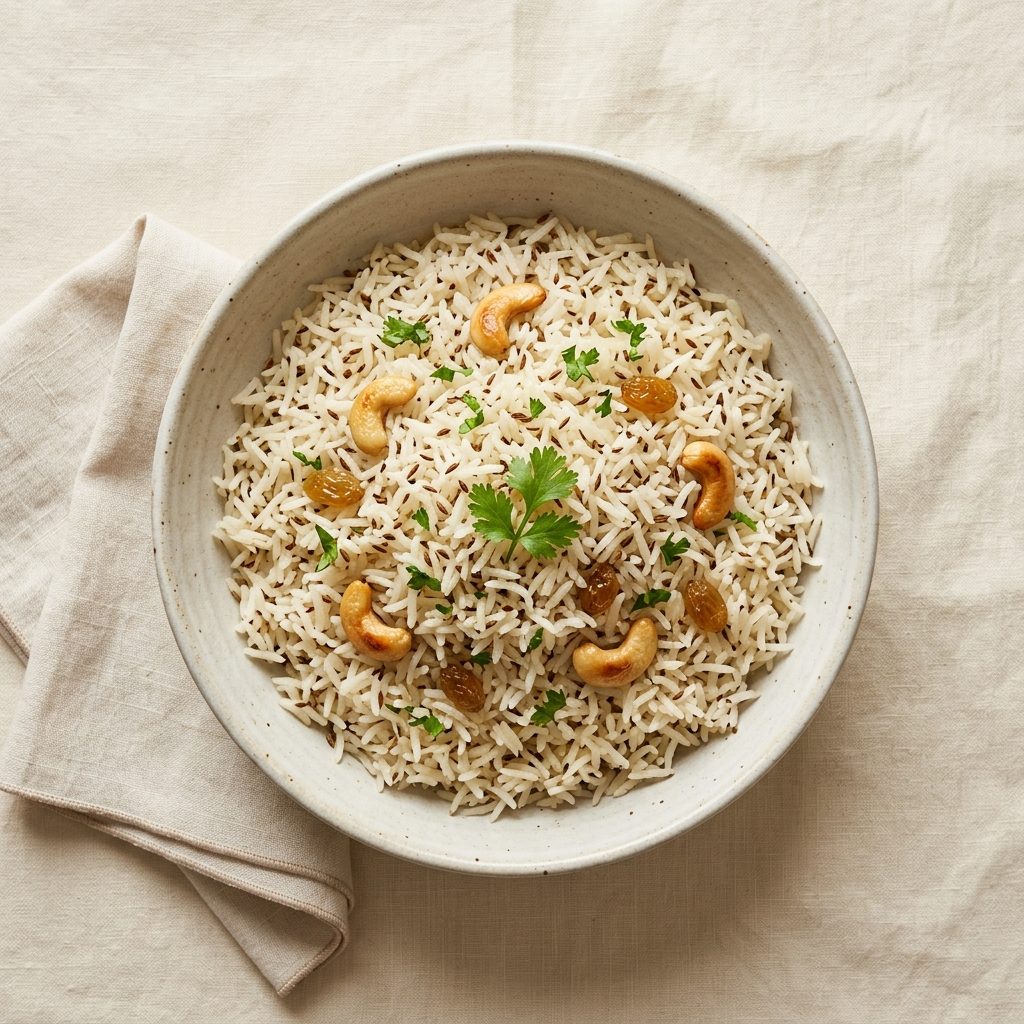
- Rice. Steamed rice, jeera rice, pulao, biryani. Spooned, not counted, which is why portions drift.
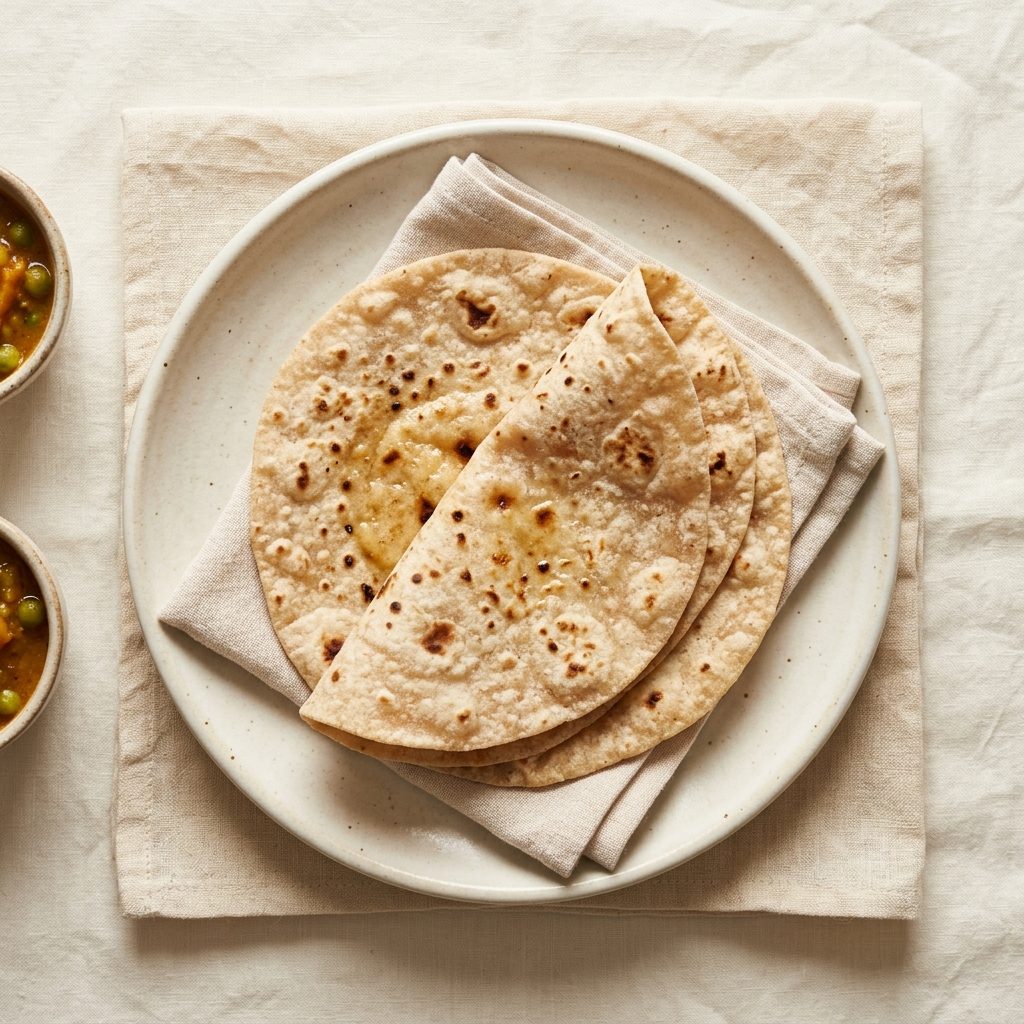
- Wheat. Roti, chapati, paratha, naan, kulcha, bhatura.
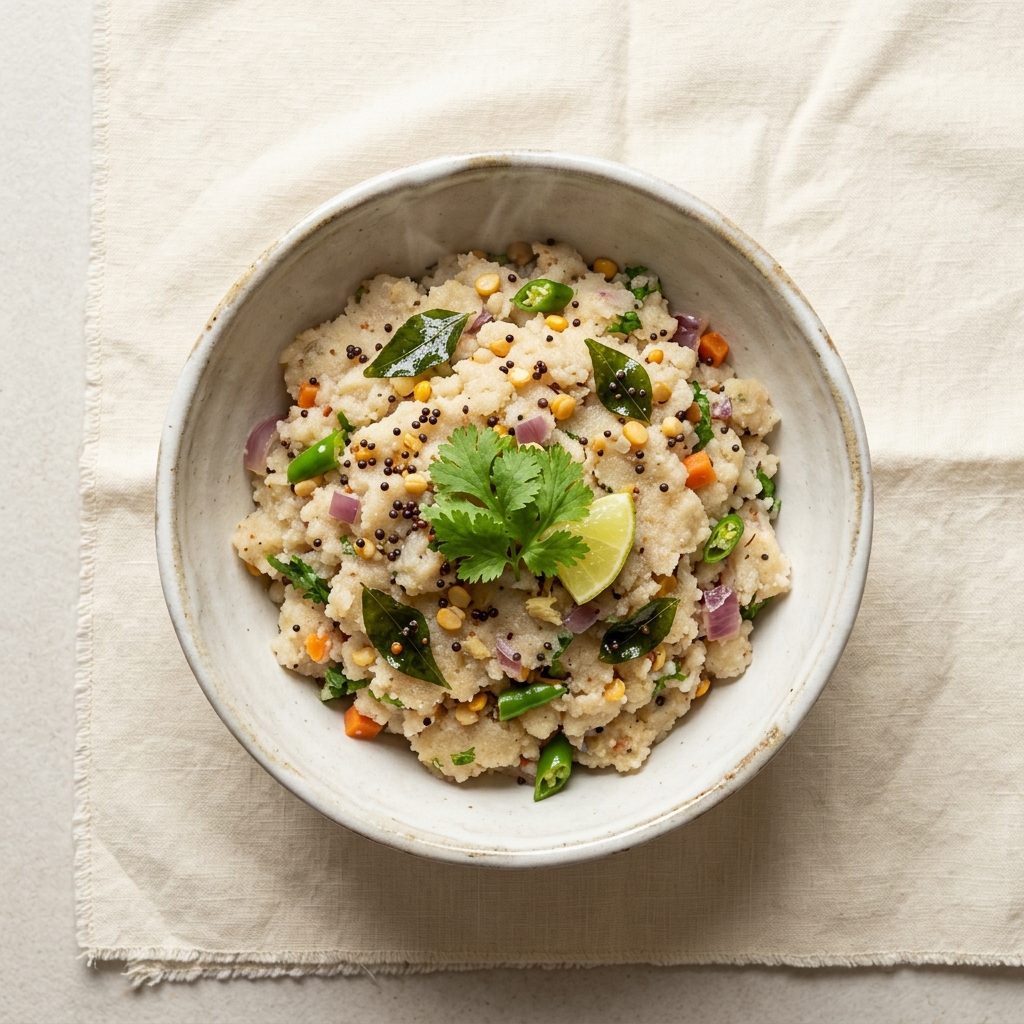
- Flattened and refined grains. Poha, upma, sewaiyan, maida noodles.
- Potato. In the sabzi, in the samosa, in the paratha, and often in all three on the same day.
- Sugar-bearing items. Sweets, chai with sugar, packaged juice, sweetened curd.
Notice what is not on the list. Dal, rajma and chana carry carbohydrate but arrive with protein and fibre attached, which changes how the meal behaves entirely.
Carbs are not the reason weight changes
Weight moves with total energy balance. Cut carbohydrate and lose weight, and the reason is that you ate fewer calories, not that a macro was removed.
This is worth stating plainly because a lot of people spend years fighting rice while the actual variable in their log is cooking fat. Two extra spoons of ghee across a day is roughly 240 calories, which is more than a full katori of rice. The ghee and oil article covers why that is the number most home logs get wrong.
Carbohydrate deserves attention for a different reason. It is the macro that is easiest to eat absent-mindedly. Nobody accidentally eats an extra 200 grams of paneer. Everybody has accidentally taken a third helping of rice.
There is a second reason, and it is about what the carbohydrate is displacing rather than what it contains. Every extra roti on the plate is space that a protein dish did not occupy. When people cut carbohydrate and feel dramatically better, the change that actually helped is usually the protein and fibre that moved in to fill the gap, not the absence of the grain.
Roti, rice, poha and upma compared
The honest comparison, with ranges rather than false precision.
| Food | Typical range | What actually varies |
|---|---|---|
| Plain home roti | 80 to 110 calories | Size, atta type, whether ghee was brushed on |
| Tandoori roti with ghee | 130 to 170 calories | The ghee, almost entirely |
| Katori of cooked rice | 100 to 150 calories | How packed the katori is |
| Bowl of poha | 250 to 400 calories | Oil, peanuts, potato |
| Bowl of upma | 250 to 400 calories | Oil, and how much semolina went in |
Two conclusions fall out of this. First, roti and rice are broadly interchangeable at the portion level, and the roti versus rice argument is mostly noise. Roti brings a little more fibre and protein from the wheat, which is a real but modest advantage.
Second, poha and upma are not light breakfasts. They read as light because they are soft and savoury. The oil and the volume put them well above two roti with a sabzi.
More detail on each in roti calories and rice calories in India.
Glycemic load, in plain language
Glycemic index measures how fast a food raises blood sugar, tested on a fixed 50 gram carbohydrate dose. It is a laboratory number and it ignores how much of the food anyone actually eats.
Glycemic load fixes that by accounting for the real portion. Watermelon has a high glycemic index and a low glycemic load, because a slice of watermelon is mostly water.
For everyday eating, three things reduce the load of a meal without any arithmetic:
- Add protein. Curd with your poha, paneer in the sabzi, dal with the rice.
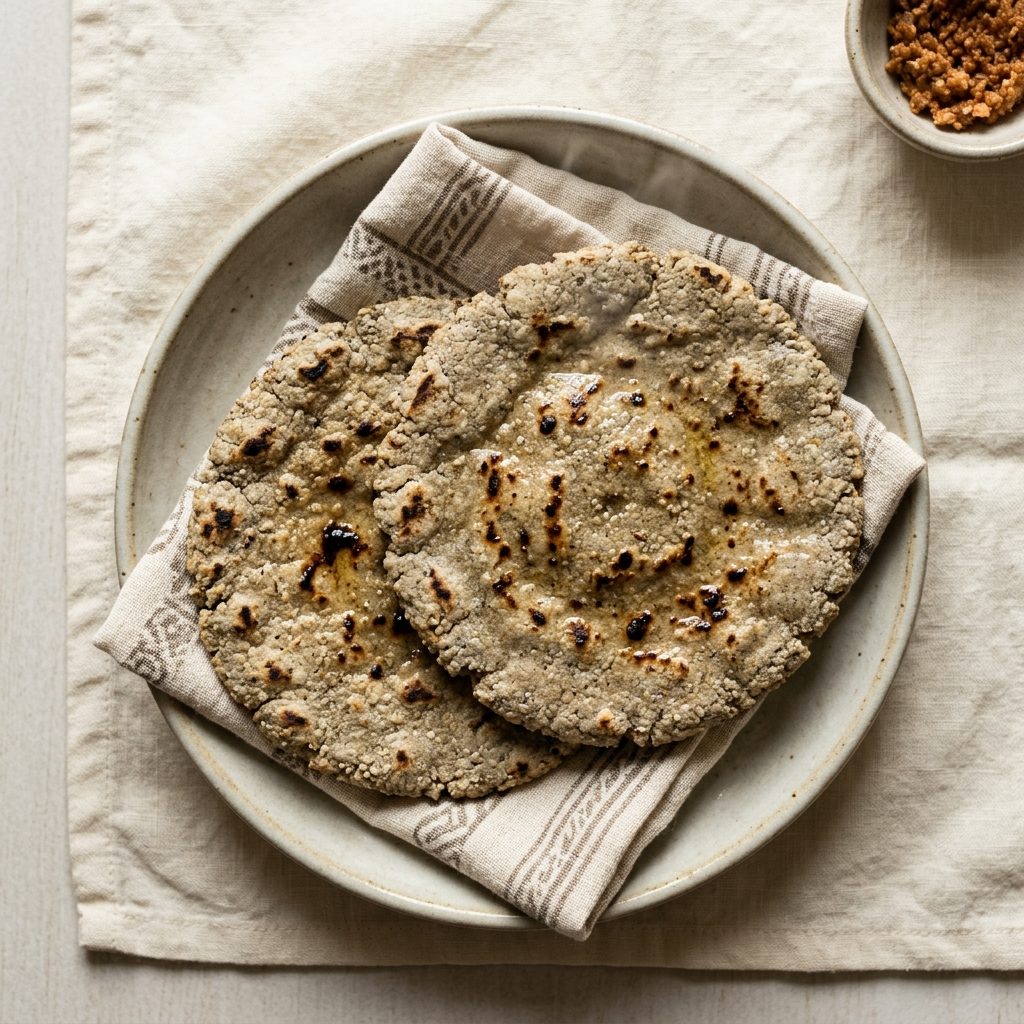
- Add fibre. Whole dals, salad, a bajra roti instead of a maida one.
- Do not eat the carbohydrate alone. A plain plate of rice behaves differently from the same rice with dal and sabzi beside it.
Anyone managing diabetes should be working from a doctor’s plan rather than a general article, since the individual response varies enormously.
Timing carbs around training
This is the one place where carbohydrate timing genuinely earns its keep.
Carbohydrate before a session gives you fuel to train harder. Carbohydrate after a session refills what you burned. If you lift or run seriously, put a meaningful share of your day’s carbohydrate on either side of that window and you will feel the difference within a fortnight.
Outside training, timing barely matters. Rice at 9 pm does not behave differently from rice at 1 pm. What matters is the total, and whether the timing you choose lets you sleep and eat consistently. Pre and post workout meals get a full treatment in pre and post workout meals in India.
Low-carb Indian eating, and whether you need it
It is entirely possible. Paneer, eggs if you eat them, all the sabzi you want, dals in moderation, curd, and cauliflower doing an unconvincing impression of rice.
Some people genuinely feel better on it. Appetite drops, energy steadies, and the simplicity suits them.
But for most people it solves a problem they do not have, at a cost they underestimate. Indian social eating is built on shared grain. A diet you cannot follow at a wedding, at your parents’ house, or in the office canteen is a diet with a countdown attached.
The far more common winning move is not fewer carbs. It is more protein and a clearer view of the cooking oil.
If you eat two rotis with every meal
Here is the practical answer, since this is the actual question most people are asking.
Keep them.
Two roti at each of three meals is roughly 500 to 650 calories across the day from wheat. That is a reasonable carbohydrate base for almost anyone who is not sedentary, and it comes with fibre and a useful amount of protein attached.
If your calorie total needs to come down, take it from the places that give up calories most cheaply: the cooking fat, the chai sugar, the evening namkeen, the third helping of rice you were not really tasting. Those changes cost you very little enjoyment.
The roti was never the problem. It just happened to be the most visible thing on the plate.
Calorie figures on this page are typical ranges, not lab values. Indian recipes vary enormously between kitchens, so a number that is right for one house is wrong for the next. Sehat keeps a confidence level and a source note on every entry rather than pretending a single figure is the truth. This is general information, not medical advice.
Common questions
How many carbs should an Indian person eat per day?
Most people do well with roughly 40 to 50 percent of their daily calories from carbohydrate. On a 2,000 calorie day that is about 200 to 250 grams. Someone training hard benefits from more, someone with a sedentary desk job often feels better slightly lower. Total calories still decide weight change, not the carb figure.
Is roti or rice better for weight loss?
Neither is better. A plain roti is typically 80 to 110 calories and a katori of cooked rice usually lands in a similar range, so they are broadly interchangeable at the portion level. Roti brings more fibre and protein from the wheat. Rice is easier to overserve because it is spooned rather than counted.
Are carbs bad for you?
No. Carbohydrate is the body's fastest fuel source and there is no mechanism by which eating it causes weight gain independent of total calories. What causes trouble is calorie surplus, and carb-dense foods are easy to eat in quantity. Cutting carbs works for some people because it reduces total intake, not because carbs are harmful.
Is poha or upma healthier?
They are close. Poha is flattened rice, upma is semolina from wheat, and both are carbohydrate-forward breakfasts that carry little protein on their own. Upma brings marginally more protein from the wheat. The bigger variable in both is the oil used and whether anything protein-rich was added, such as peanuts, curd or egg.
Can I eat rice at night and still lose weight?
Yes. Meal timing has no meaningful independent effect on fat loss. What matters is your total intake across the day and across the week. If rice at dinner fits your calories and helps you sleep and eat consistently, it is a good choice. The rule about avoiding rice at night has no strong evidence behind it.
Dishes mentioned
In the app
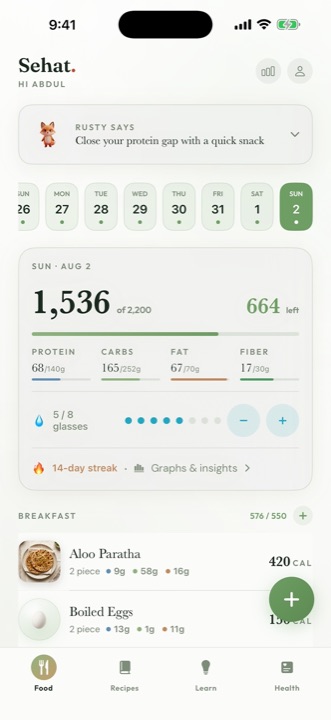
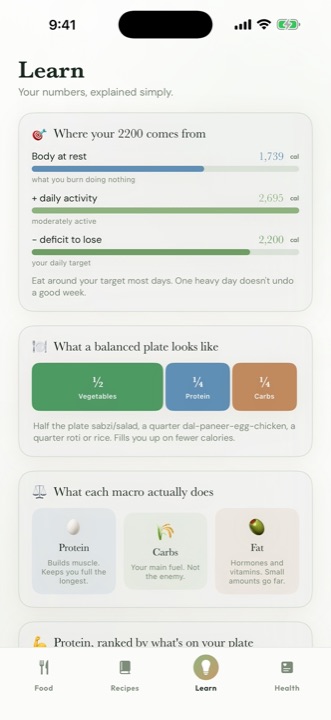
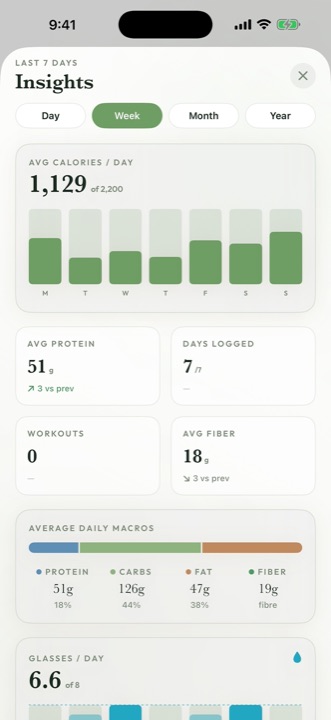
All of this, without the arithmetic.
The world's most complete Indian calorie counter.
Over 10,000 foods and spellings.
Log dal, roti and biryani by voice, in Hinglish, in the portions your kitchen actually uses. An AI coach reads your day and guides you. No coaches. No calls. No spam.
Download free on the App StoreAndroid is on the way.
Calorie tracking
How many calories are in a roti?
A plain home roti runs 80 to 110 calories. Why the range is wide, how atta and size change it, and how phulka, tandoori roti and laccha paratha compare.
Calorie tracking
How many calories are in a katori of rice?
One katori of plain steamed rice is usually 130 to 200 calories. Why cooked and uncooked weight confuses everyone, and where pulao and biryani get heavier.
Macros
Macros explained, for people who eat Indian food
Protein, carbs, fat and fibre, explained against a real Indian plate. Why the thali runs carb-heavy, a sane starting split, and how to fix the protein gap.