Ghee, oil and fat in Indian cooking
The short answer
Fat carries 9 calories per gram, more than double protein or carbohydrate, which makes cooking oil the largest hidden variable in a home-cooked food log. Ghee is neither harmful nor a health food. Estimate the oil that goes into your regular dishes once, divide by servings, and reuse that figure.
Key takeaways
- Fat carries 9 calories per gram, so a tablespoon of any cooking oil or ghee is roughly 120 calories regardless of which one you choose.
- Ghee is around 60 percent saturated fat and carries no meaningful advantage or disadvantage over other cooking fats at normal household quantities.
- Most Indian home dishes carry somewhere between half a teaspoon and one and a half teaspoons of cooking fat per serving.
- Restaurant and dhaba gravies routinely carry two to four times the cooking fat of the same dish made at home.
- Estimating your per-serving cooking fat once and reusing it removes the single largest source of error from a home-cooked log.
Ask anyone why their calorie log is not matching their scale and they will blame the rice. It is almost never the rice.
Fat carries 9 calories per gram, more than double what protein or carbohydrate carry. That single number makes cooking oil the largest hidden variable in any home-cooked log, and the one nobody can see once the dish is on the table.
Nothing here says use less. It says know how much, because you cannot log what you have not looked at.
Why cooking fat breaks a home log
The arithmetic is unforgiving. A tablespoon of any cooking fat is roughly 120 calories. A generous tadka can carry two of them.
Now consider what that does across a month. Two extra spoons of ghee a day is about 240 calories. Over thirty days that is more than 7,000 calories of difference, which is the whole gap between a working deficit and a plateau.
Meanwhile the dish looks identical. Same dal tadka, same katori, same colour. The fat is invisible once it is in the pot, which is why estimating it properly is not optional if you cook at home.
This is the most common failure in Indian food tracking, and it sits alongside a few others in calorie tracking mistakes in India.
Where ghee actually sits
Ghee has been through two decades of whiplash. First it was the reason Indians had heart disease. Then it became a superfood sold in glass jars at four times the price.
Both are marketing.
Ghee is clarified butter fat. It is roughly 60 percent saturated fat, carries about 120 calories per tablespoon, contains small amounts of vitamins A, D, E and K, and has a high smoke point that makes it genuinely good for Indian cooking. The lactose and casein are mostly removed in clarification, which is why some people who react to butter tolerate ghee.
There is no property of ghee that burns fat, boosts metabolism, or makes the calories not count. There is also nothing in it that makes a spoon in your dal a problem.
Use it because it tastes right in the dish. Log it because it is 120 calories a spoon. Both things are true at once.
If you are managing cholesterol, heart disease or any lipid condition, your saturated fat intake is a conversation for your doctor, not for a nutrition article.
Mustard, groundnut, coconut, refined
Cooking oils differ on fatty acid profile, smoke point and flavour. On calories they are identical. Every pure fat sits at roughly 9 calories per gram.
| Oil | Character | Where it works |
|---|---|---|
| Mustard | Pungent, high smoke point, high monounsaturated | North and East Indian cooking, pickles, fish |
| Groundnut | Neutral, high smoke point | Frying, everyday sabzi, South and West Indian dishes |
| Coconut | Highly saturated, distinct flavour | Kerala and coastal cooking where the flavour belongs |
| Sesame, gingelly | Nutty, moderate smoke point | Tamil cooking, tempering, rice dishes |
| Refined seed oils | Neutral, cheap, high smoke point | General purpose frying |
| Ghee | Rich, very high smoke point, mostly saturated | Tadka, parathas, rice dishes, sweets |
The sensible position is to rotate between two or three that suit what you cook, rather than hunting for one perfect oil. The quantity you use matters considerably more than which bottle it came from.
One thing worth avoiding is repeatedly reusing the same oil for deep frying, which degrades it. That is a food quality point rather than a calorie point.
How much fat a home dish actually carries
Real household numbers, as ranges, because every kitchen is different.
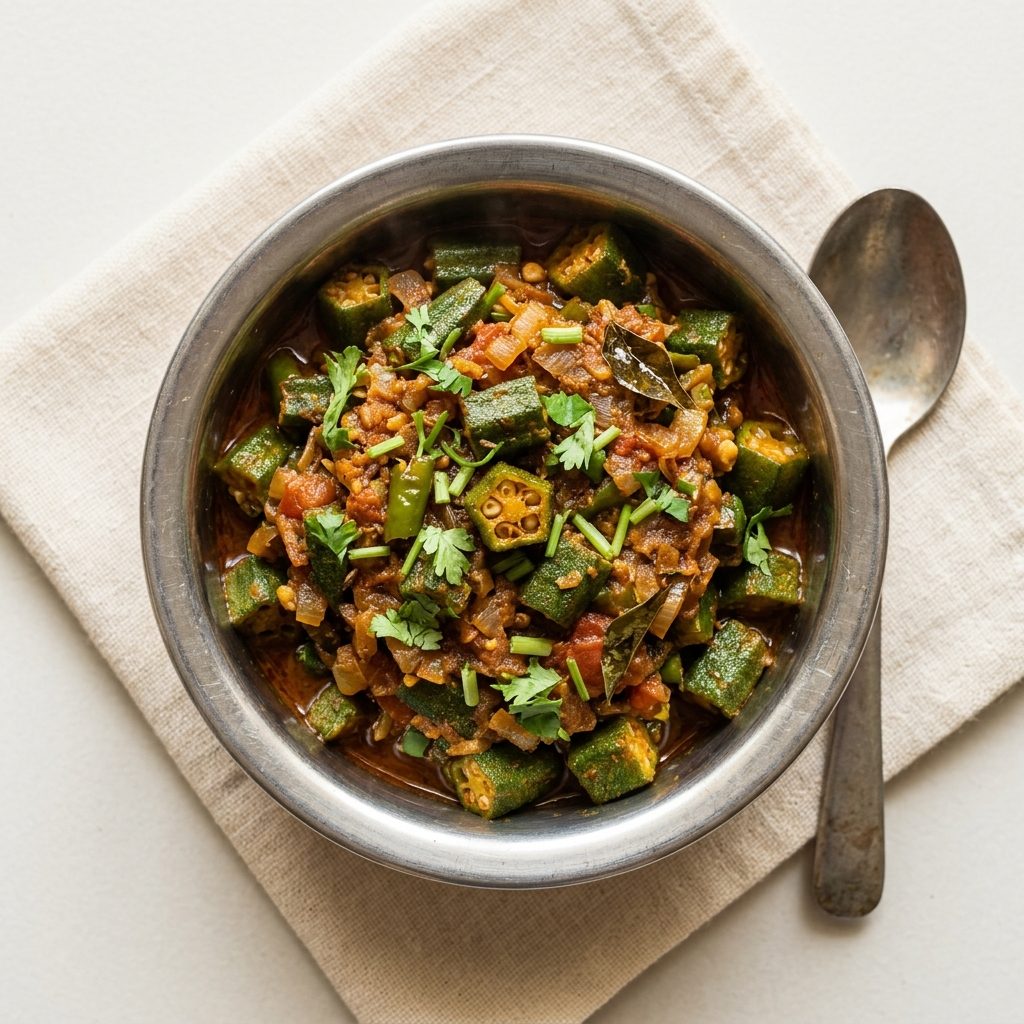
- Dry sabzi, such as bhindi masala or jeera aloo: roughly half to one teaspoon of oil per serving, about 20 to 40 calories.
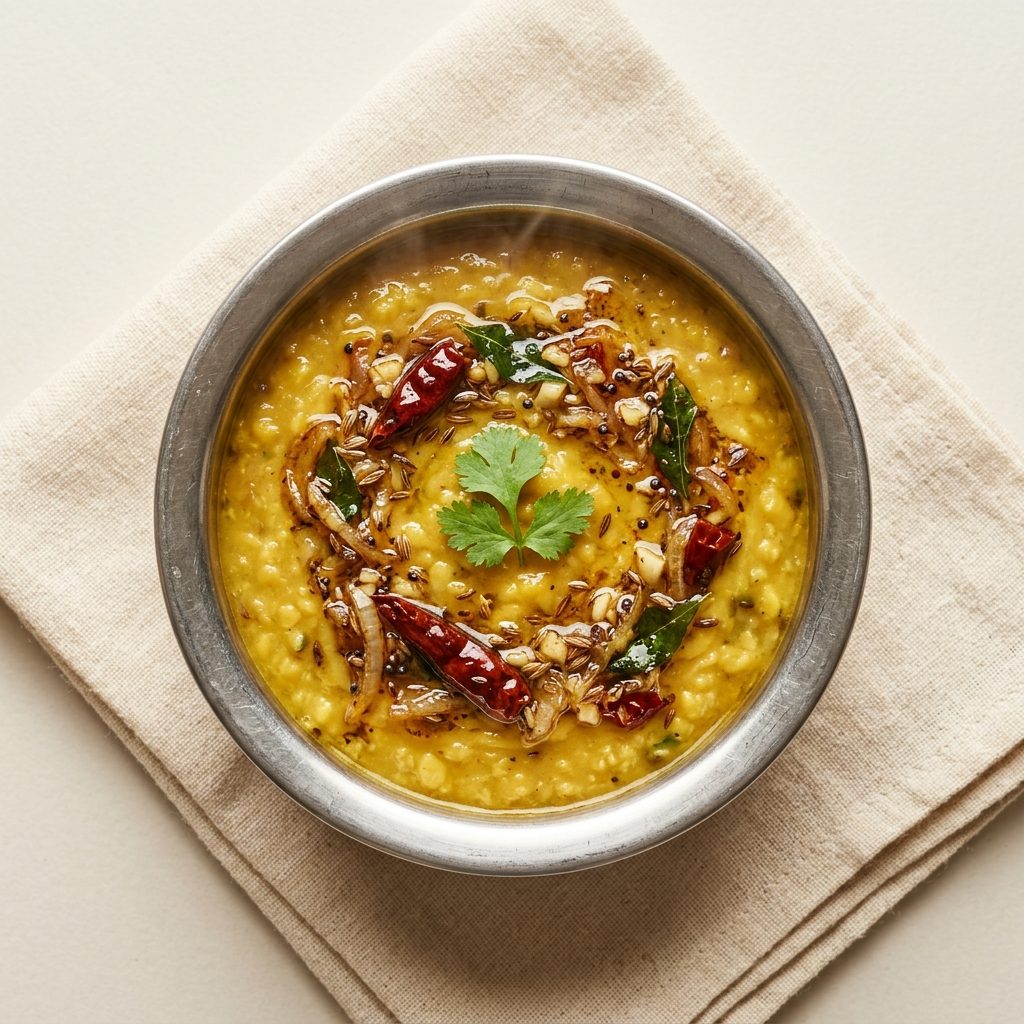
- Dal with a tadka: half to one teaspoon per serving, more if the tadka is ghee-forward.
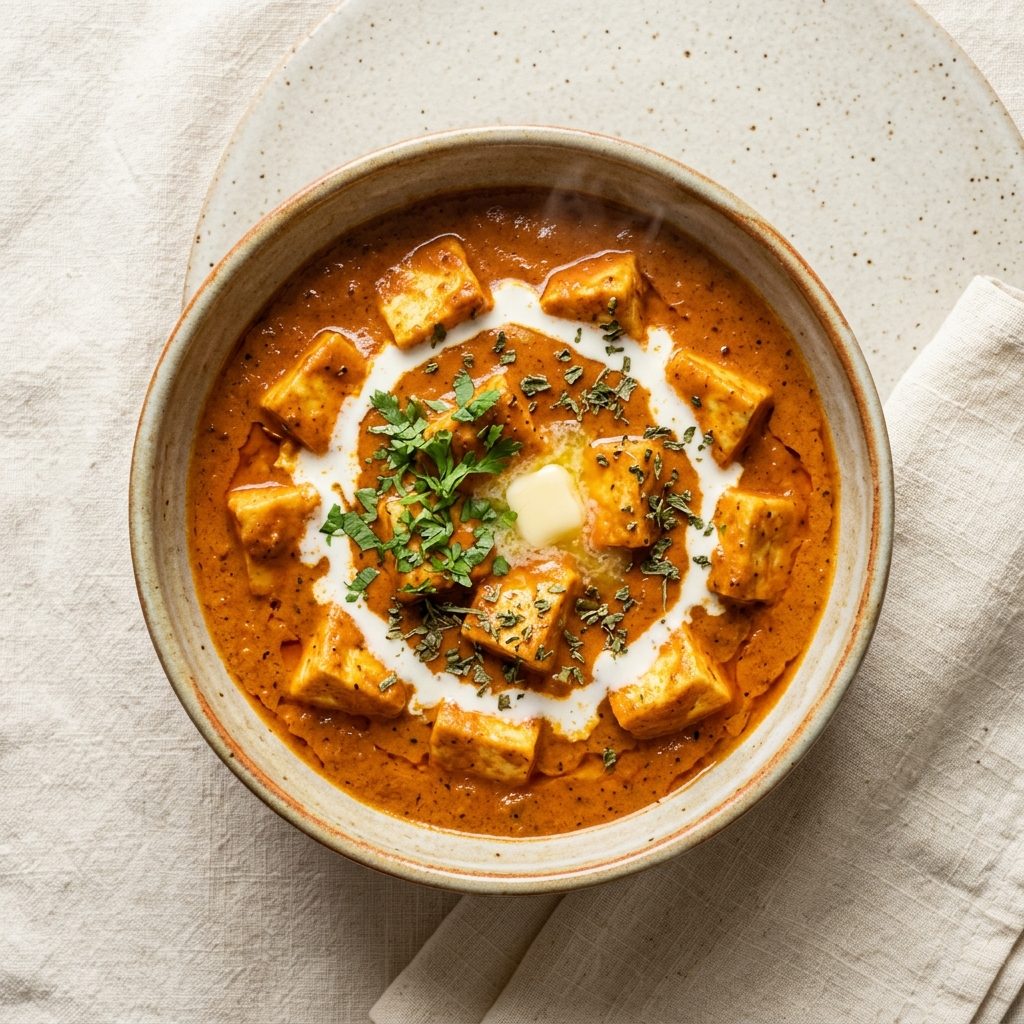
- Rich gravy at home, like paneer butter masala: one to two teaspoons per serving, plus whatever cream went in.
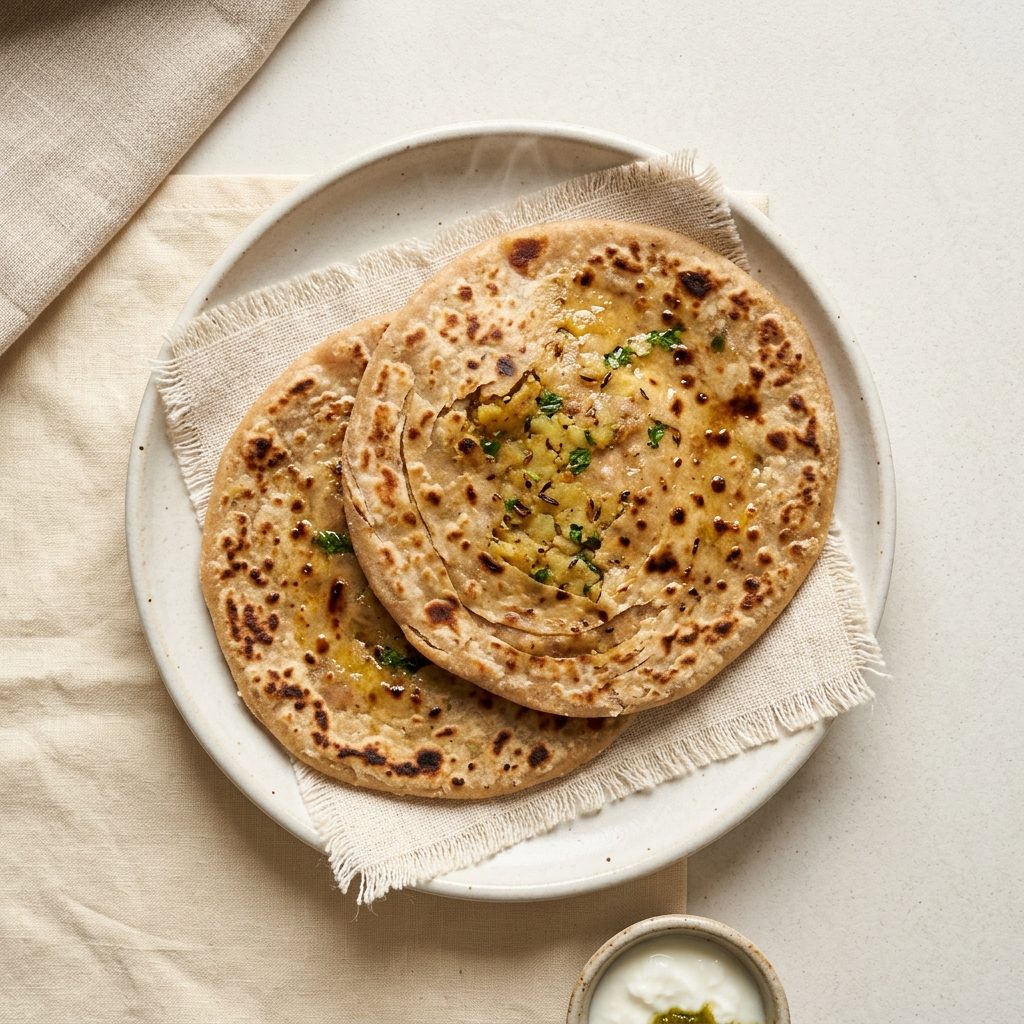
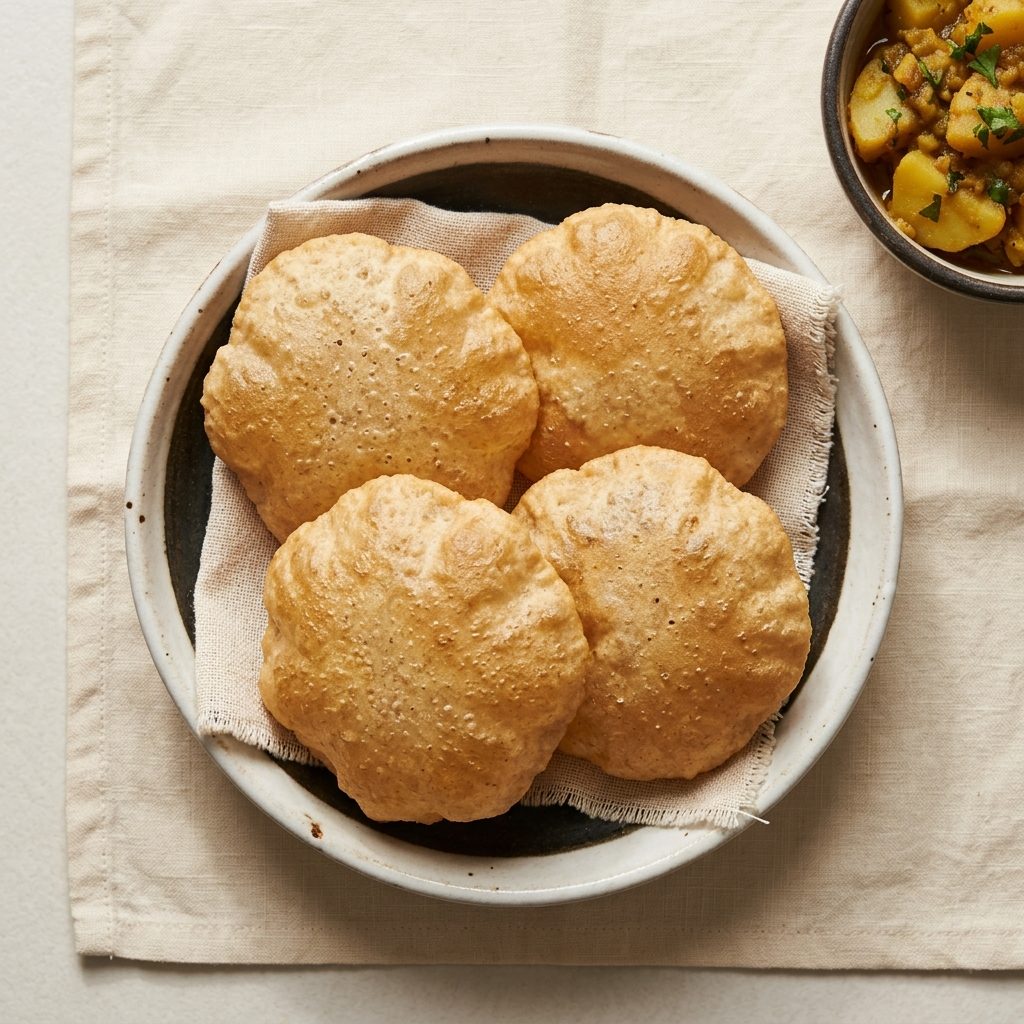
- Paratha: roughly one to two teaspoons of ghee or oil per piece, which is often more than the atta contributes.
- Deep fried, like puri or pakora: absorption varies enormously with oil temperature, but this is where the numbers get genuinely large.
Across a normal home-cooked day, cooking fat usually adds somewhere between 150 and 400 calories. That is a wide range, and the width of it is exactly why guessing badly costs you.
Why eating out reads so differently
A restaurant gravy is a different construction from a home gravy.
The base is often cooked in several tablespoons of oil per portion, finished with cream, and topped with butter for shine and mouthfeel. A dhaba dal is not your dal with more salt. It is your dal with three times the fat.
The spices are the same. The protein is roughly the same. The fat is the entire difference, and it is why the same dish name can swing by hundreds of calories depending on the kitchen.
This is not an argument against eating out. It is an argument for logging restaurant food as a distinct entry from the home version, which is covered properly in eating out and tracking Indian food.
The estimate-once method
You do not need to measure oil at every meal. You need to measure it once, per dish, and then never think about it again.
- Watch one cooking session. Next time your regular sabzi goes on, note what actually goes into the pan. Not what you think goes in. What goes in.
- Count the servings that pot produces. Four katori, six katori, whatever it is.
- Divide. That is your standing per-serving cooking fat for that dish.
- Save it. Log the dish once with that fat figure attached and reuse the saved entry forever.
- Redo it when the recipe changes, and only then.
Ten minutes of attention, once, and the biggest error in your log stops being an error.
The same principle applies to household oil consumption at the level of the whole kitchen. If you know how long a litre of oil lasts your family and how many people it feeds, you have a reasonable per-person daily figure without measuring anything at all.
The point of all this
None of this is an instruction to cook drier food. Indian cooking without fat is not Indian cooking, and a joyless plate is a plate you stop eating.
The point is that fat is the one macro where a small physical quantity carries a large calorie consequence. Everything else on your plate is roughly the size it looks. Fat is not.
Look at the pan once. Write down the number. Then go back to cooking the way you cook.
Calorie figures on this page are typical ranges, not lab values. Indian recipes vary enormously between kitchens, so a number that is right for one house is wrong for the next. Sehat keeps a confidence level and a source note on every entry rather than pretending a single figure is the truth. This is general information, not medical advice.
Common questions
Is ghee healthy?
Ghee is a normal cooking fat, neither a health food nor something to avoid. It is around 60 percent saturated fat and carries roughly 120 calories per tablespoon, the same as any oil. Used in ordinary household quantities it fits most diets comfortably. Anyone managing cholesterol or heart disease should take fat guidance from their doctor.
How many calories are in a tablespoon of ghee or oil?
Roughly 120 calories. All pure cooking fats sit close to 9 calories per gram, and a tablespoon holds about 13 to 14 grams. Ghee, mustard oil, groundnut oil, coconut oil and refined oils are effectively identical on calories. They differ on fatty acid profile, smoke point and flavour, not on energy.
Which oil is best for Indian cooking?
There is no single best oil. Mustard oil suits high heat and North and East Indian cooking, groundnut oil is neutral with a high smoke point, and coconut oil suits South Indian dishes where its flavour belongs. Rotating between two or three covers a reasonable range of fatty acids. Total quantity matters far more than the choice.
How much oil is in a typical Indian home-cooked dish?
Usually between half a teaspoon and one and a half teaspoons of fat per serving, which is roughly 20 to 60 calories. A dry sabzi sits at the lower end, a rich gravy or anything with a heavy tadka at the upper end. Deep-fried items and restaurant gravies run substantially higher.
Why is restaurant food so much higher in calories than the same dish at home?
Cooking fat, almost entirely. A restaurant gravy is built on a base that may carry several tablespoons of oil or butter per portion, plus cream and finishing butter that home cooking rarely uses. The spices and the protein are broadly the same. The fat is where the difference lives.
Dishes mentioned
In the app
All of this, without the arithmetic.
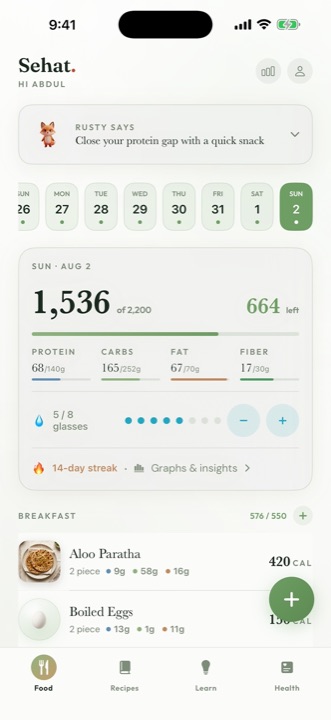
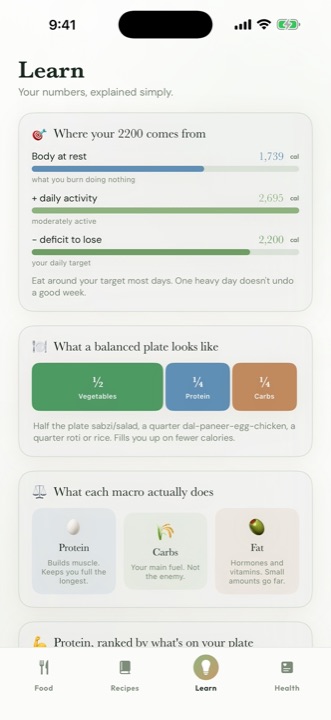
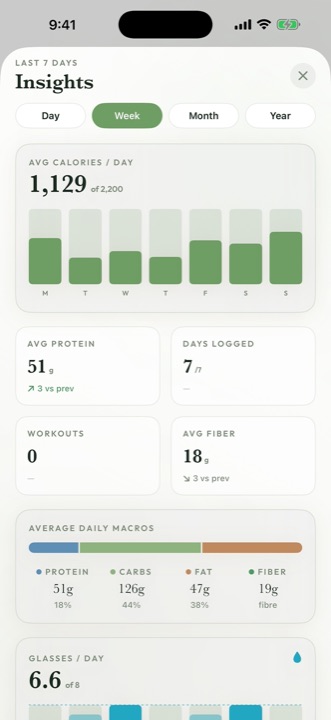
The world's most complete Indian calorie counter.
Over 10,000 foods and spellings.
Log dal, roti and biryani by voice, in Hinglish, in the portions your kitchen actually uses. An AI coach reads your day and guides you. No coaches. No calls. No spam.
Download free on the App StoreAndroid is on the way.
Calorie tracking
How to count calories in Indian food
A practical method for tracking dal, roti, sabzi and biryani without weighing anything. Portions, honest ranges, and the four habits that make a log actually stick.
Macros
Macros explained, for people who eat Indian food
Protein, carbs, fat and fibre, explained against a real Indian plate. Why the thali runs carb-heavy, a sane starting split, and how to fix the protein gap.
Calorie tracking
Seven calorie tracking mistakes that quietly ruin an Indian food log
Untracked ghee, four cups of chai, a generic dal entry and invisible weekends. The seven errors that make an Indian calorie log wrong, and the fix for each.