How to track what you eat at a restaurant
The short answer
Restaurant Indian food carries far more oil, butter, cream and cashew paste than the same dish cooked at home, often one and a half to two times the calories. Log an estimate rather than nothing, lean on tandoori and dry preparations over rich gravies, and use published figures wherever a chain provides them.
Key takeaways
- The same dish cooked in a restaurant typically runs one and a half to two times a home version, because of the fat in the gravy base.
- Restaurant gravies are built on onion, tomato, cashew paste and cream, then finished with butter, and none of that is visible on the plate.
- Tandoori and dry preparations sit far lower than makhani, korma and malai versions of the same protein.
- A restaurant portion of a main is usually two katori worth, and a shared bowl serves two to three people.
- Chain restaurants that publish their own nutrition give you a real number, which beats any estimate you or an app can make.
- An estimate logged is worth more than a perfect entry skipped. Gaps in a log distort the trend more than rough numbers do.
You cook dal at home and log a katori. You order the same dal at a restaurant and log a katori. Then you wonder why the week did not add up.
The dish had the same name both times. It was not the same food.
Restaurant Indian cooking is a different craft with different economics, and the gap shows up almost entirely in the fat. Once you know roughly how big that gap is, eating out stops being a hole in your log.
Why restaurant food reads so differently
Restaurant food is engineered to taste unmissable on the first bite, and fat is how that is done.
A commercial kitchen has no reason to be restrained with oil. Fat carries flavour, gives gravies their sheen, keeps food glossy under a heat lamp, and makes a dish taste rich enough to justify the price. Nobody at the table sees how much went into the pan.
As a working assumption, a restaurant version of a home dish runs one and a half to two times what your kitchen produces. A home dal makhani simmered with a spoon of butter and a restaurant one finished with cream and a floating knob of butter are not in the same range at all.
What actually goes into a restaurant gravy
Most north Indian restaurant gravies are built from a small number of prepared bases, and this is where the calories live.
- Onion and tomato masala, cooked down in a lot of oil, often held in bulk and portioned out per order.
- Cashew paste, which is what gives korma, malai and shahi gravies their body. Cashews are around 550 to 600 calories per 100 g, and a rich gravy can hold a serious quantity.
- Cream and khoya, added at the end for texture.
- A butter finish, a spoon stirred in or dropped on top just before it leaves the kitchen.
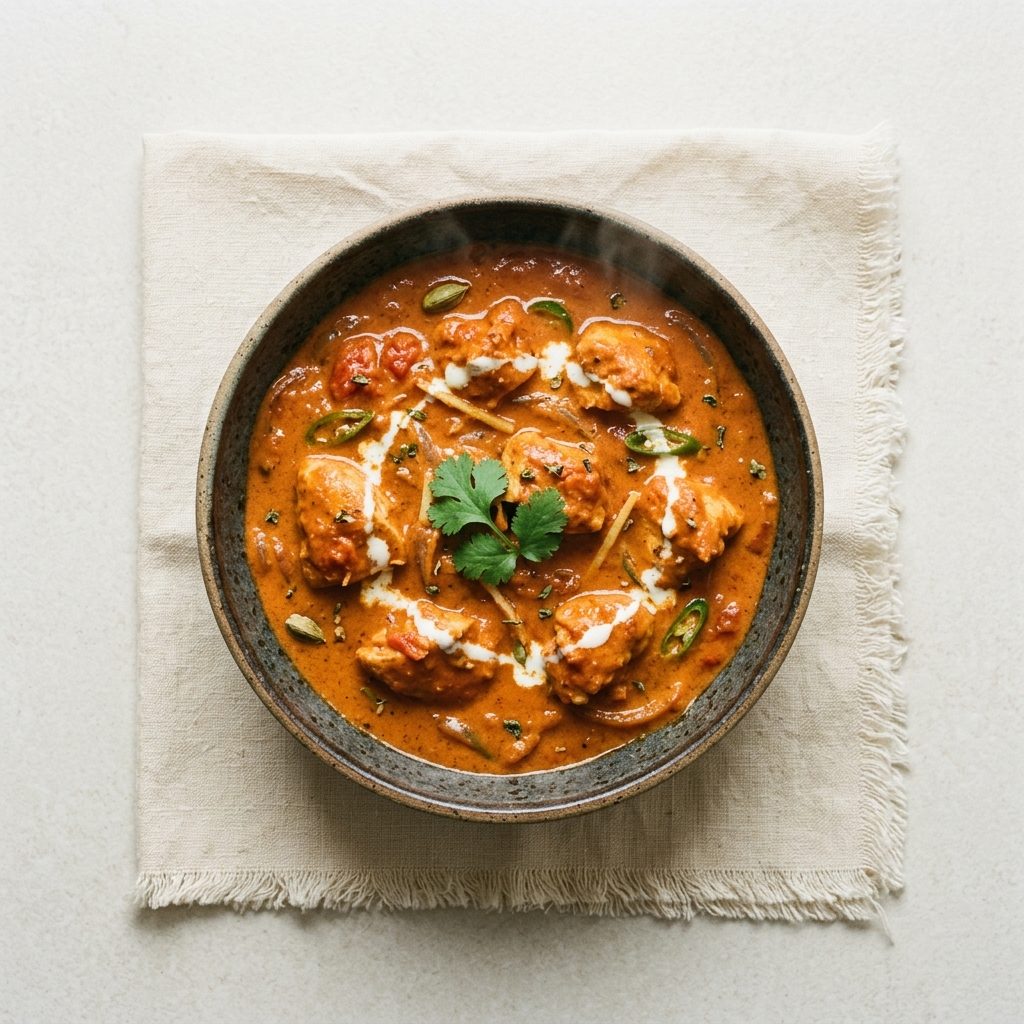
None of that is visible when the bowl reaches you. A butter chicken looks like chicken in an orange sauce. The sauce is most of the meal.
This is also why the range on a restaurant dish is so wide. Two kitchens making the same named dish can differ by hundreds of calories a portion, and neither is doing anything unusual. Anyone quoting you one exact figure for restaurant butter chicken is quoting one kitchen’s recipe and calling it a fact.
The ordering decisions that move the number most
You do not need a rule for every dish. Four decisions carry almost all of the difference.
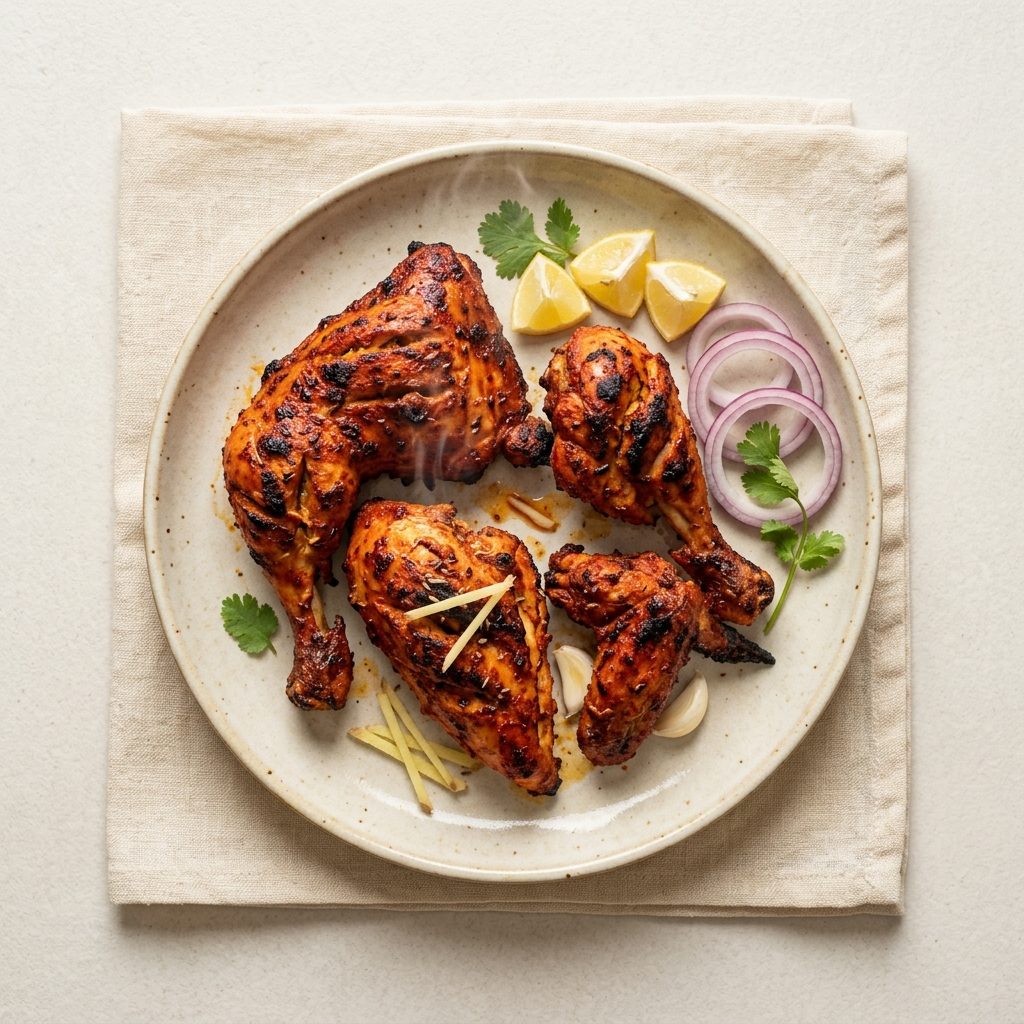
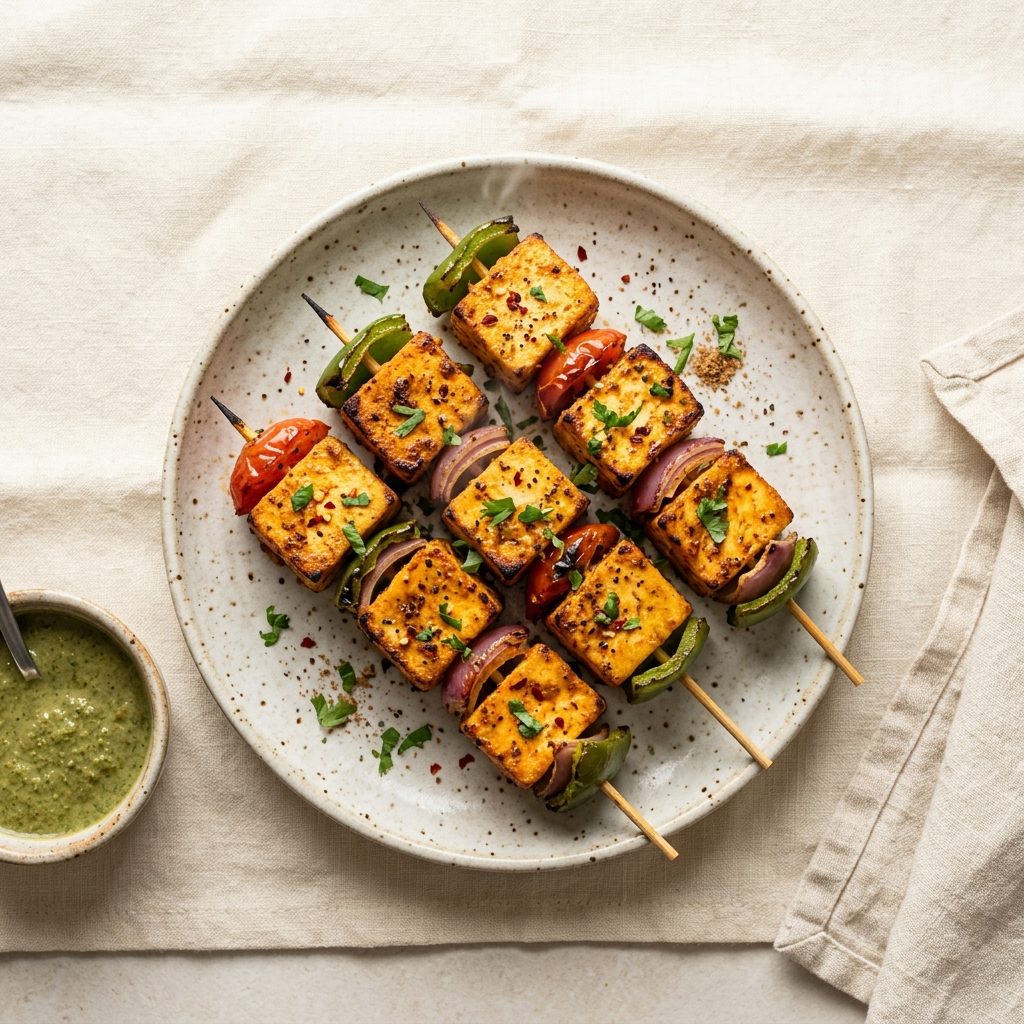
Tandoori and grilled over gravy. Tandoori chicken, seekh kebab, paneer tikka and fish tikka are marinated in curd and spice, then cooked dry in high heat. The same protein in a makhani or korma gravy arrives with the entire fat load of that gravy attached.
Dry over makhani, korma and malai. Kadai, bhuna, sukka and jeera preparations use far less cream and cashew than their creamy counterparts. Same kitchen, same protein, different order of magnitude on the sauce.
Watch the rice portion, not the rice. A restaurant serving of jeera rice or biryani is often two to three times a home serving. This is one of the easiest adjustments available: order one rice for the table rather than one each.
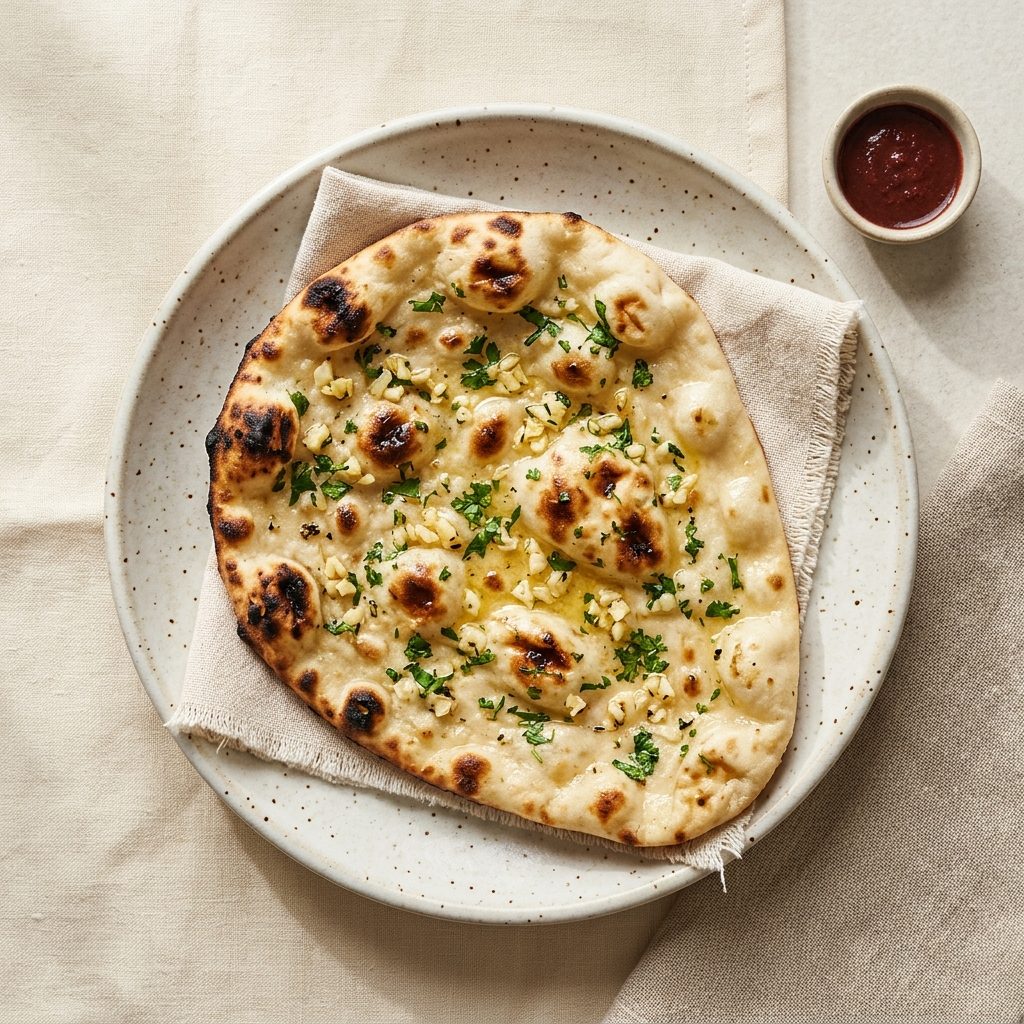
Count the breads honestly. A plain tandoori roti is a modest thing. A garlic naan or a laccha paratha brushed with butter is a different proposition, and four of them across a meal add up quietly. The roti calories guide has the comparison across the whole bread family.
None of this is a list of things to avoid. It is a list of levers, to pull on the days you feel like pulling them.
How to estimate a restaurant portion without making it weird
Nobody is taking a measuring cup to a restaurant. You do not need one.
Use the same household units you already log in, and estimate from what the bowl looks like:
- A restaurant serving of a main, the bowl one person gets, is usually two katori worth, around 300 to 350 g.
- A shared bowl in the middle of the table typically serves two to three people. Note how many ways it went.
- A plate of biryani is one plate, usually 300 to 450 g, and does not need splitting into components.
- Breads and starters are pieces. Count them.
- Drinks are glasses. A sweet lassi or two beers is not a rounding error.
Do the estimate at the table or on the way home, not at midnight. The memory of how many bowls came and how many ways they split is accurate for about an hour and vague by bedtime.
Chains publish their own numbers, and that beats guessing
Chain restaurants standardise. That is the whole business model: the same recipe, the same portion, in every outlet.
That standardisation is why many chains publish nutrition information for their menu, and why those figures are worth more than any estimate. They come from a fixed recipe with measured quantities, not from a chef adjusting the cream by eye. When a published figure exists for the exact item you ordered, use it and move on.
This is worth knowing when you plan. If you are going to eat out on a day you care about, a chain with published numbers gives you certainty that an independent kitchen genuinely cannot. Sehat carries chain items with the brand’s own published nutrition, marked as such, so you can see when a figure is measured rather than estimated.
For everything else, an estimate with a stated range is the honest option, and it is enough.
Weddings, buffets and shaadi season
A wedding dinner cannot be tracked dish by dish. Stop trying.
Count plates instead. Roughly how many plates did you go through, were the mains mostly gravy or mostly tandoori, how many pieces of dessert, how many drinks. Log it as one large estimated meal and let it sit in the week.
Two things help more than any arithmetic. Walking one full lap of the buffet before picking up a plate, so the choices are yours rather than the queue’s. And starting at the tandoori and salad counters, because those tend to sit at the far end and everyone arrives there full.
A shaadi season with fifteen functions is not a tracking problem to be solved. It is a stretch of weeks where your average runs higher, which is a fact to be recorded rather than a failure to be hidden.
Log the estimate, not nothing
Here is the mistake that costs people the most, and it looks like diligence.
You cannot find the exact dish. The portion is uncertain. So you skip the entry, and tell yourself you will be careful tomorrow.
A missing meal does more damage to a log than a rough one. A rough entry is wrong by maybe twenty percent. A skipped entry is wrong by a hundred percent, and it is always wrong in the same direction, on exactly the days that were biggest. Three skipped restaurant meals a month and your log now describes a person who does not exist.
So log something. Log restaurant butter chicken, two katori, and move on. This is the same principle behind most of the other quiet leaks collected in the piece on calorie tracking mistakes.
Eating out fits in a normal life
Nothing here is an argument for staying home.
Restaurants, weddings, office lunches and Sunday dinners with the family are not obstacles to a plan. They are the reason to have a plan that survives contact with a normal Indian calendar. A system that only works when you cook every meal yourself is not a system, it is a holiday from your own life.
Order what you want. Estimate it. Write it down. The weekly average is patient, and it absorbs a good dinner without complaint. Where all of this fits together is covered in the guide to counting calories in Indian food.
Calorie figures on this page are typical ranges, not lab values. Indian recipes vary enormously between kitchens, so a number that is right for one house is wrong for the next. Sehat keeps a confidence level and a source note on every entry rather than pretending a single figure is the truth. This is general information, not medical advice.
Common questions
How many calories are in restaurant butter chicken?
A restaurant serving usually lands somewhere around 400 to 700 calories for a single portion, and the spread is genuinely that wide. The variable is the gravy. Cashew paste, cream and a butter finish differ enormously between kitchens. A home version of the same dish typically sits well below the lower end of that band.
How do I track calories when eating out in India?
Estimate the portion in familiar units, roughly two katori for a shared main, one plate for rice or biryani, and count the breads. Assume more oil and butter than a home kitchen would use. Log it the same day. An approximate entry keeps the weekly trend honest, while a skipped meal does not.
Should I stop eating out if I am tracking calories?
No. Restaurants and social eating are part of a normal life, and a plan that requires avoiding them will not last. Track what you eat, order in a way that suits your goals when you feel like it, and let the weekly average absorb the bigger days. Consistency across weeks is what moves the needle.
How do I handle a buffet or a wedding dinner?
Count plates rather than dishes. Note roughly how many plates you went through, whether the mains were gravy-heavy or tandoori, how many pieces of dessert, and how many drinks. Log it as a large estimated meal. Precision is impossible at a shaadi and it is also not necessary.
Is chain restaurant nutrition data reliable?
It is more reliable than a guess. Chains cook to standardised recipes with measured portions, and where they publish nutrition it is calculated from those recipes. That is not true of an independent kitchen where the chef adjusts the cream by eye. If a published figure exists for what you ordered, use it.
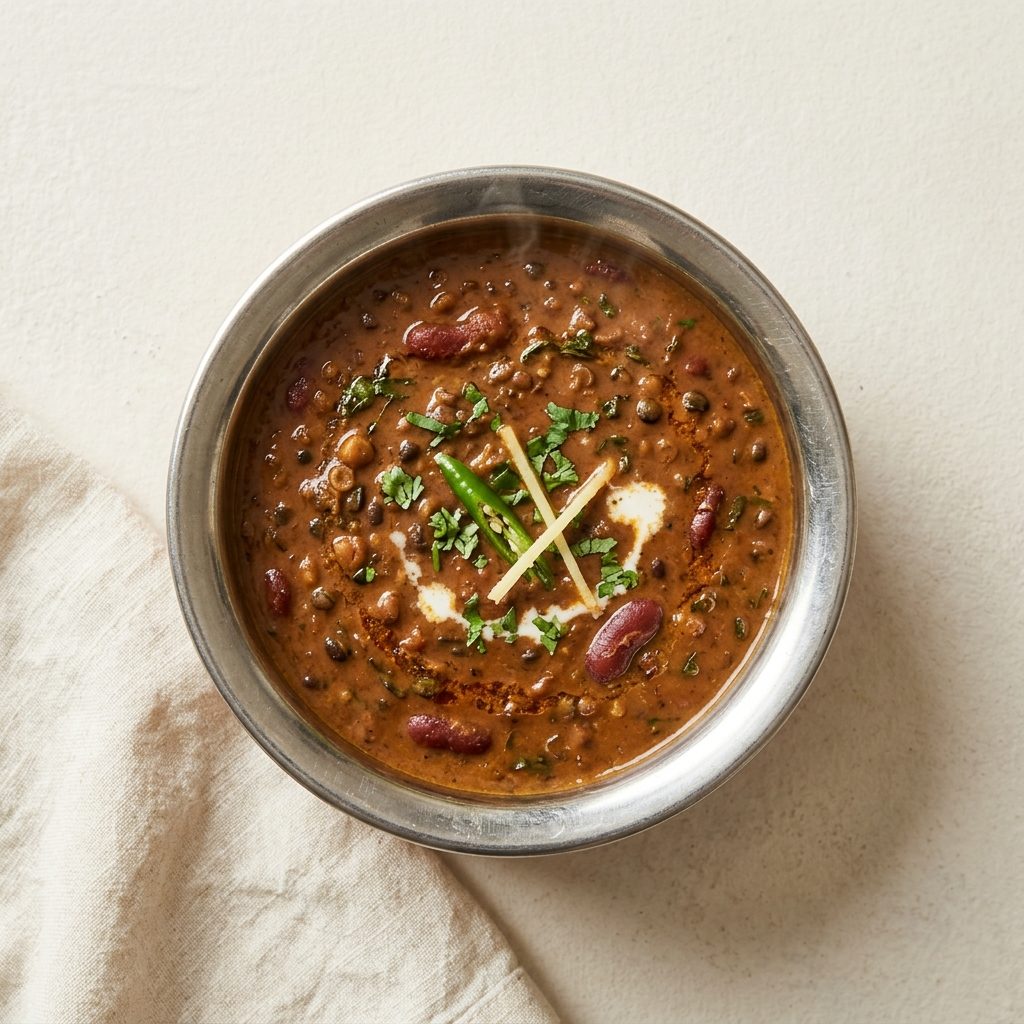
Dishes mentioned
In the app
All of this, without the arithmetic.
The world's most complete Indian calorie counter.
Over 10,000 foods and spellings.
Log dal, roti and biryani by voice, in Hinglish, in the portions your kitchen actually uses. An AI coach reads your day and guides you. No coaches. No calls. No spam.
Download free on the App StoreAndroid is on the way.
Nutrition
Street food calories, and how to fit chaat into a normal week
Honest ranges for samosa, chole bhature, pav bhaji, bhel puri, gol gappe, momos and jalebi, plus a practical way to eat street food without wrecking a week.
Calorie tracking
Seven calorie tracking mistakes that quietly ruin an Indian food log
Untracked ghee, four cups of chai, a generic dal entry and invisible weekends. The seven errors that make an Indian calorie log wrong, and the fix for each.
Calorie tracking
How to count calories in Indian food
A practical method for tracking dal, roti, sabzi and biryani without weighing anything. Portions, honest ranges, and the four habits that make a log actually stick.