Street food calories, and how to fit chaat into a normal week
The short answer
Indian street food ranges from roughly 100 to 180 calories for six gol gappe to 600 to 900 for a plate of chole bhature. The frying oil and the portion drive the number far more than the ingredients. Street food fits into any week when the rest of the week is planned around it rather than in denial of it.
Key takeaways
- Gol gappe and bhel puri are the lightest common chaat, usually 100 to 350 calories a serving.
- Chole bhature is the heaviest of the classics, commonly 600 to 900 calories a plate, because two deep fried bhature carry most of it.
- Deep frying can add 100 to 200 calories per item, and reused vendor oil makes the absorbed amount higher still.
- Nothing on the street is a standard portion, so a range is the honest answer and a single number is not.
- One street food meal a week is roughly 3 to 6 percent of a week's calories. It does not decide anything on its own.
There is a version of nutrition advice that treats chaat as something to be survived rather than eaten. Avoid the samosa. Say no to the jalebi. Have a salad before you go.
It does not work, and it never has. People who follow that advice for a month eat two months of street food in a weekend and then decide the whole project was not for them.
So here is the other approach. Real numbers, honestly hedged, and a way to fit street food into an ordinary week without pretending it does not exist.
Honest ranges for the classics
Every number below is a range, and the range is wide because street food is the least standardised food in India. No two vendors make the same size samosa, and the same stall varies through the day.
| Dish | Typical serving | Rough calories |
|---|---|---|
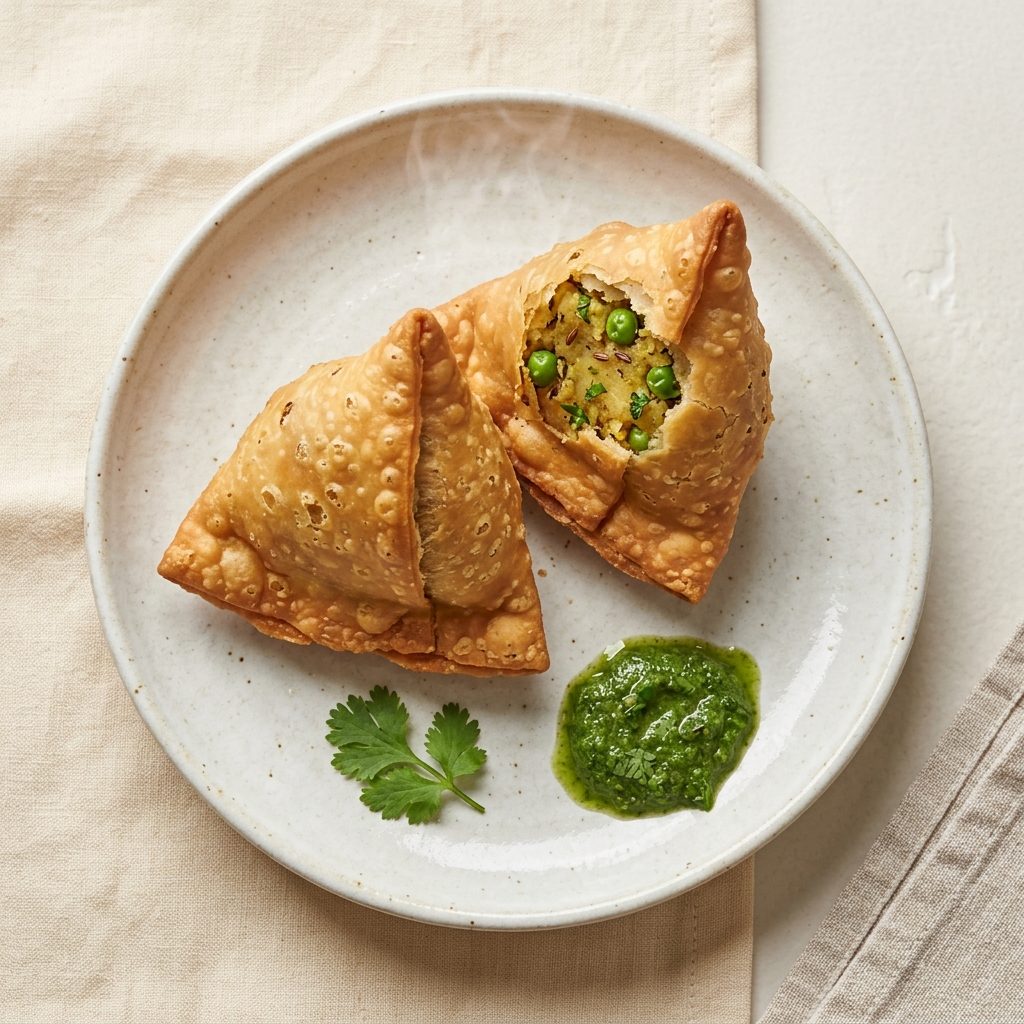
| Samosa | one medium | 150 to 250 |
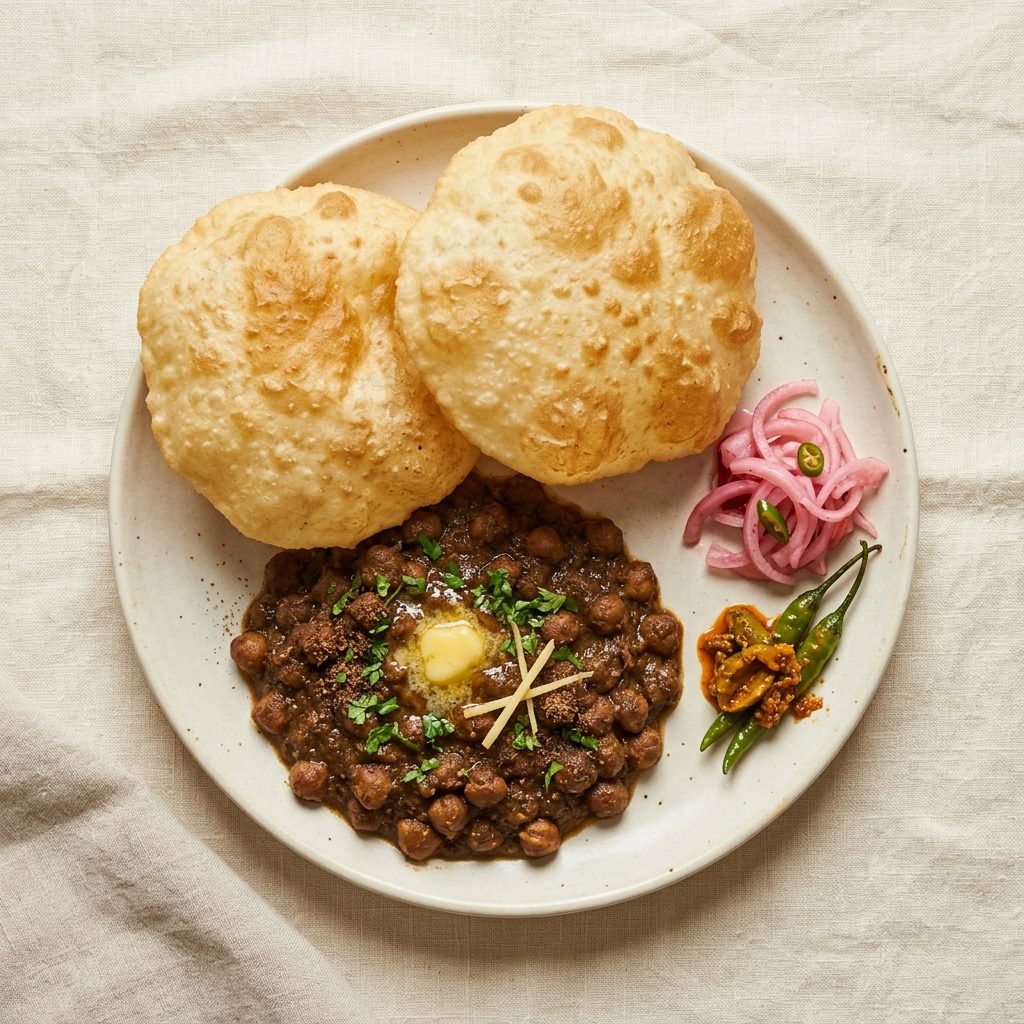
| Chole bhature | one plate, two bhature | 600 to 900 |
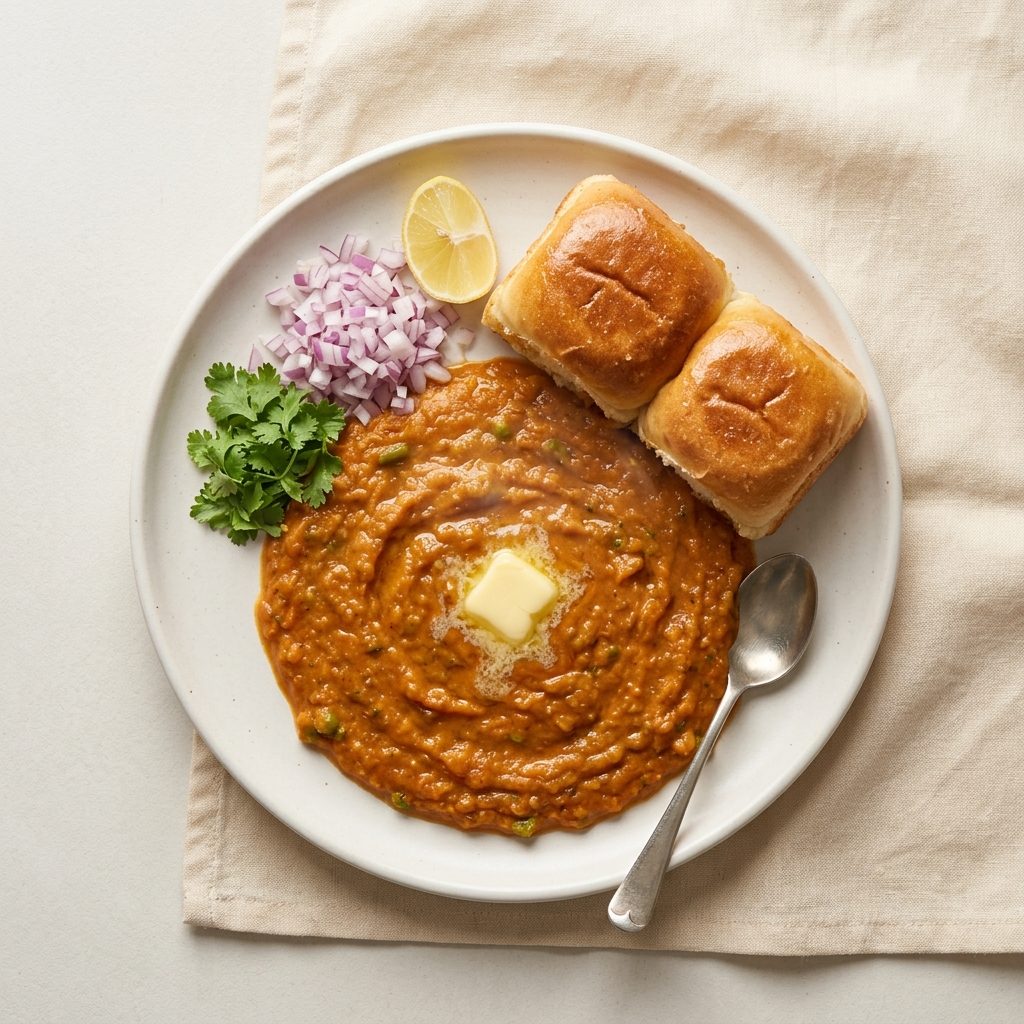
| Pav bhaji | two pav with bhaji | 400 to 650 |
| Vada pav | one | 250 to 350 |
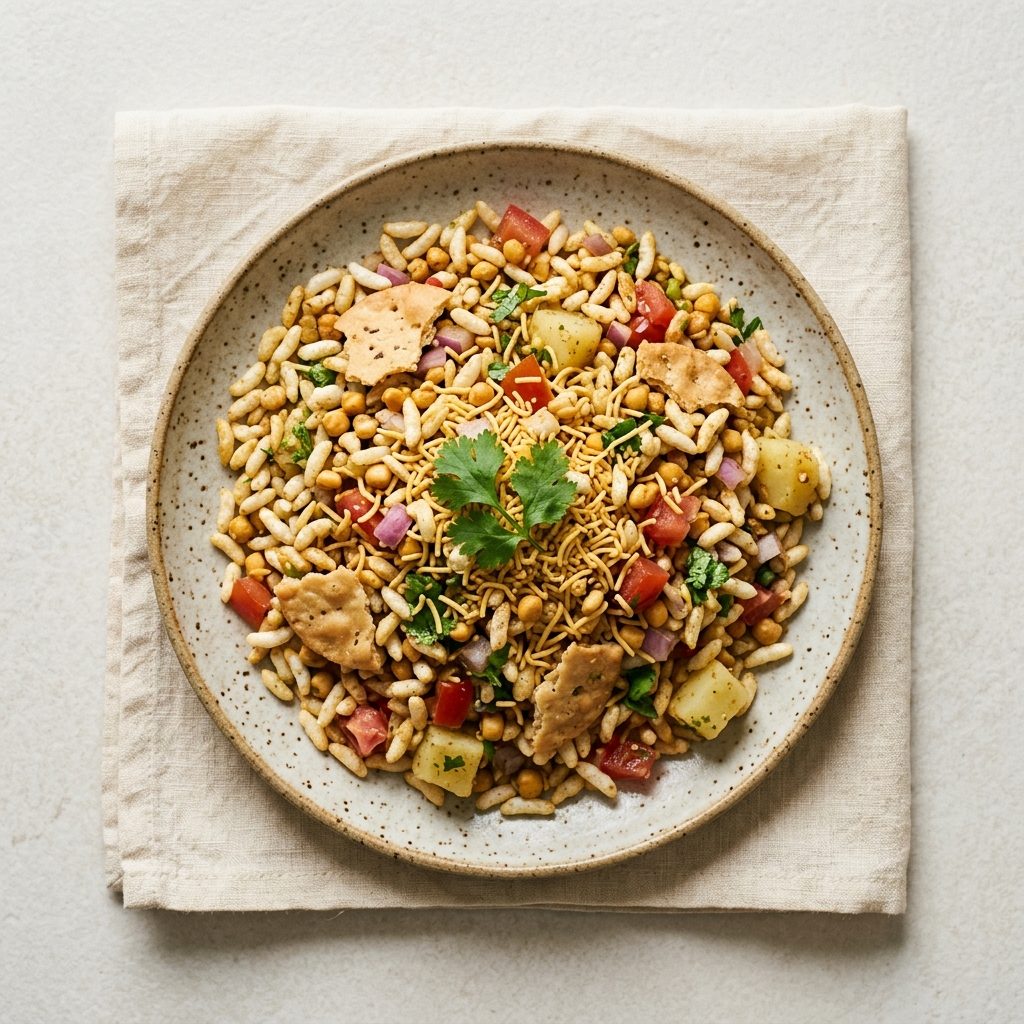
| Bhel puri | one plate | 200 to 350 |
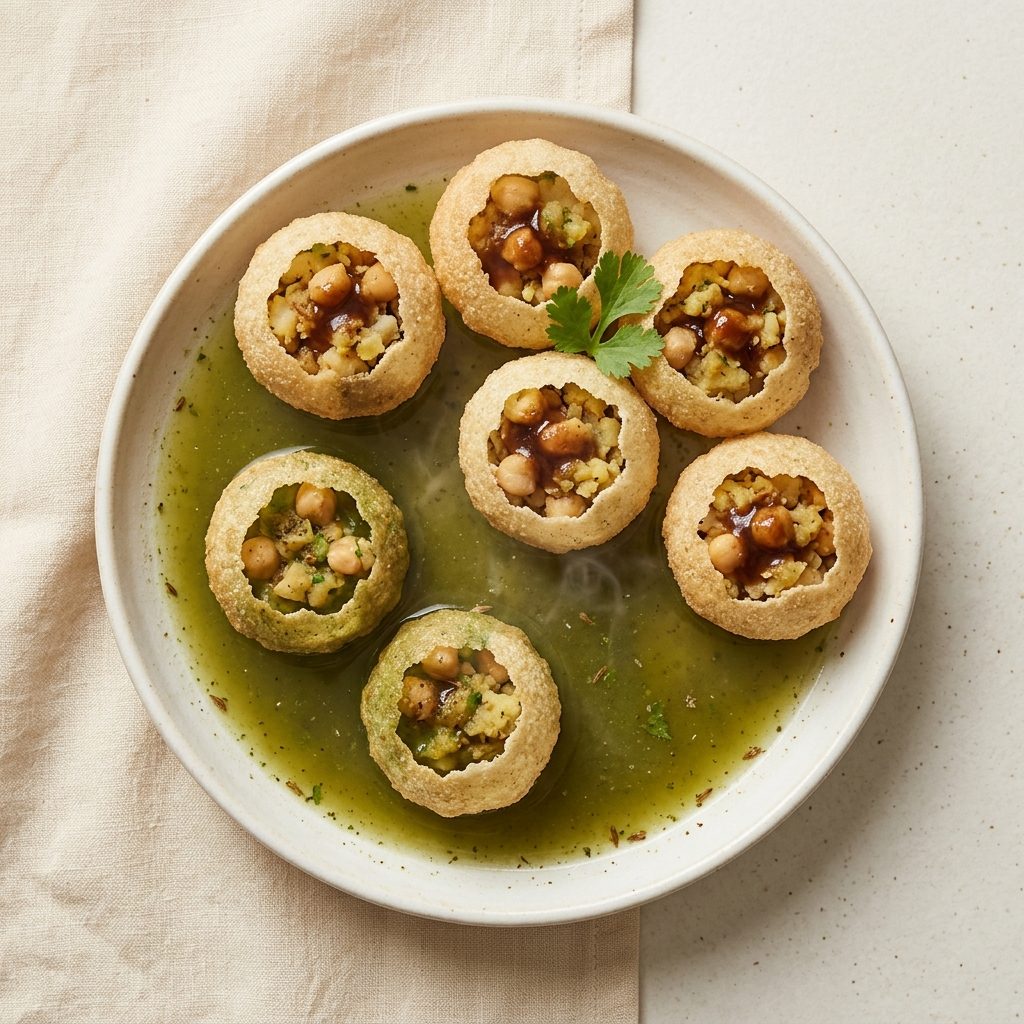
| Gol gappe | six pieces | 100 to 180 |
| Momos, steamed | six pieces | 200 to 300 |
| Momos, fried | six pieces | 350 to 500 |
| Jalebi | one piece | 100 to 180 |
Two things in that table are worth pausing on.
Gol gappe are remarkably light. The puri are tiny, the filling is spiced water, and six of them come in under most biscuits. This is the chaat that gets unfairly bundled with everything else.
Chole bhature sits in a category of its own. The chole is an ordinary chana gravy. The two deep fried maida bhature carry the bulk of the plate. The same chole with rice or two roti lands hundreds of calories lower, which is a genuinely useful thing to know if you eat it often.
Why the oil matters more than the ingredients
A samosa is potato, peas, spices and a flour shell. On paper that is a modest food. Fried, it becomes 150 to 250 calories, and close to half of that is oil the pastry absorbed in the kadhai.
This is the single biggest driver of street food calories, and it works in a way most people underestimate.
Oil that has been used repeatedly absorbs more. As frying oil degrades through a day of service, it becomes more readily taken up by whatever goes into it. The same samosa fried in fresh oil and in oil that has run since morning are not the same samosa.
Temperature matters too. Oil that has dropped below frying temperature soaks in rather than searing the surface. A busy stall with a constant queue keeps its oil hot. A quiet one does not.
Surface area multiplies it. Anything with folds, layers or a large thin surface, bhature, fried momos, crispy corn, pakora, takes on far more oil than a compact item of the same weight.
This is why the fried version of anything runs 40 to 80 percent above the steamed version. Six steamed momos and six fried momos start from identical dumplings.
The flip side is genuinely good news. Anything not deep fried is usually much lighter than people assume. Bhel puri is mostly puffed rice. Steamed momos are a reasonable meal with actual protein in the filling. Grilled and tandoori street items sit close to their home-cooked versions.
The portion problem
Nothing on the street is a standard serving, and this is the real reason honest ranges are wide rather than narrow.
A samosa in Old Delhi and a samosa at a Bengaluru bakery can differ by 60 percent in weight. A plate of pav bhaji might come with two pav or four, and the pat of butter on top might be a spoon or a slab. Bhel puri portions run from a small cone to a full plate.
This means two things in practice.
First, a single confident calorie figure for a street dish is not more accurate than a range. It is just more confident, which is a different thing. Sehat carries a confidence level and a source note on entries like these rather than inventing precision the data does not support.
Second, your own estimate gets better fast once you anchor it to the specific place you actually eat. The stall near your office serves what it serves, consistently. After two or three visits your estimate for that stall is better than any national average could be.
The habit of logging what you eat out with a rough range beats not logging it at all, by a wide margin.
How to fit it into a normal week
Here is the arithmetic that most people never do.
If you eat around 2,000 calories a day, your week is 14,000. A 700 calorie plate of chole bhature is 5 percent of that. A 300 calorie plate of bhel puri is 2 percent.
One street food meal a week does not decide anything. What decides things is the other twenty meals, and whether the street food meal is one meal or the beginning of a four day unravelling.
A framework that works for most people:
- Plan it in, do not sneak it in. Sunday evening chaat, decided on Wednesday, is easy to build a week around. The unplanned version arrives with guilt attached, and guilt is what turns one plate into three.
- Do not skip meals to earn it. Arriving hungry means eating more of it and enjoying it less. Eat normally through the day, with a protein-forward lunch.
- Log it with a range and move on. Write down 600 to 900 for the chole bhature. An approximate entry beats a missing one every time, and a missing entry is the one that quietly compounds.
- Pick the lighter option when the lighter option is one you like. Gol gappe over fried momos, steamed over fried, one samosa instead of two. Not as a punishment. Only when you genuinely do not mind.
- Keep the next meal ordinary. Not smaller, not a compensating fast. Just the normal dinner you would have eaten anyway.
- Protect protein across the day. Street food is generally low in it, so the rest of the day carries that load. A dal and paneer heavy lunch does the job.
That is the entire system. There is nothing to give up in it.
What street food is not
It is not a cheat, a slip, a mistake, or something to be earned back on a treadmill. Those framings do more damage over a year than the food ever does.
Chaat is one of the great food cultures on earth and it belongs in the week of anyone who enjoys it. The only thing worth changing is the information you have about it, so that a plate of chole bhature is a choice you made rather than a number you were afraid of.
Know the range. Log it honestly. Eat the samosa.
Calorie figures on this page are typical ranges, not lab values. Indian recipes vary enormously between kitchens, so a number that is right for one house is wrong for the next. Sehat keeps a confidence level and a source note on every entry rather than pretending a single figure is the truth. This is general information, not medical advice.
Common questions
How many calories are in a samosa?
A standard medium samosa is usually 150 to 250 calories, and larger ones sold at sweet shops can go higher. Almost half of that comes from the oil absorbed during frying rather than from the potato filling. Two samosa with chutney generally lands somewhere between 350 and 550 calories.
How many calories are in a plate of chole bhature?
Typically 600 to 900 calories, and sometimes more at places known for large bhature. The chole itself is a modest part of it. Two deep fried bhature made from maida carry most of the total, which is why the same chole with rice or roti reads very differently.
What is the lowest calorie Indian street food?
Gol gappe are usually the lightest, at roughly 100 to 180 calories for six pieces, because the puri are small and the filling is mostly water, spice and a little potato or chana. Bhel puri, steamed momos and a plain chaat without extra sev or fried toppings also sit at the lower end.
Can I eat street food while trying to lose weight?
Yes. A weekly street food meal is roughly 3 to 6 percent of a week's calories, which no deficit is decided by. Log it honestly, keep the surrounding meals normal rather than skipped, and lean on protein and vegetables in the rest of the day. Restriction is what breaks plans, not chaat.
Why is street food higher in calories than the same dish at home?
Mostly oil. Vendors deep fry at volume, often in oil used repeatedly through the day, and used oil is absorbed more readily by whatever goes into it. Portions are also larger and less consistent than a home serving. The recipe is usually the same. The cooking conditions are not.
Dishes mentioned
In the app
All of this, without the arithmetic.
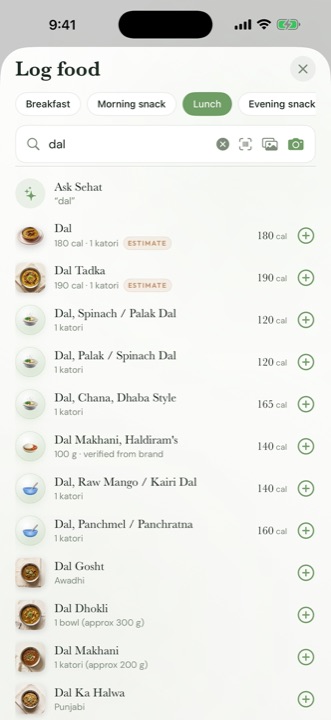
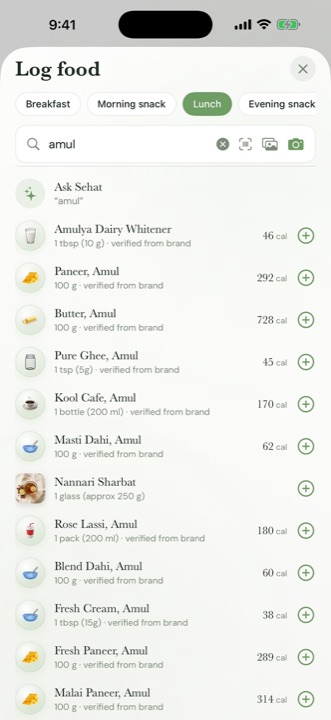
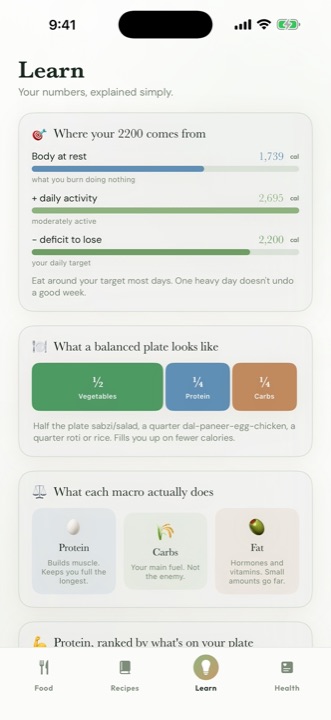
The world's most complete Indian calorie counter.
Over 10,000 foods and spellings.
Log dal, roti and biryani by voice, in Hinglish, in the portions your kitchen actually uses. An AI coach reads your day and guides you. No coaches. No calls. No spam.
Download free on the App StoreAndroid is on the way.
Indian food
How to track what you eat at a restaurant
Restaurant gravies carry far more oil, butter and cream than home cooking. How to order, how to estimate a portion, and why an estimate beats logging nothing.
Calorie tracking
How to build a calorie deficit on an Indian diet
A calorie deficit does not require giving up dal, roti or rice. How to size one sensibly, adjust cooking fat and portions, and keep it going past week three.
Calorie tracking
How to count calories in Indian food
A practical method for tracking dal, roti, sabzi and biryani without weighing anything. Portions, honest ranges, and the four habits that make a log actually stick.