Macros explained, for people who eat Indian food
The short answer
Macros are the three nutrients you eat in gram quantities. Protein and carbs carry 4 calories per gram, fat carries 9. A typical Indian plate is carb-heavy and protein-light because roti and rice dominate it. Fixing the protein side, not cutting the carbs, is usually the first useful change.
Key takeaways
- Protein and carbohydrate each carry 4 calories per gram. Fat carries 9. Those three figures are the whole of macro arithmetic.
- A standard Indian thali built on roti, rice and one sabzi usually lands around 60 to 70 percent of its calories from carbohydrate.
- A sane starting split for most people is roughly 30 percent protein, 40 percent carbohydrate and 30 percent fat, adjusted from there.
- The protein gap in an Indian diet closes with paneer, curd, soya, dals in bigger quantities and eggs if you eat them, not by abandoning the cuisine.
- Fibre is a carbohydrate but behaves nothing like sugar, which is why it gets tracked on its own bar rather than buried in the carb total.
Protein, carbs and fat. Three words repeated in every gym in the country, usually by someone who has never explained what they actually do.
Macros are simply the three nutrients you eat in gram quantities, and the only three that carry calories. Everything else, the vitamins, the minerals, the water in your chaas, sits outside that arithmetic.
Here is what each one does, why an ordinary Indian plate lands where it lands, and which number to fix first.
What protein, carbs and fat actually do
Each macro has a job, and they are not interchangeable.
Protein builds and repairs. Muscle, skin, hair, enzymes, immune cells. It is also the most filling of the three per calorie, and the one your body will not manufacture from spare parts. Miss it for weeks and you lose muscle, especially if you are eating in a deficit.
Carbohydrate is fuel. It is the fastest energy your body can reach, it fills the muscle glycogen you burn through in a hard session, and it is the reason a plate of rice before a run feels different from a plate of paneer.
Fat runs the slow machinery. Hormones, cell membranes, absorption of vitamins A, D, E and K. Cutting fat to nearly zero is not a clever move, and never was.
Fibre is technically a carbohydrate, but it behaves like nothing else in that group. More on it below, because it is the reason this app gives it a bar of its own.
The only arithmetic worth memorising
Three numbers. That is the whole of it.
| Macro | Calories per gram |
|---|---|
| Protein | 4 |
| Carbohydrate | 4 |
| Fat | 9 |
Fat carries more than double what the other two do. This single fact explains almost everything that surprises people about an Indian food log. A generous serving of steamed rice adds far fewer calories than it looks like it should. Two extra spoons of ghee in the tadka add far more.
It also explains why cooking oil is the biggest source of error in a home-cooked log, and why we gave it a whole article.
Why the Indian plate runs carb-heavy and protein-light
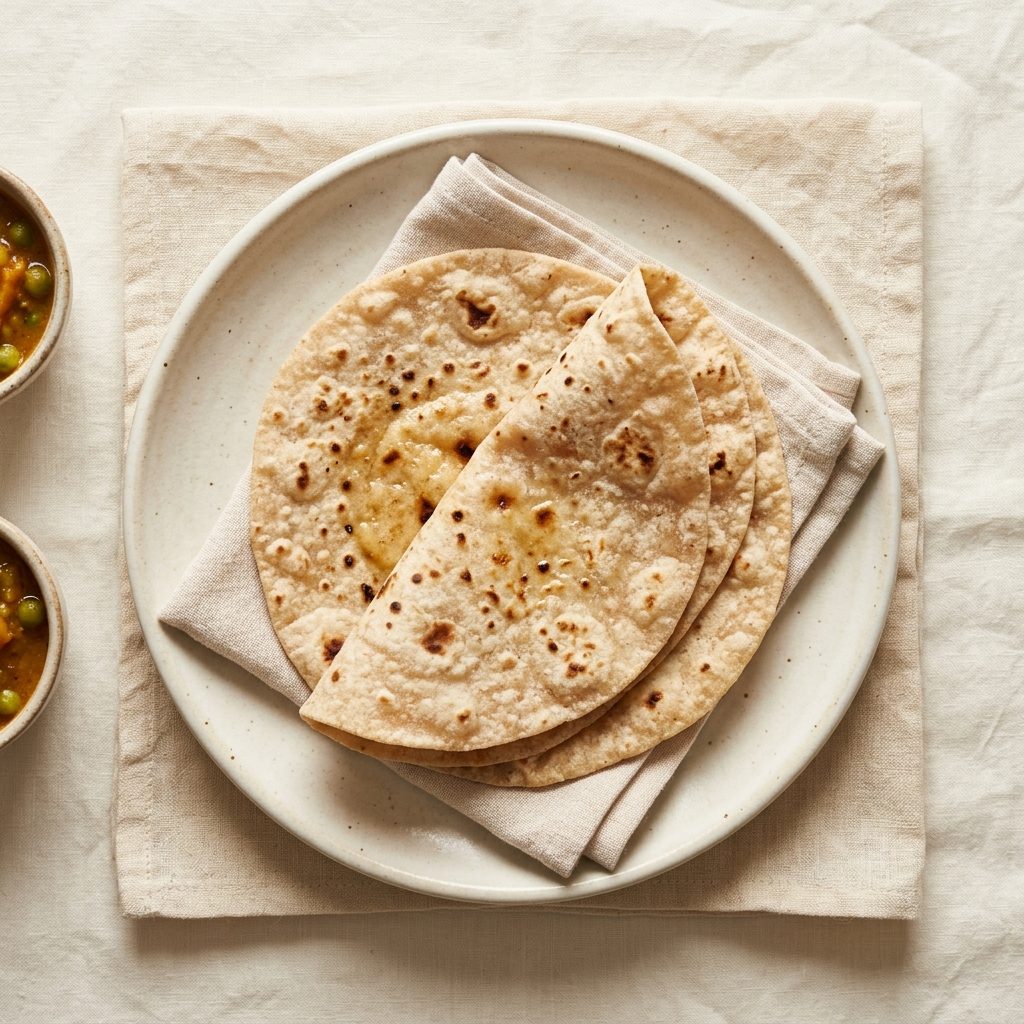
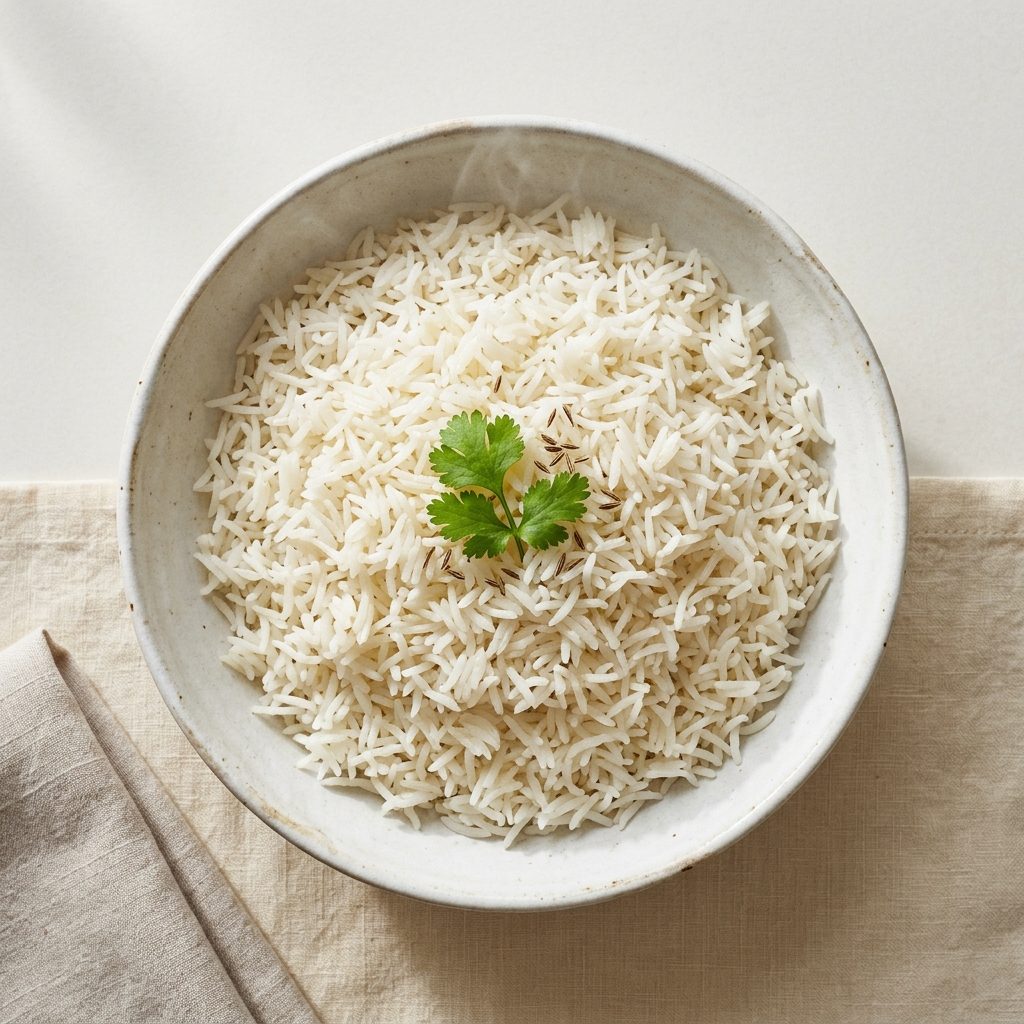
Look at a standard North Indian dinner. Two roti, a katori of dal, a katori of sabzi, some rice, curd on the side.
The volume on that plate is grain. The protein arrives in small supporting quantities. Run the ratios and most home thali land somewhere around 60 to 70 percent of calories from carbohydrate, 12 to 18 percent from protein and the rest from fat.
That is not a flaw in the cuisine. Indian cooking was built for people doing physical work all day, where carbohydrate-forward eating made complete sense. It matches a desk job and a gym membership less well.
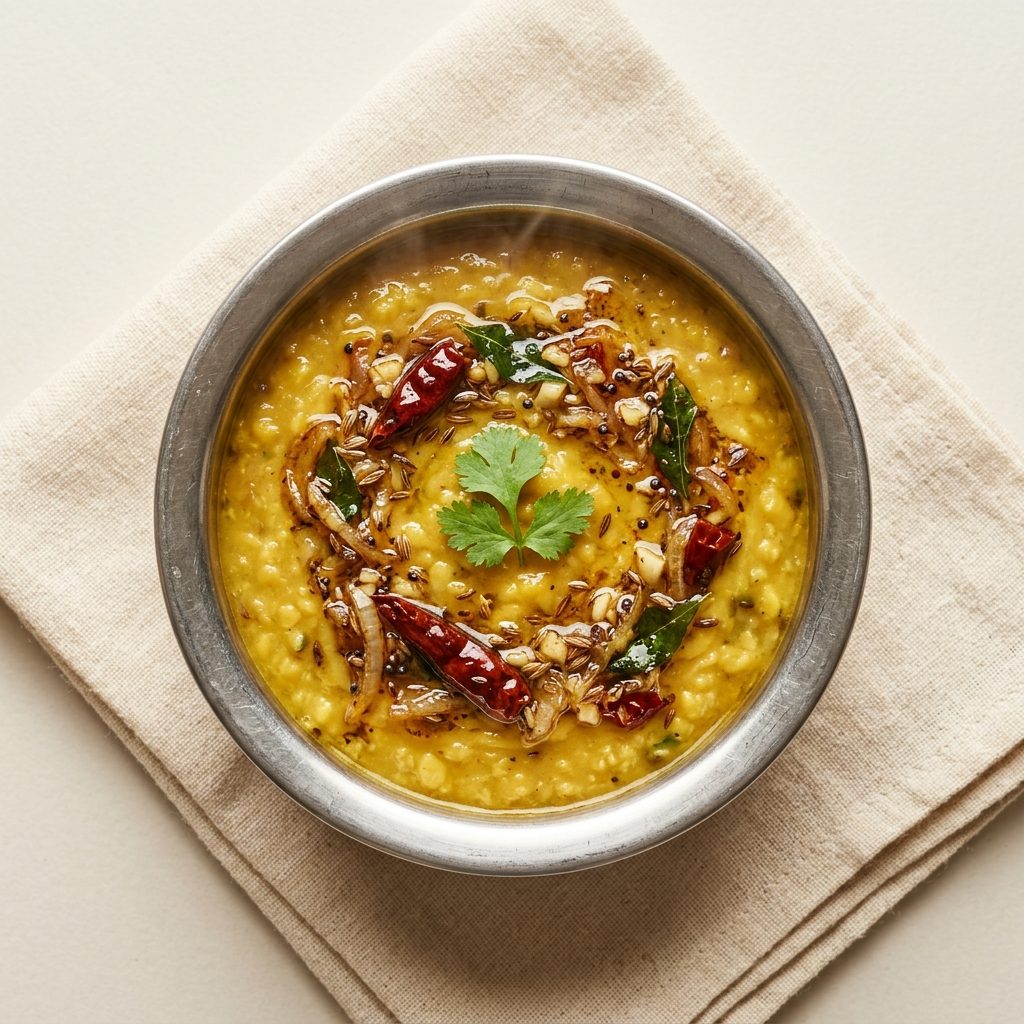
The other reason is a genuine misconception. Dal is widely treated as the protein of the meal. A katori of cooked dal usually delivers around 4 to 6 grams of protein, because most of what is in that bowl is water. It is a good food. It is not a protein source at the quantity anyone actually eats it.
A sane starting macro split
If you want a number to start from rather than a philosophy, use this.
- Protein: 30 percent of calories. Or set it directly at roughly 1.2 to 1.6 grams per kilogram of bodyweight if you train, which is usually the more useful way to think about it.
- Carbohydrate: 40 percent.
- Fat: 30 percent.
For someone eating 2,000 calories a day, that is about 150 g protein, 200 g carbohydrate and 67 g fat.
Adjust from there. If you train five days a week and feel flat, carbohydrate goes up and fat comes down. If you sit all day and finish meals still hungry, protein goes up. What you should not do is set a split on Monday and change it on Wednesday. Give any adjustment three weeks of honest logging before you judge it.
Your total calories still decide whether you gain or lose. Macros decide what the gain or loss is made of. Two people eating the same 1,800 calories, one at 60 g of protein and one at 130 g, will lose roughly the same weight and end up with noticeably different bodies underneath it.
One warning about percentages. They move when your calories move, which makes them awkward to track day to day. Most people find it easier to fix protein as a gram target, fix fat at a sensible floor of around 0.6 to 0.8 grams per kilogram of bodyweight, and let carbohydrate absorb whatever is left in the calorie budget. That way the two numbers with real biological floors stay protected and the flexible one does the flexing.
Closing the protein gap without leaving the cuisine
You do not have to start eating grilled chicken breast and boiled broccoli. Nobody sustains that in an Indian household anyway.
Four changes, in order of how much they move the number:
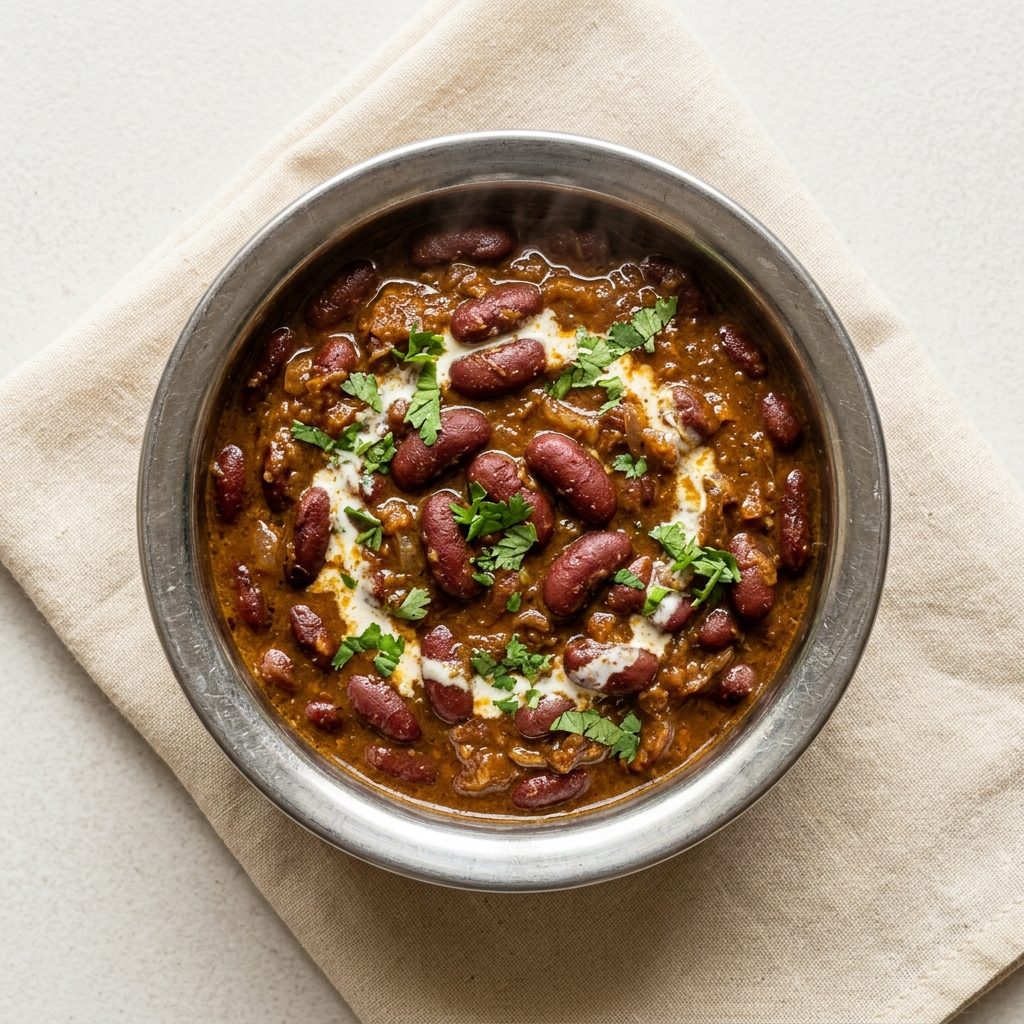
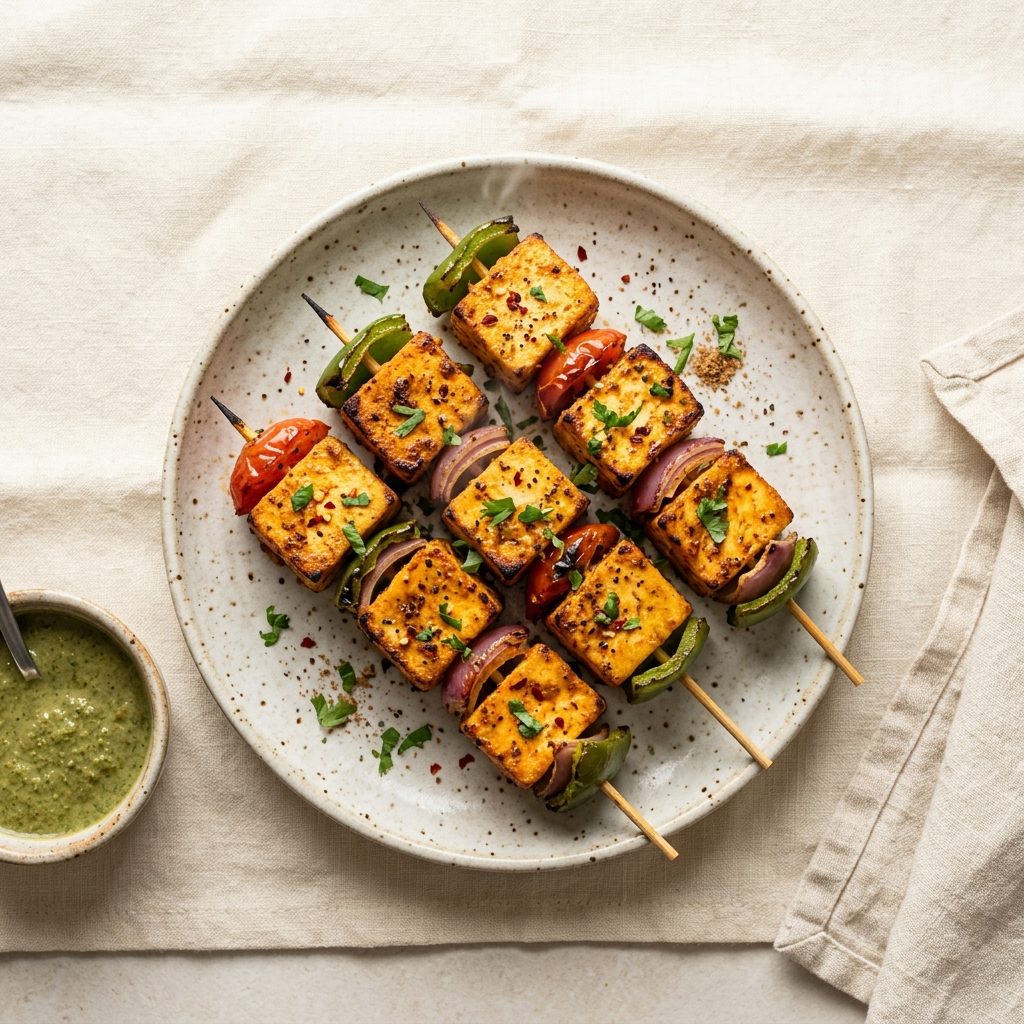
- Add a dedicated protein dish to two meals a day. Paneer tikka, soya chunk curry, chana, rajma as the main item rather than the side.
- Make the dal thicker and the katori fuller. Same dish, double the lentil to water ratio, roughly double the protein.
- Use curd properly. A large bowl of curd or hung curd at lunch adds real protein and costs nothing in effort.
- Anchor breakfast. Besan chilla, sattu, eggs if you eat them, paneer bhurji. Indian breakfasts skew heaviest towards carbohydrate of all three meals.
If you are vegetarian, this deserves more detail than one section, so read how to hit your protein target on a vegetarian Indian diet. Sehat has a veg mode, and its coach will never suggest a non-vegetarian food to a vegetarian user, which matters when the advice being given is about protein.
Why fibre gets its own line
Fibre is a carbohydrate that your body cannot break down for energy. It passes through largely intact, feeding gut bacteria and slowing everything else down on the way.
That behaviour makes it worth watching separately. Two meals with identical carbohydrate totals can feel completely different depending on whether the carbohydrate came with fibre attached. A bowl of chana and a bowl of maida noodles are not the same event in your body, even when the carb number matches.
Most people in Indian cities land well under the rough daily target of 25 to 35 grams, largely because polished rice and refined flour dominate. That is why fibre sits on its own bar in Sehat rather than hiding inside the carb total, and why it gets its own article.
Where to actually start
Do not rebuild your diet around a spreadsheet. Track what you already eat for two weeks without changing a thing, then look at the split.
Almost everyone finds the same result. Calories roughly fine, carbohydrate high, fat higher than expected, protein short by 30 to 50 grams.
Fix the protein. Leave the roti alone. The rest tends to sort itself out.
Calorie figures on this page are typical ranges, not lab values. Indian recipes vary enormously between kitchens, so a number that is right for one house is wrong for the next. Sehat keeps a confidence level and a source note on every entry rather than pretending a single figure is the truth. This is general information, not medical advice.
Common questions
What are macros in simple terms?
Macros are the three nutrients your body needs in gram quantities every day. Protein builds and repairs tissue, carbohydrate is the body's quickest fuel, and fat runs hormones and helps absorb certain vitamins. Together they make up every calorie you eat. Vitamins and minerals are micronutrients and carry no calories at all.
How many calories are in a gram of protein, carbs and fat?
Protein carries 4 calories per gram. Carbohydrate carries 4 calories per gram. Fat carries 9 calories per gram, more than double the other two. Alcohol sits at 7. These are established conversion factors, which is why a small amount of cooking oil moves a calorie total far more than a large serving of rice does.
What is a good macro split for an Indian diet?
A reasonable starting point is 30 percent of calories from protein, 40 percent from carbohydrate and 30 percent from fat. Someone training hard can push carbohydrate higher. Someone with a desk job and low activity often feels better with carbohydrate slightly lower. Adjust after three weeks of real data, not after three days.
Why is Indian food low in protein?
Because the volume on the plate comes from grains and the protein sources appear in small quantities. Two roti, a plate of rice and a katori of dal will deliver plenty of carbohydrate but only around 15 to 20 grams of protein. The cuisine is not the problem. The ratio of the serving sizes is.
Do I need to hit my macros exactly every day?
No. Protein is the one worth hitting most days because it has a genuine floor. Carbohydrate and fat can move around within your calorie total without much consequence, and most people naturally trade one for the other across a week. Consistency across a month matters far more than precision on any single day.
Dishes mentioned
In the app
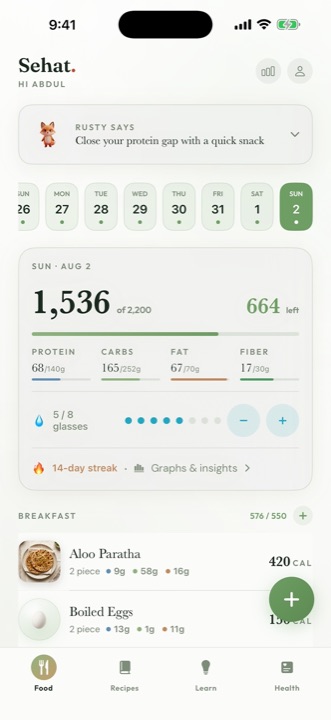
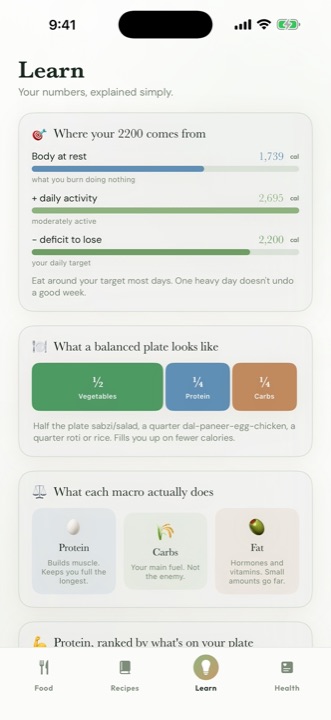
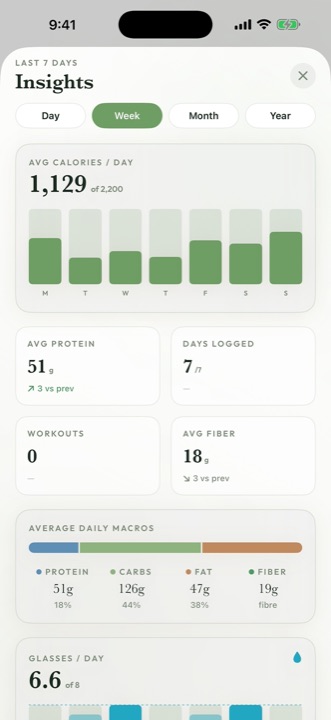
All of this, without the arithmetic.
The world's most complete Indian calorie counter.
Over 10,000 foods and spellings.
Log dal, roti and biryani by voice, in Hinglish, in the portions your kitchen actually uses. An AI coach reads your day and guides you. No coaches. No calls. No spam.
Download free on the App StoreAndroid is on the way.
Macros
How to hit your protein target on a vegetarian Indian diet
The real protein sources in Indian vegetarian food, ranked, with a worked day that reaches 100 grams. Plus why dal alone will never get you there.
Macros
Carbs in Indian food, and how many you actually need
Which Indian staples are carb-dense, how roti, rice, poha and upma compare, and the honest answer for anyone eating two rotis with every meal.
Macros
Ghee, oil and fat in Indian cooking
Why cooking fat is the biggest hidden variable in a home-cooked log, where ghee actually sits nutritionally, and how to estimate per-serving oil once and reuse it.