Fibre in an Indian diet, and why most people fall short
The short answer
Most people need roughly 25 to 35 grams of fibre a day and most urban Indian diets land well under that, because polished rice and refined flour have had the fibre stripped out. Whole dals, chana, rajma, bajra and jowar rotis, sabzi and fruit with skin close the gap without any supplement.
Key takeaways
- The rough daily fibre target for most adults is 25 to 35 grams, and typical urban Indian intake falls well below it.
- Fibre is a carbohydrate your body cannot digest, so it contributes bulk and slows digestion without behaving like sugar.
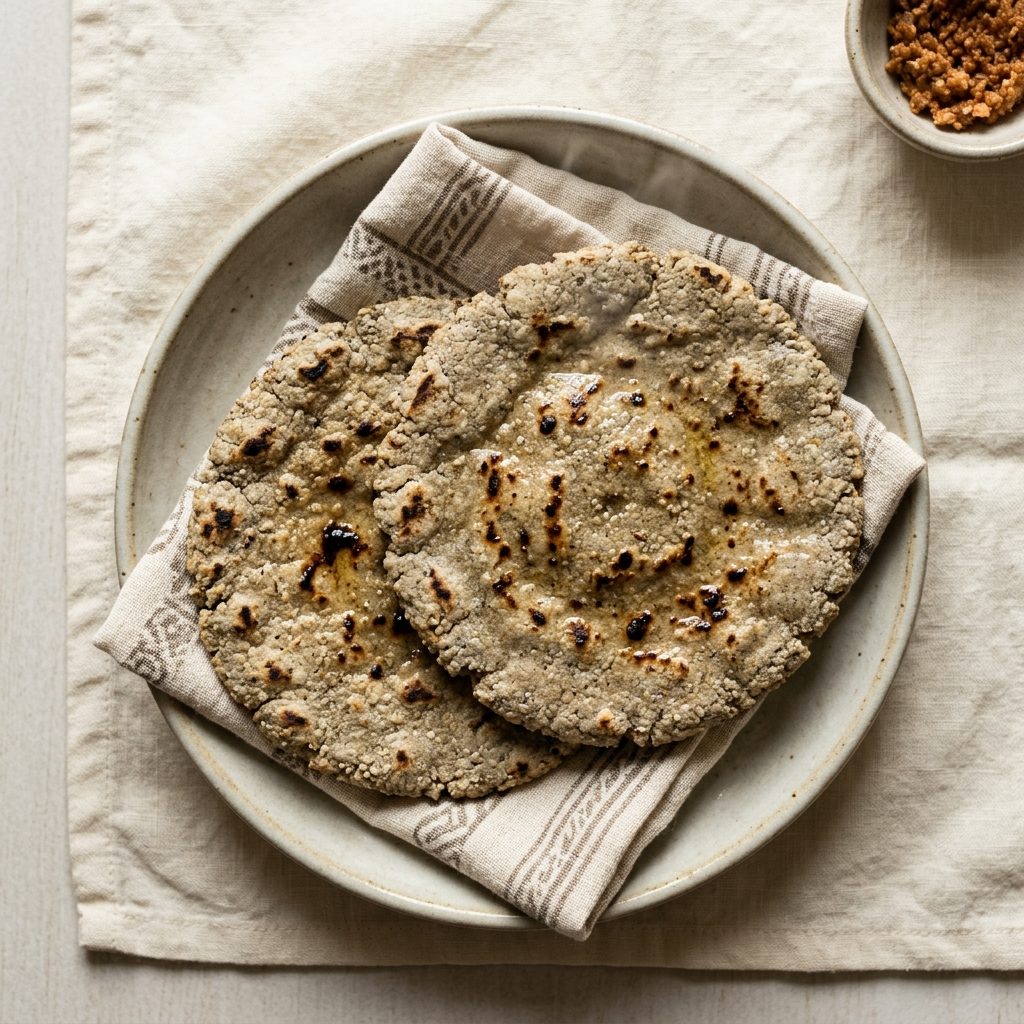
- Whole dals with the skin on, chana, rajma, bajra and jowar rotis and fruit eaten with the skin are the genuine high fibre items in an Indian kitchen.
- Polishing rice and refining wheat into maida removes the bran, which is where nearly all the fibre lived.
- Fibre is the cheapest tool available for staying full in a calorie deficit, because it adds volume without adding meaningful calories.
Fibre is the macro nobody chases. Protein gets the gym posters. Carbs get the arguments. Fat gets the podcasts. Fibre gets a passing mention and a box of husk in the back of the cupboard.
Which is odd, because Indian food is one of the best fibre-delivery systems in the world, and most people eating it are still falling short.
The reason is not the cuisine. It is what happened to the grain.
What fibre actually does
Fibre is a carbohydrate your body cannot break down for energy. It passes through largely intact, and that is precisely the point.
Along the way it does four useful things:
- Adds bulk without adding calories. It occupies space in the stomach that would otherwise need to be filled by something energy-dense.
- Slows digestion. Food leaves the stomach more gradually, which flattens the rise in blood sugar after a meal and keeps you full longer.
- Feeds gut bacteria. Soluble fibre is fermented in the large intestine, and that bacterial population appears to matter for a range of things we are still learning about.
- Keeps things moving. Insoluble fibre, the kind in wheat bran and vegetable skins, adds physical bulk to stool.
Because it behaves so differently from the rest of the carbohydrate group, fibre earns its own line in a log rather than sitting anonymously inside the carb total. Two meals with the same carbohydrate figure are not the same meal if one had fibre attached, which is part of why macros for Indian food is worth reading as a whole rather than one number at a time.
The target, and where most people land
Roughly 25 to 35 grams a day for most adults. Larger people and those eating more total food sit at the upper end.
Typical urban Indian intake is somewhere between 12 and 20 grams. That is a meaningful shortfall, and it has almost nothing to do with people not eating vegetables.
It has to do with the grain. A rural Indian diet built on bajra, jowar, ragi, whole wheat and a large serving of legumes clears 35 grams without trying. A city diet built on polished rice, maida-heavy breads, biscuits and refined breakfast items struggles to reach 15.
The cuisine did not become less healthy. The processing changed.
What polishing and refining actually removed
A whole grain has three parts. The bran on the outside, the germ, and the starchy endosperm in the middle.
Nearly all the fibre lives in the bran. Milling removes it, along with most of the micronutrients and a share of the protein, and what remains is the starch.
This is why:
- Polished white rice carries very little fibre, while hand-pounded or brown rice retains substantially more.
- Maida carries almost none, while whole wheat atta with the bran retained carries a useful amount.
- Bajra and jowar rotis sit well above wheat, because those grains are usually ground whole.
None of this makes white rice a bad food, and nobody needs to give it up. It simply means that when rice is the base of the meal, the fibre has to come from what sits beside it. The dal, the sabzi, the salad, the curd bowl. That is exactly how a traditional thali was constructed, which is not a coincidence.
The genuinely high fibre Indian foods
Ranked by how much they will actually move your daily number, given normal serving sizes.
| Food | Why it works |
|---|---|
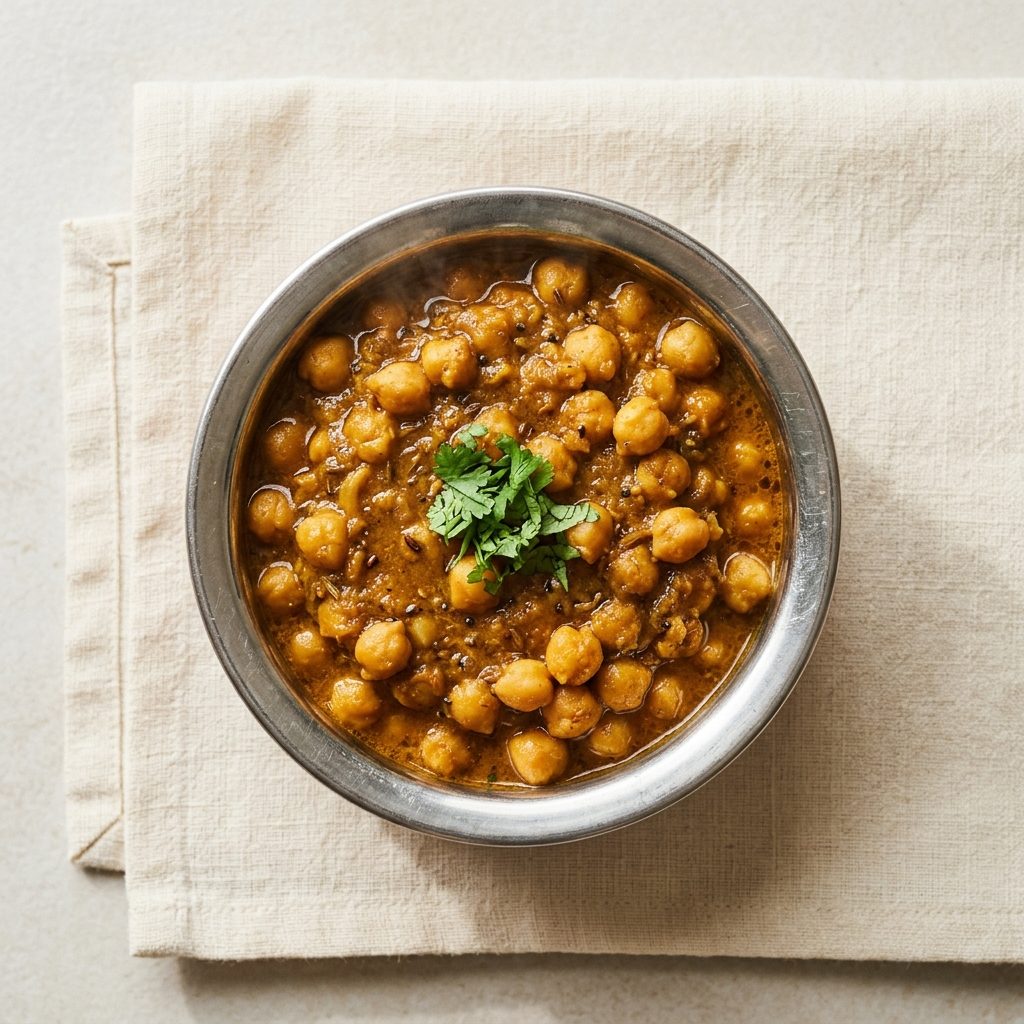
| Chana, kala chana, chole | The densest everyday source in most Indian kitchens |
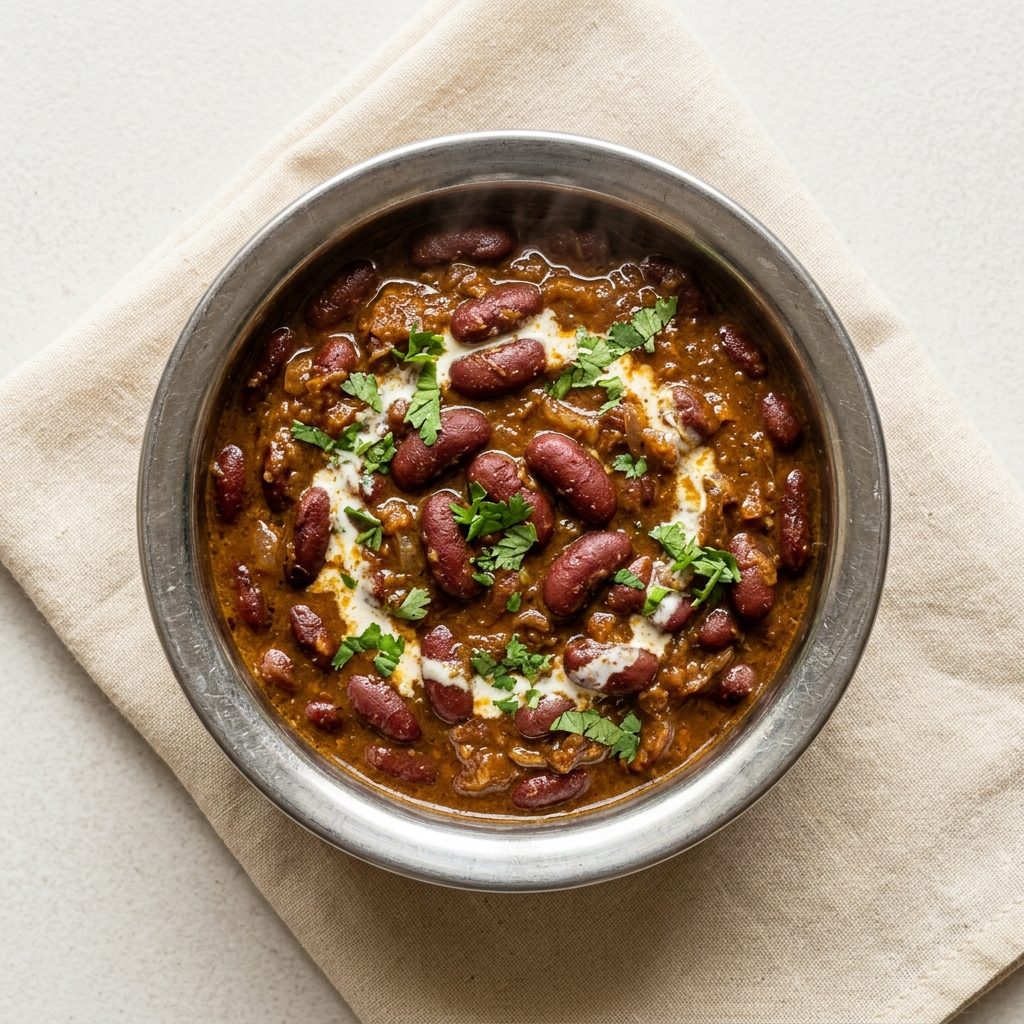
| Rajma and other beans | A full katori contributes a large share of a day’s target |
| Whole dals with skin on | Chilka moong, whole masoor, urad with skin. Far better than the washed versions |
| Bajra and jowar rotis | Substantially ahead of refined wheat, and traditional to half the country |
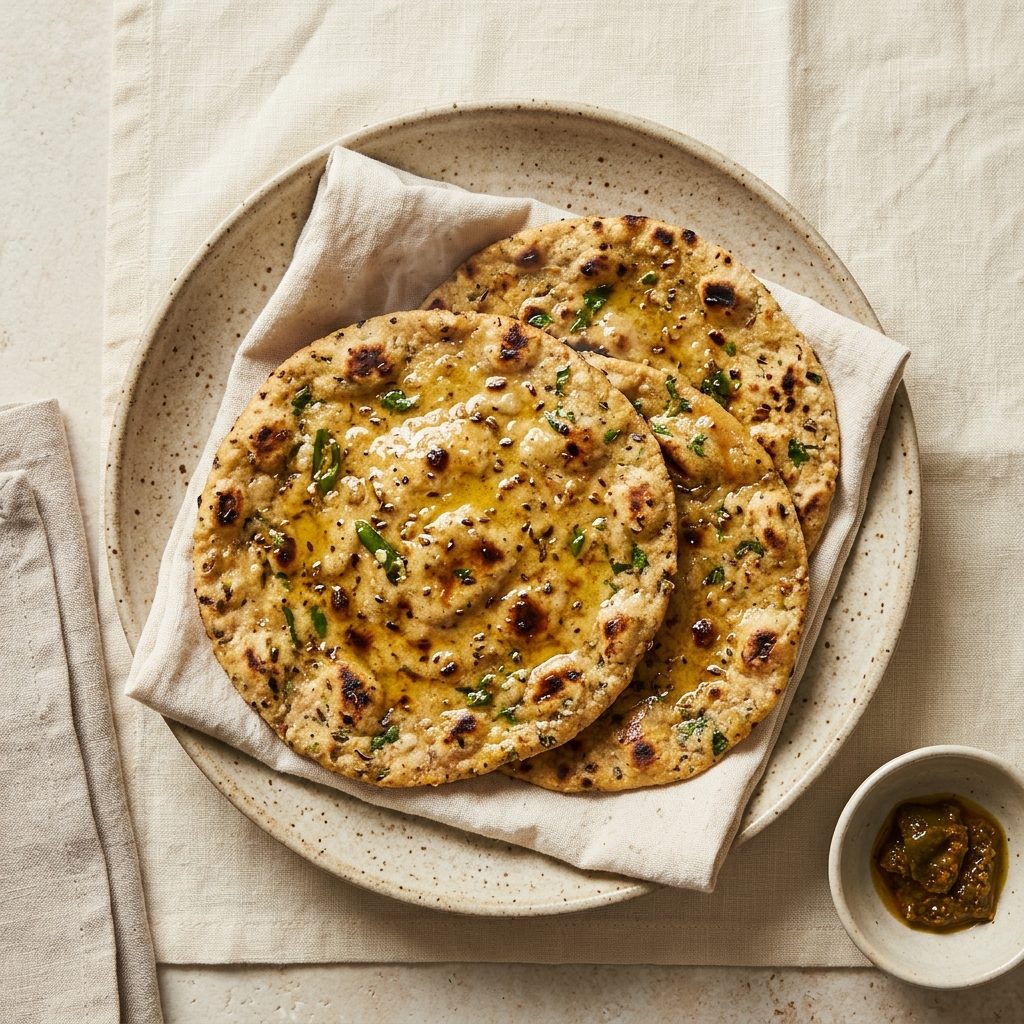
| Missi roti | Besan in the dough adds fibre and protein together |
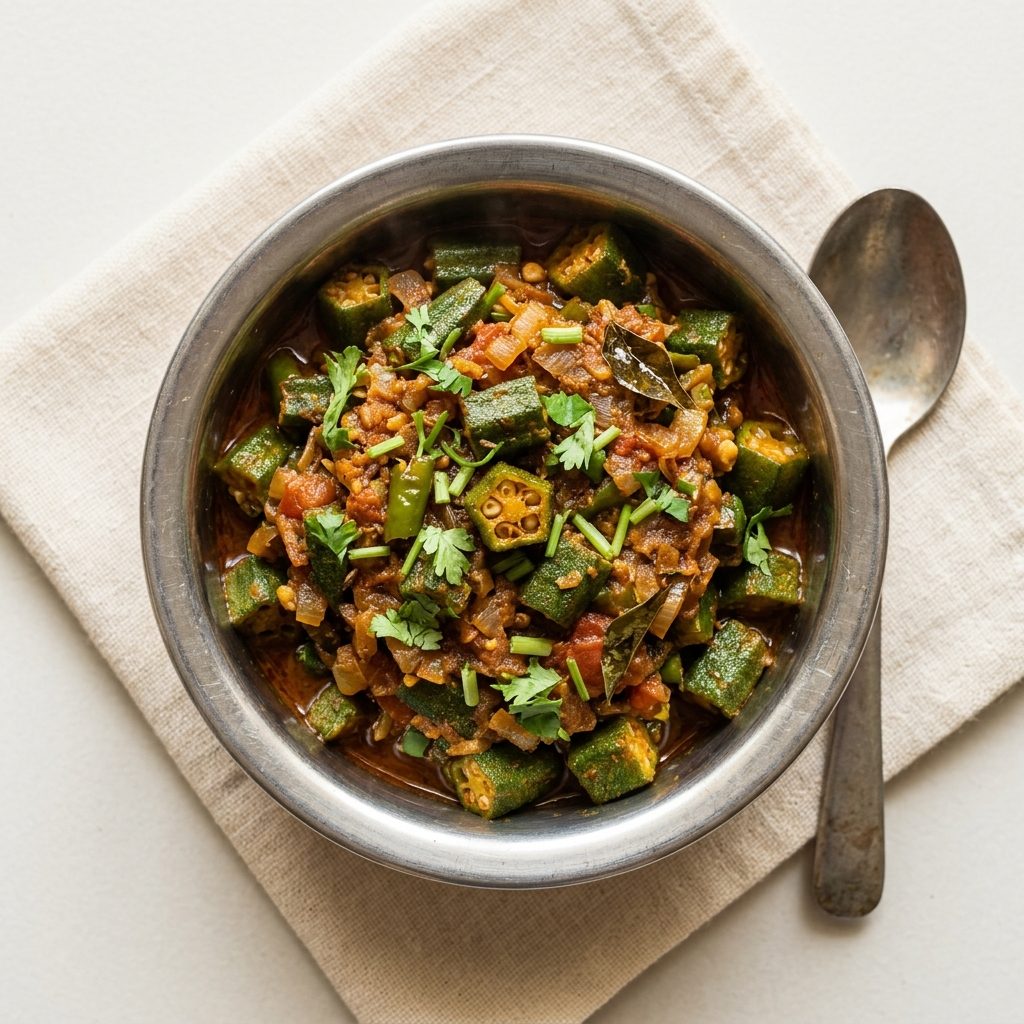
| Sabzi, especially with skins | Bhindi, lauki, karela, cabbage, beans, methi |
| Fruit eaten with skin | Guava, apple, pear. Peeling removes a good share of it |
| Peanuts, almonds, seeds | Small servings, but they add up |
| Sattu | Roasted chana flour brings fibre and protein in one drink |
The one item worth calling out is the difference between washed dal and whole dal. Dhuli moong and chilka moong are the same lentil at different stages of processing, and the version with the skin carries considerably more fibre. Swapping one for the other in a dish you already cook is the least effortful upgrade on this page.
The satiety angle, which matters most in a deficit
Calorie deficits do not usually fail because the arithmetic was wrong. They fail because the person was hungry.
Fibre is the cheapest tool available against that. It adds volume and slows stomach emptying, so the same calorie total keeps you full for meaningfully longer.
Compare two lunches at roughly the same calories. A plate of white rice with a thin dal. Or a smaller portion of rice with a full katori of rajma, a large sabzi and a salad. The second one carries more protein, considerably more fibre, and keeps you comfortable until dinner. The first has you looking at the biscuit tin by four o’clock.
This is the practical reason fibre belongs in the conversation for anyone tracking. It does not change the maths. It changes whether you can live with the maths, which is covered further in the Indian calorie deficit guide.
Adding fibre without a single supplement
Five changes, none of which require buying anything new.
- Switch one roti a day to bajra, jowar or missi. Dinner is the easiest slot.
- Buy dals with the skin on. Chilka moong instead of dhuli moong, whole masoor instead of split.
- Put a legume on the table five days a week. Chana, rajma, lobia, chole. As a main dish, not a garnish.
- Stop peeling fruit and vegetables that do not need it. Guava, apple, cucumber, lauki when it is young.
- Make salad an actual portion. Not three slices of onion beside the plate. A bowl.
Do those and 30 grams stops being a target and becomes an accident.
One caution. If your current intake is low, increase it over two or three weeks rather than overnight, and drink more water alongside. A sudden jump commonly causes bloating and discomfort, which is the fastest way to convince yourself fibre is the enemy. Anyone with IBS, an inflammatory bowel condition or any diagnosed gut issue should take this pace from their doctor, since specific fibres suit specific conditions differently.
Why we track it separately
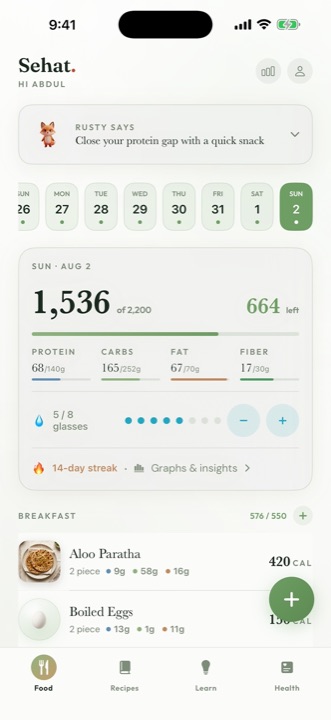
Sehat gives fibre its own bar alongside protein, carbs and fat rather than folding it into the carbohydrate total.
The reason is simple. Fibre is the one number on that screen where being low is easy to miss and easy to fix. Protein shortfalls announce themselves in the gym. Calorie surpluses announce themselves on the scale. Fibre just quietly leaves you hungry at 4 pm and constipated on Thursday, and nobody connects the two.
Put it on a bar and people fix it within a fortnight. That is the entire argument.
Calorie figures on this page are typical ranges, not lab values. Indian recipes vary enormously between kitchens, so a number that is right for one house is wrong for the next. Sehat keeps a confidence level and a source note on every entry rather than pretending a single figure is the truth. This is general information, not medical advice.
Common questions
How much fibre should you eat per day?
Roughly 25 to 35 grams a day for most adults, with larger people and those eating more food generally sitting at the higher end. Most people in Indian cities land somewhere between 12 and 20 grams. Increase gradually across two or three weeks and drink more water, since a sudden jump commonly causes bloating.
Which Indian foods are highest in fibre?
Whole dals eaten with their skin, chana, rajma and other legumes, bajra and jowar rotis, whole wheat atta with the bran retained, most sabzi, and fruit eaten with the skin such as guava, apple and pear. Chana and rajma are the densest everyday sources in a typical Indian kitchen.
Does white rice have fibre?
Very little. Polishing removes the bran layer, which is where almost all the fibre in the grain lived. Brown or hand-pounded rice retains considerably more. This does not make white rice a problem, but it does mean a rice-based meal needs its fibre from the dal, the sabzi and the salad rather than from the grain itself.
Does fibre help with weight loss?
Indirectly, and reliably. Fibre adds volume and slows the emptying of the stomach, so high fibre meals keep you full for longer at the same calorie cost. In a deficit that is the single most useful property available, because hunger is what ends most deficits rather than any failure of arithmetic.
Do I need a fibre supplement?
Almost certainly not if you eat Indian food. A single serving of chana or rajma, one bajra roti and a couple of servings of vegetables will comfortably outperform a spoon of husk. Supplements have a place when a doctor recommends one for a specific reason, but they are not a substitute for the food that already sits in the kitchen.
Dishes mentioned
In the app
All of this, without the arithmetic.
The world's most complete Indian calorie counter.
Over 10,000 foods and spellings.
Log dal, roti and biryani by voice, in Hinglish, in the portions your kitchen actually uses. An AI coach reads your day and guides you. No coaches. No calls. No spam.
Download free on the App StoreAndroid is on the way.
Macros
Macros explained, for people who eat Indian food
Protein, carbs, fat and fibre, explained against a real Indian plate. Why the thali runs carb-heavy, a sane starting split, and how to fix the protein gap.
Macros
Carbs in Indian food, and how many you actually need
Which Indian staples are carb-dense, how roti, rice, poha and upma compare, and the honest answer for anyone eating two rotis with every meal.
Macros
How to hit your protein target on a vegetarian Indian diet
The real protein sources in Indian vegetarian food, ranked, with a worked day that reaches 100 grams. Plus why dal alone will never get you there.