Light Indian dinners that still feel like dinner
The short answer
A lighter Indian dinner comes from four levers, not from eating less. Cut the cooking fat, hold the grain portion steady, double the sabzi volume, and put a real protein in the middle of the plate. Do those and dinner still fills the plate, still tastes like dinner, and lands far lower.
Key takeaways
- Cooking fat is the biggest single lever. A tablespoon of oil or ghee is roughly 120 calories, and most home gravies carry two.
- Volume matters more than restriction. A plate that looks full at half the energy density is the entire trick.
- Protein at dinner keeps you from finishing the evening at the fridge, which is where most late night calories actually come from.
- You do not need a separate meal from your family. Change the ratio on your own plate, not the recipe in the pot.
- Lighter does not mean smaller. Two katori of a vegetable heavy sabzi beats half a katori of a rich one on both fullness and satisfaction.
The usual advice for a light dinner is soup and salad, which in most Indian homes lasts about four days before someone quietly makes parathas.
The problem is that a light dinner is treated as a smaller dinner. It should be treated as a differently built one. Dinner is the meal where an empty looking plate does the most damage, because the gap gets closed at ten at night standing in front of the fridge.
So the goal here is not less food. It is a full plate that happens to land lower.
A light dinner is a volume problem, not a willpower problem
Fullness comes mostly from the weight and volume of what you eat, not from its calories. That is why 300 grams of sabzi satisfies in a way that 80 grams of a rich gravy does not, even when the numbers are similar.
Indian vegetables are ideal for this. Lauki, tinda, bhindi, cabbage, beans, palak and gobi are almost all water and fibre. You can eat a lot of them for very little, and they carry spice well enough that nobody feels short-changed.
Build dinner in this order and it works nearly every time:
- A large volume of vegetables.
- A real protein.
- A measured grain portion.
- Cooking fat, decided in advance rather than poured by eye.
The four levers that actually move the number
Almost every heavy Indian dinner is heavy for one of four reasons. Adjust the lever that applies, and leave the others alone.
Cooking fat. A tablespoon of oil or ghee is roughly 120 calories, and a normal home gravy carries two of them. Halving the oil in a sabzi is often a bigger change than removing an entire roti, and it costs you nothing on the plate. Use a wide pan so onions brown in less oil, and add a splash of water instead of more oil when things stick.
The grain portion. Not removing the grain. Fixing it. Two rotis rather than four, or one katori of rice rather than a spooned heap. Serve it once, at the start, and do not go back to the casserole. The full picture is in carbs in Indian food.
Sabzi volume. Cook double the vegetables you normally would and serve two katori instead of one. This is the lever that makes the whole thing feel generous instead of restrictive.
Protein. Dinner without protein is dinner you will finish twice. Paneer, curd, dal thickened with chana, eggs, chicken or fish. Roughly 25 to 30 grams at dinner is the difference between closing the kitchen at nine and reopening it at eleven. There are eight more ways to hit that in high protein Indian recipes.
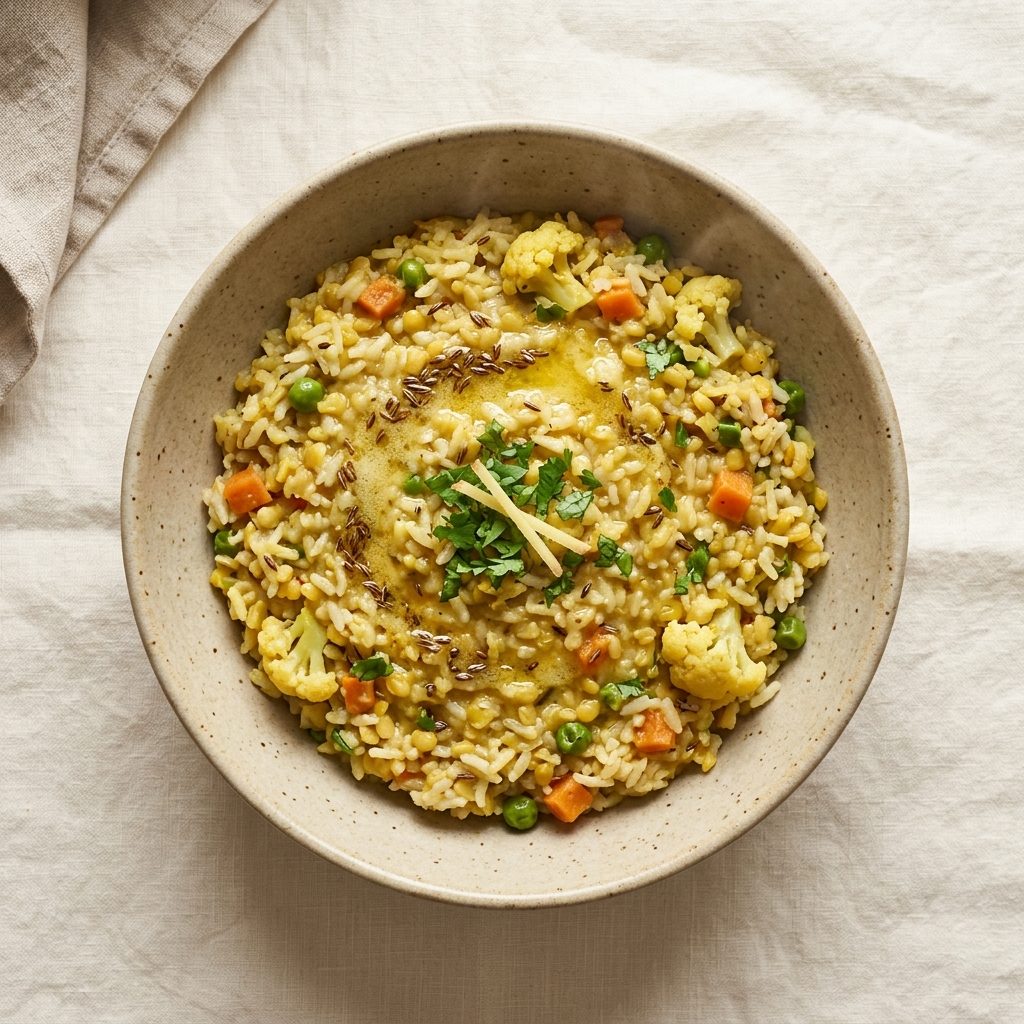
Moong dal khichdi with vegetables (vegetarian)
Khichdi is the most underrated light dinner in the country and it takes one pot.
Ingredients. 60 g rice, 60 g yellow moong dal, 1 carrot diced, a handful of beans, half a cup of peas, 1 tomato, half tsp haldi, salt, 900 ml water. For the tadka, 2 tsp ghee, 1 tsp jeera, pinch of hing, 1 dried red chilli. Serves two.
Method.
- Rinse the rice and dal until the water runs clear.
- Everything except the tadka into the cooker. Three whistles, then let the pressure drop naturally.
- Whisk it loose with a little hot water. Khichdi should pour, not stand.
- Make the tadka in the ghee and pour it over at the table.
Serve with a katori of curd and it becomes a balanced meal with roughly 15 to 18 grams of protein per serving.
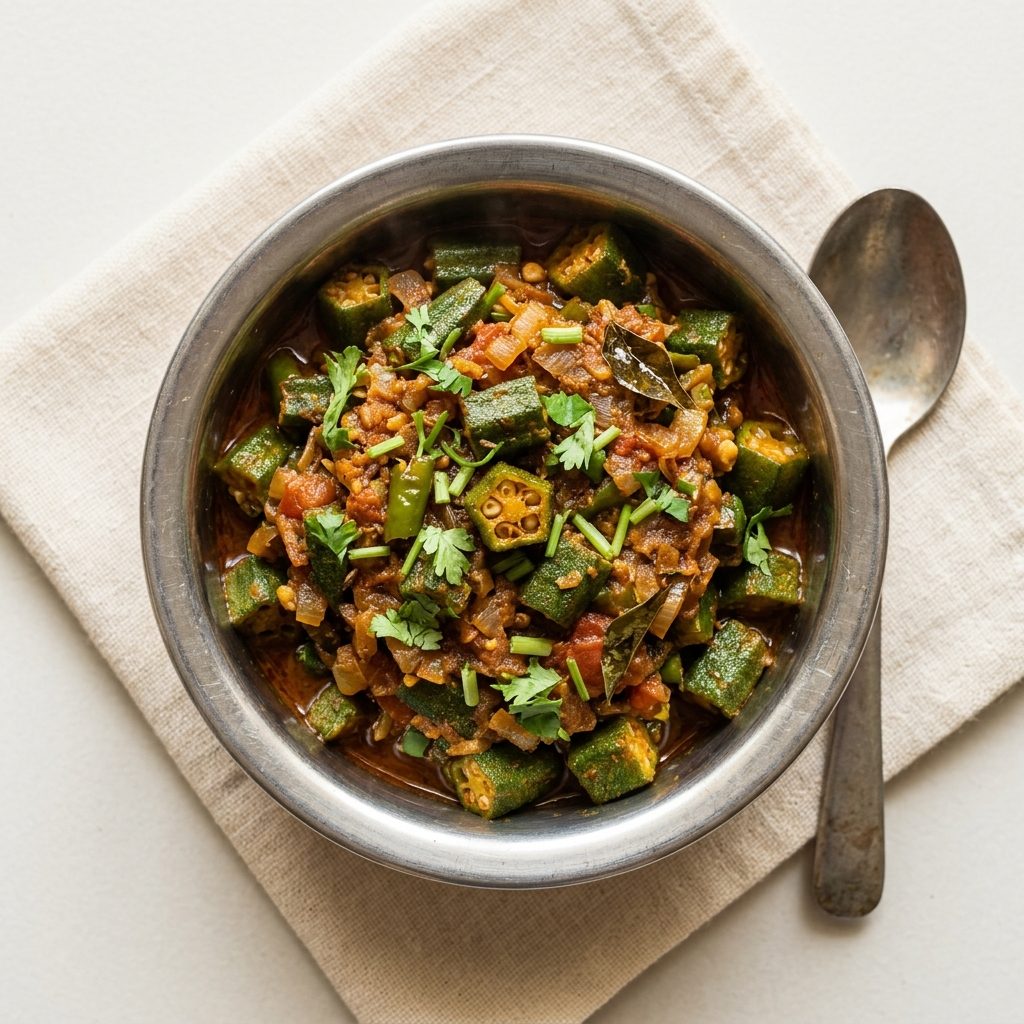
Bhindi masala with two rotis (vegetarian)
Bhindi is normally cooked in a lot of oil to stop it going slimy. There is a better way.
Ingredients. 400 g bhindi in 2 cm pieces, 1 onion sliced, half tsp haldi, 1 tsp coriander powder, half tsp amchur, 2 tsp oil, salt. Serves two.
Method.
- Wash the bhindi and dry it completely, then cut. Wet bhindi is what makes it slimy, not the cooking.
- Heat a wide pan properly hot with the oil. Add the bhindi in a single layer and leave it alone for three minutes without stirring.
- Toss, cook another five minutes, then add the onion and spices.
- Amchur at the end. Do not cover the pan at any point.
A high heat wide pan does what extra oil was doing. See bhindi masala for portion sizes.
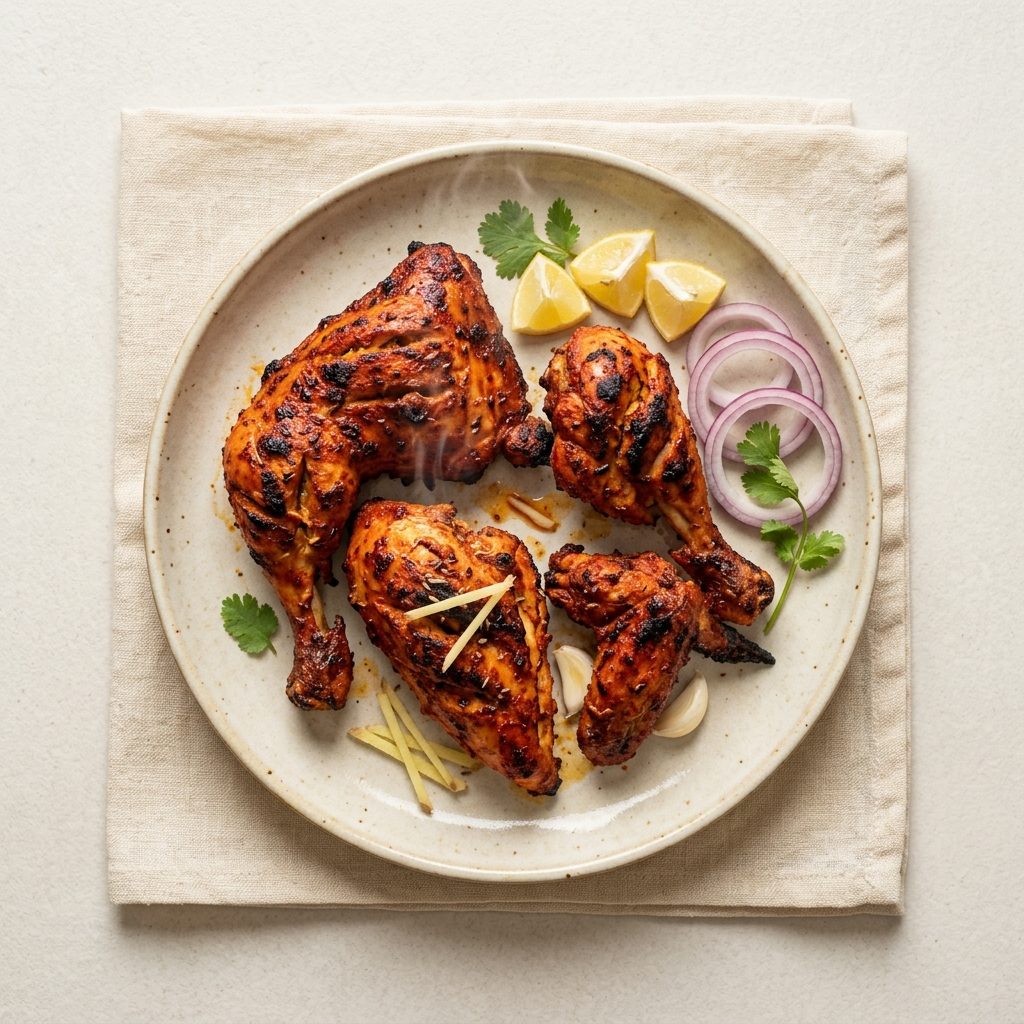
Tandoori chicken with a big salad (non-vegetarian)
Grilled chicken in a curd marinade is about as protein dense as an Indian dinner gets, and the salad does the volume.
Ingredients. 500 g chicken drumsticks or thighs, skin removed, slashed to the bone. 150 g thick curd, 1 tbsp ginger garlic paste, 1 tsp red chilli powder, 1 tsp garam masala, 1 tbsp lemon juice, 1 tsp mustard oil, salt. Serves two to three.
Method.
- Rub the chicken with lemon, salt and chilli powder. Rest 20 minutes.
- Coat in the curd marinade and refrigerate at least four hours.
- Oven at 220 C for 30 to 35 minutes, turning once, or an air fryer at 200 C for 22.
- Rest 5 minutes. Serve with a plate of onion, cucumber, tomato and lemon.
Roughly 35 to 40 grams of protein per serving. The tandoori chicken page has the usual piece counts.
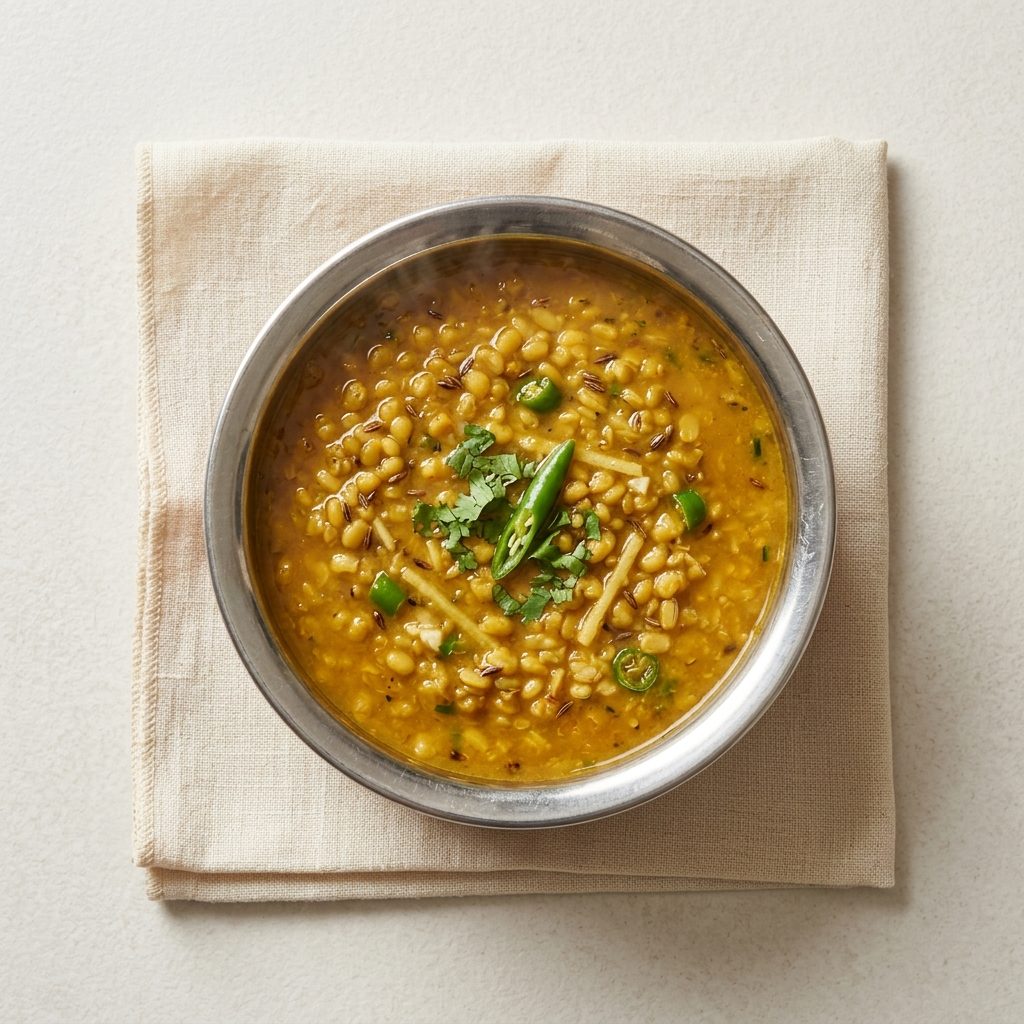
Lauki chana dal (vegetarian)
Bottle gourd adds enormous volume for almost nothing, and the chana dal keeps it from feeling thin.
Ingredients. 100 g chana dal soaked one hour, 500 g lauki peeled and cubed, 1 tomato, 1 tsp ginger paste, half tsp haldi, salt. Tadka of 2 tsp ghee, 1 tsp jeera, hing, 2 dried chillies. Serves three.
Method.
- Pressure cook the dal, lauki, tomato, ginger, haldi and salt with 500 ml water. Three whistles.
- Mash lightly so the lauki melts into the dal but a few pieces stay whole.
- Ghee tadka, coriander, lemon.
This is a large, filling katori for very little, and it holds roughly 10 to 13 grams of protein per serving.
Paneer and vegetable stir fry (vegetarian)
Twelve minutes, one pan, and it fills a plate properly.
Ingredients. 200 g paneer in fingers, 1 capsicum, 1 onion, 1 cup shredded cabbage, a handful of beans, 2 tsp oil, 1 tsp ginger garlic, half tsp red chilli flakes, 1 tsp soy sauce, salt, spring onion. Serves two.
Method.
- Sear the paneer dry on a hot pan for 40 seconds a side, then set aside.
- One teaspoon of oil, high flame, ginger garlic, then the hardest vegetables first and the cabbage last. Three to four minutes total, keep them crunchy.
- Return the paneer, add the soy and chilli flakes, toss twice and take it off.
Roughly 20 to 24 grams of protein per serving, and the vegetables make it look like far more food than it is.
Egg curry with one roti (non-vegetarian)
Boiled eggs in a simple onion tomato gravy is the fastest protein dinner in an Indian kitchen.
Ingredients. 4 boiled eggs, 2 onions chopped, 2 tomatoes pureed, 1 tbsp ginger garlic paste, 2 tsp oil, 1 tsp jeera, half tsp haldi, 1 tsp chilli powder, 1 tsp coriander powder, salt, coriander. Serves two.
Method.
- Brown the onions properly in the oil, then ginger garlic, then the tomato and spices until the oil separates.
- Add a cup of water and simmer 5 minutes.
- Halve the eggs, lay them in gently, simmer 3 minutes, coriander over the top.
Roughly 15 to 18 grams of protein per serving, and it costs almost nothing.
When the family eats from the same pot
You do not need to cook a separate dinner for yourself, and doing so is usually the reason light eating collapses inside a fortnight.
Change your plate, not the recipe.
- Serve yourself first, before the food is passed around. It is the only reliable way to control what lands on your plate.
- Shift the ratio. More sabzi and dal, fewer rotis. Same pot, same dish, different proportions.
- Add something only you eat. A katori of curd, a plate of salad, a boiled egg. Nobody notices and it changes the whole meal.
- Ask for one change that helps everyone. Half the oil in the sabzi. Cooked right, nobody at the table will identify what is different.
None of this needs announcing. There is no reason for dinner to become a conversation about your diet.
Lighter is a shape, not a size
The dinners above are not small. Most of them fill a plate more convincingly than a rich gravy and two parathas do.
That is the point. If you finish dinner and the evening is over, the dinner worked. If you finish dinner and start negotiating with yourself about biscuits, it did not, regardless of what the number said.
Volume, protein, and honest cooking fat. Everything else is detail.
Calorie figures on this page are typical ranges, not lab values. Indian recipes vary enormously between kitchens, so a number that is right for one house is wrong for the next. Sehat keeps a confidence level and a source note on every entry rather than pretending a single figure is the truth. This is general information, not medical advice.
Common questions
What is a good light Indian dinner?
A bowl of moong dal khichdi with a small ghee tadka, a vegetable heavy sabzi with one or two rotis, grilled paneer or chicken with a large salad, or a thick vegetable and dal soup with roasted chana. All of them fill a plate properly. The common thread is high volume, moderate grain and a real protein.
Should I skip rice at dinner to lose weight?
No, and skipping it usually backfires. Rice is not what stalls a deficit, total intake across the day is. A small katori of rice at dinner is easy to fit into most targets. If you find rice hard to portion, serve it first into a katori rather than spooning from the pot, and keep the rest of the plate to vegetables and protein.
Is roti or rice better for a light dinner?
Neither is meaningfully lighter at typical portions. A medium roti and a small katori of plain rice land in a similar band. Roti is easier to count because it comes in pieces, rice is easier to over-serve because it is spooned. Pick whichever one you portion more honestly.
How do I eat lighter when the whole family eats from one pot?
Serve yourself first and change the ratio, not the recipe. Take more of the sabzi and dal, fewer rotis, and add something on the side that only you eat, like curd, salad or a boiled egg. Nobody has to cook twice and nobody has to know.
Is khichdi good for a light dinner?
Yes. Moong dal khichdi is soft, filling, easy to digest and gives you grain and pulse in one pot. Keep the ghee to a teaspoon or two and add vegetables to the cooker. Adding a katori of curd on the side turns it into a balanced meal with meaningful protein.
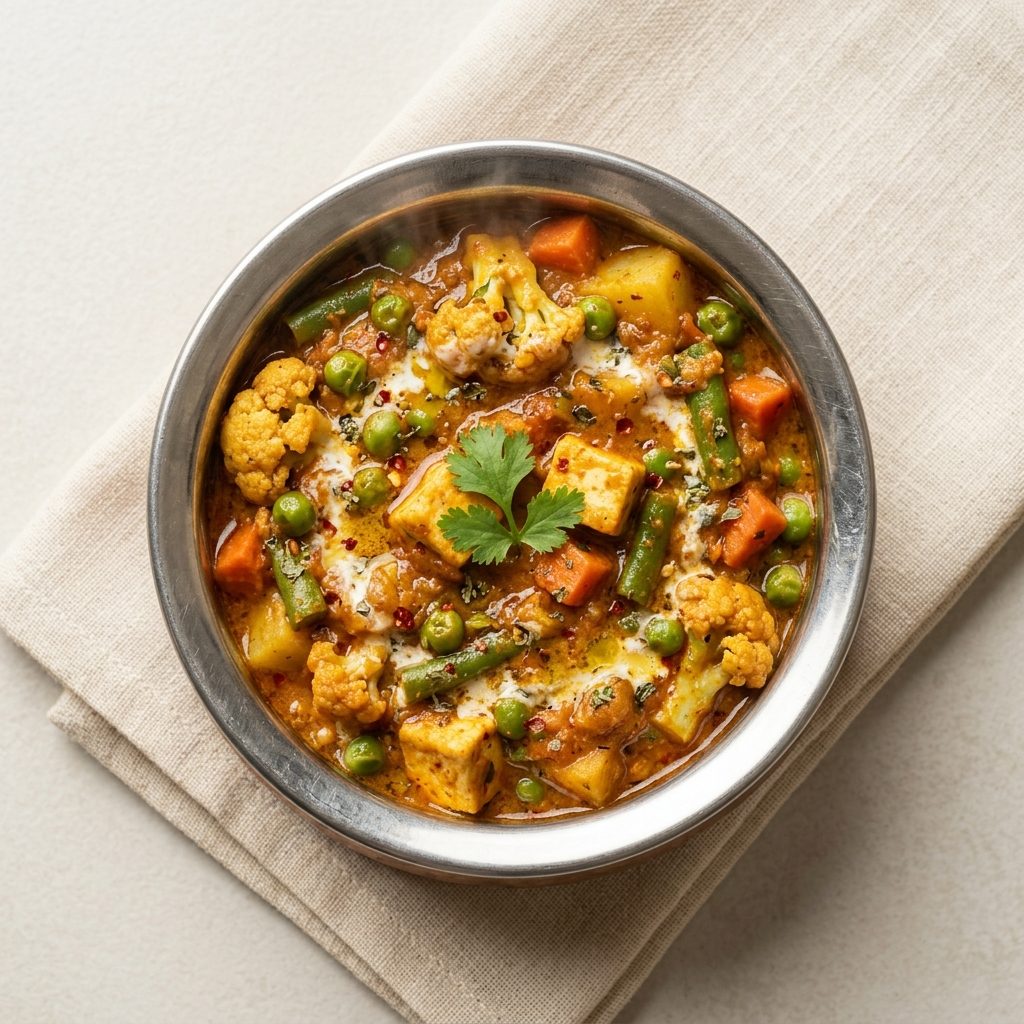
Dishes mentioned
In the app
All of this, without the arithmetic.
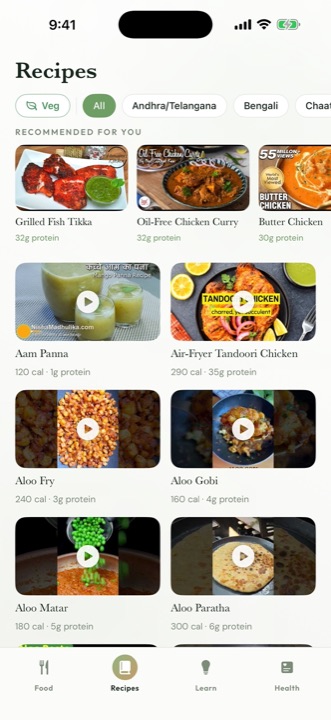
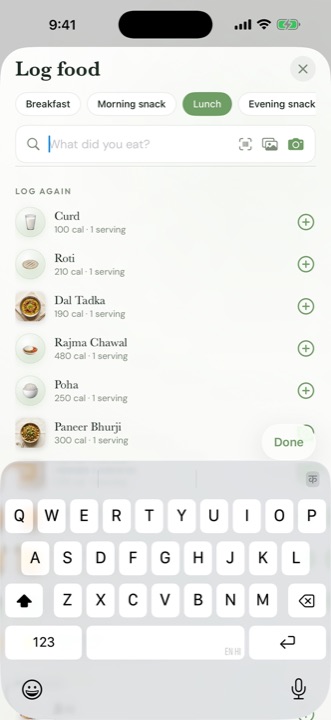
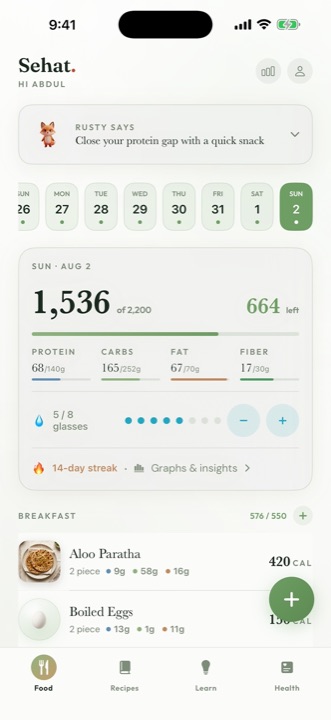
The world's most complete Indian calorie counter.
Over 10,000 foods and spellings.
Log dal, roti and biryani by voice, in Hinglish, in the portions your kitchen actually uses. An AI coach reads your day and guides you. No coaches. No calls. No spam.
Download free on the App StoreAndroid is on the way.
Calorie tracking
How to build a calorie deficit on an Indian diet
A calorie deficit does not require giving up dal, roti or rice. How to size one sensibly, adjust cooking fat and portions, and keep it going past week three.
Fitness
Losing fat without giving up Indian food
A moderate deficit, protein held high, and the cooking oil lever that changes everything. How to lose fat while still eating roti, rice and dal every day.
Recipes
Eight high protein Indian recipes that are not chicken breast
Eight real Indian recipes built around protein, four vegetarian and four not. Soya curry, sattu paratha, paneer bhurji and chicken tikka, with full method.