North, south, east, west: how Indian food changes by region
The short answer
Indian food changes region by region. Wheat is the staple across the north and much of the west, rice across the south and east. Cooking fat shifts from ghee and mustard oil to coconut and groundnut oil. Fermented batters, fish and dairy weight all vary, so a single average Indian diet describes nobody.
Key takeaways
- Wheat is the staple across the north and much of the west, rice across the south, east and coasts, and that single split changes how a whole day of eating is structured.
- Cooking fat is the biggest regional variable. Ghee and mustard oil in the north and east, coconut oil in Kerala, groundnut oil in Gujarat and Maharashtra.
- The south ferments. Idli, dosa, appam and uttapam batters are naturally leavened, which changes texture, sourness and digestibility.
- Fish is an everyday protein in Bengal, Odisha, Kerala, coastal Karnataka and Goa, where much of the north treats it as occasional.
- Dairy sits heaviest in the north and west, through paneer, curd, ghee, malai and khoya.
- A national average Indian diet is a fiction. Nobody eats it, and a food database built around one region cannot serve the rest.
Somebody in Ludhiana eats two rotis, a katori of rajma and a glass of lassi. Somebody in Thrissur eats rice, a fish curry cooked in coconut oil and a spoon of pickle. Somebody in Ahmedabad eats thepla, a sweetened dal and a katori of shrikhand.
All three ate Indian food today. The overlap between those plates is close to zero.
Indian cuisine is not one cuisine with local accents. It is a set of distinct food cultures that differ in staple, fat, protein and structure, and that matters a great deal to anyone trying to track what they eat.
There is no such thing as an average Indian diet
The phrase Indian diet gets used constantly, usually attached to a number. It describes nobody.
The country runs on at least two different staple grains, at least five common cooking fats, wildly different dairy habits, and completely different attitudes to fish. Average all of that together and you get a plate that does not exist in any home in the country.
This is not a statistical quibble. If you eat a south Indian diet and read advice written from a north Indian plate, it will be wrong in ways that are hard to spot: wrong about which foods carry the fat, wrong about where your protein is coming from.
The staple line: wheat above, rice below
The clearest split in Indian food runs roughly across the middle of the country.
Wheat is the everyday staple across Punjab, Haryana, Delhi, Uttar Pradesh, Rajasthan, Madhya Pradesh and much of Gujarat. The meal is built around breads: roti, phulka, paratha, bhakri, thepla, missi roti. Millets like bajra and jowar sit alongside wheat in Rajasthan, Gujarat and parts of Maharashtra and Karnataka.
Rice is the everyday staple across the south, the east, the northeast and the whole coastline. In Tamil Nadu, Kerala, Andhra, Telangana, Karnataka, Bengal and Odisha, rice is not a side dish. It is the plate, and everything else is served onto it.
That structural difference matters more than the grains themselves. Breads arrive as countable pieces, which makes them easy to log. Rice is ladled onto a plate, which makes portions much easier to overshoot. The two staples are broadly comparable in energy for a comparable serving, and completely different at the table.
The cooking fat map
If you only learn one regional difference, learn this one. Cooking fat is the single largest variable in Indian home cooking, and it changes entirely by geography.
| Region | Everyday fat | Shows up in |
|---|---|---|
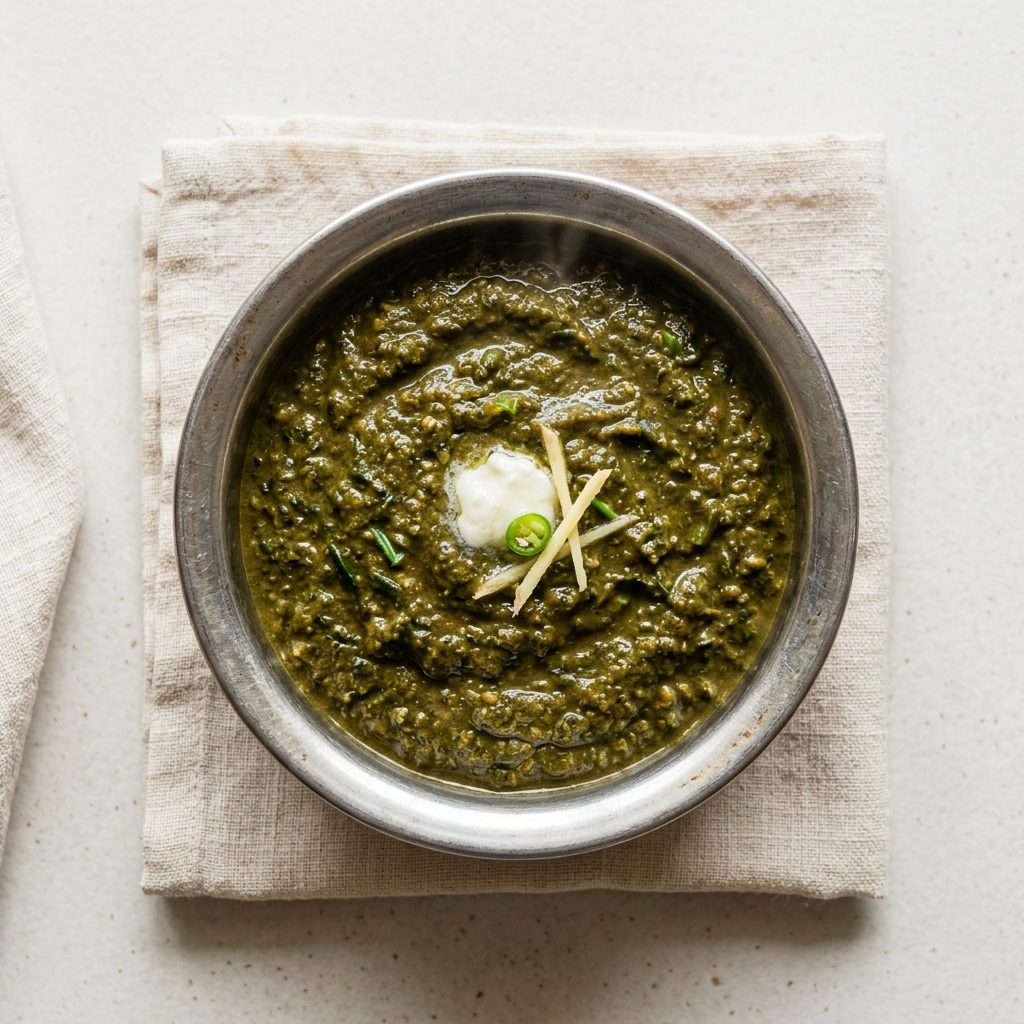
| Punjab, Haryana, Rajasthan | Ghee, mustard oil | Sarson ka saag, parathas, dal |
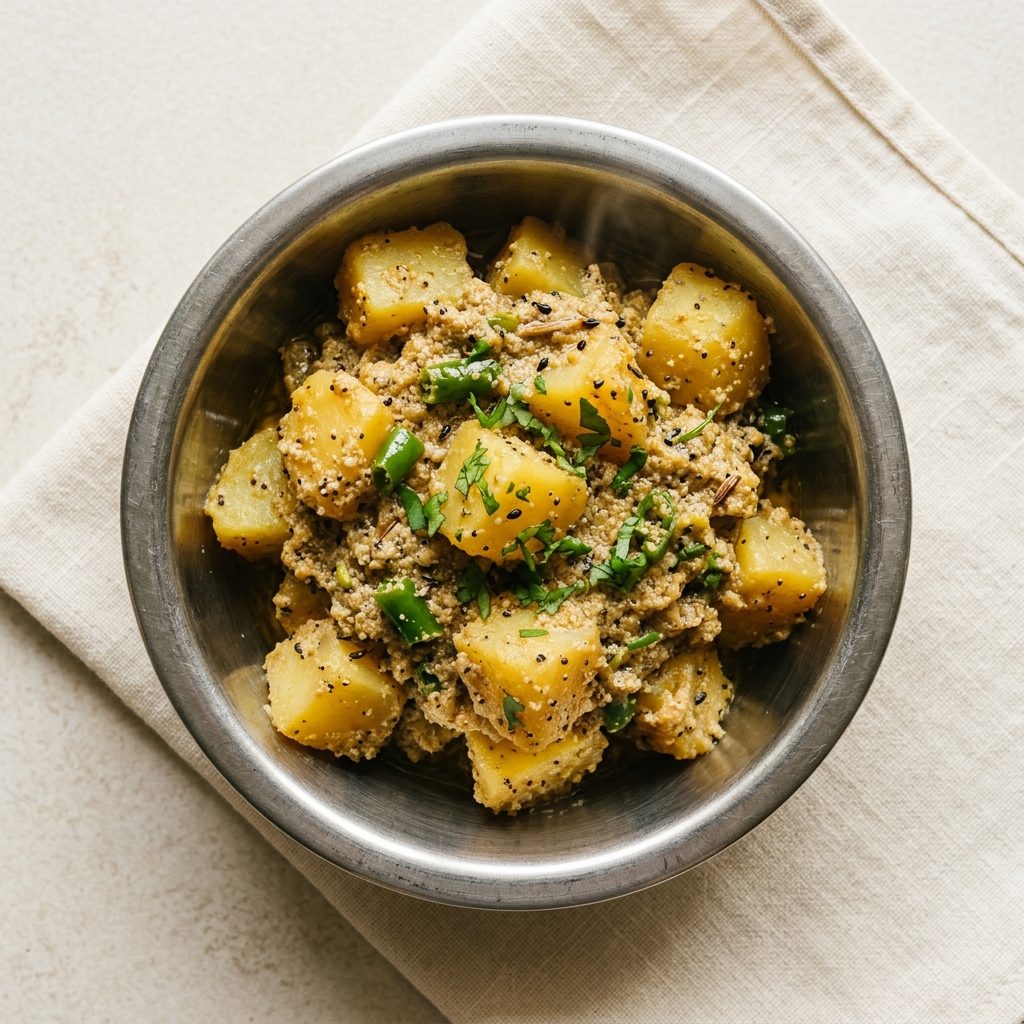
| Bengal, Odisha, Bihar | Mustard oil | Aloo posto, fish curries, bhaja |
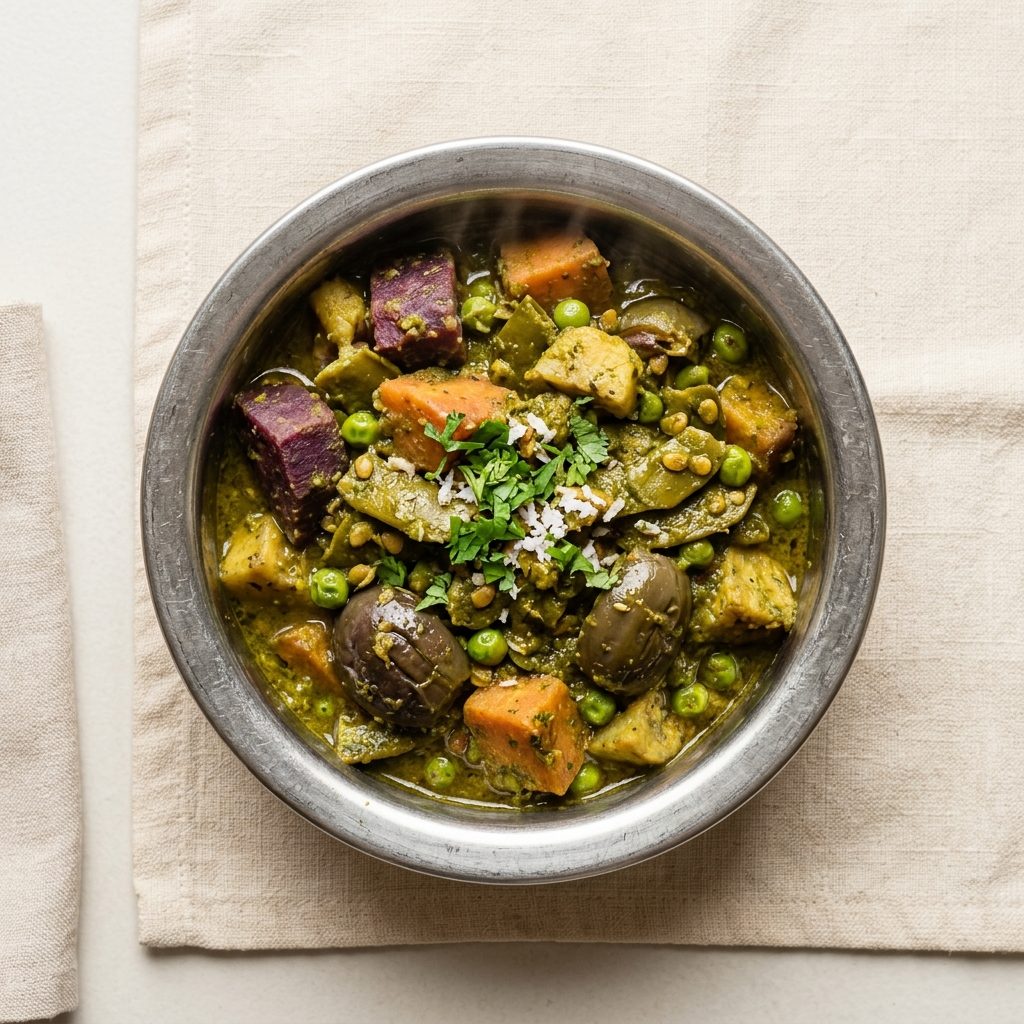
| Kerala, coastal Karnataka | Coconut oil, fresh coconut | Mangalorean fish curry, avial, thoran |
| Gujarat, Maharashtra | Groundnut oil, some ghee | Undhiyu, usal, bhaji |
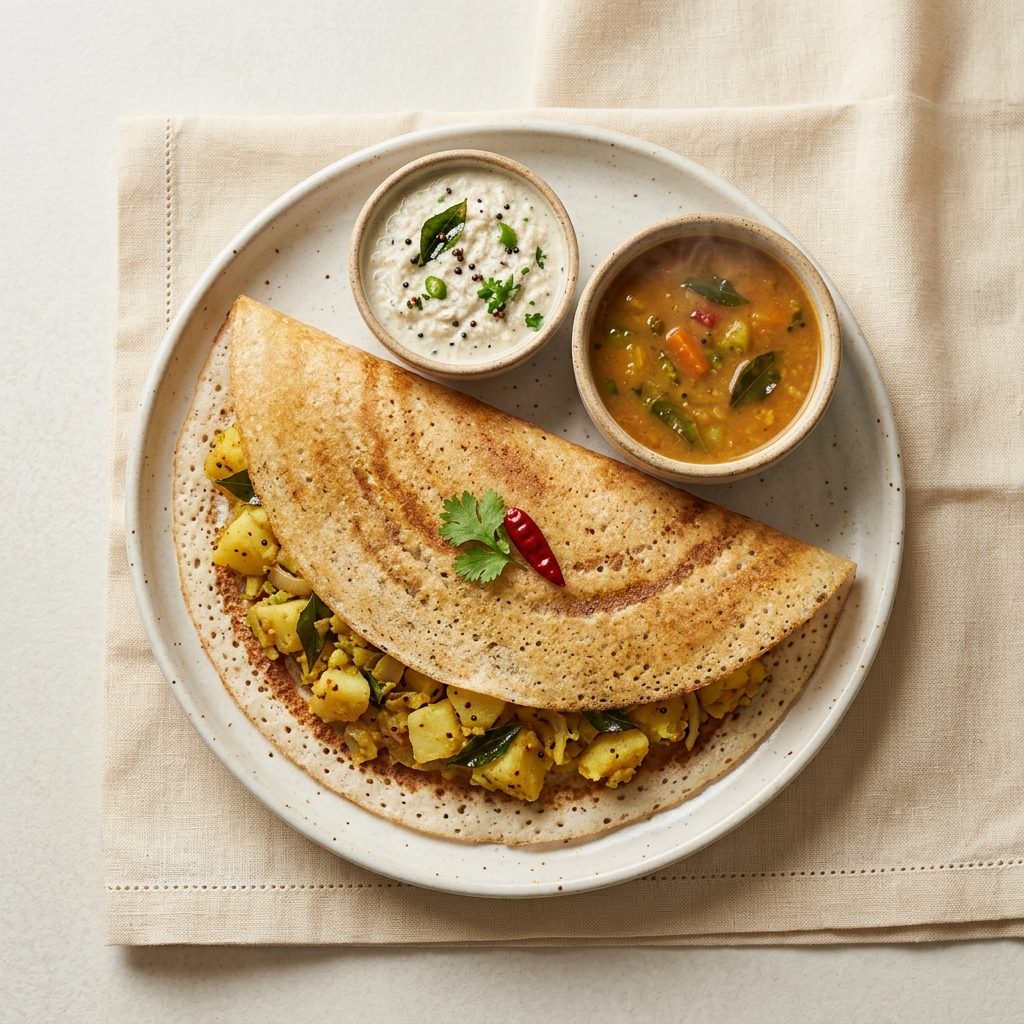
| Tamil Nadu, Andhra | Sesame oil, groundnut oil | Sambar, poriyal, pappu |
Here is the part that surprises people. All of them carry roughly the same energy. Ghee, mustard oil, coconut oil and groundnut oil are all somewhere around 120 calories per tablespoon. They differ in flavour, smoke point, fatty acid profile and tradition, not in calories.
So the regional question that matters for tracking is not which oil. It is how much, and that varies by dish and by household far more than by state.
The north: dairy carries the plate
North Indian cooking leans on dairy more than any other regional cuisine in the country.
Curd with the meal, paneer as the default vegetarian protein, malai and cream in restaurant gravies, khoya in the sweets, ghee on the roti, lassi and chaas as everyday drinks. Rajasthan and Punjab in particular built their food around milk in a way that Kerala and Bengal did not.
For tracking, that concentrates a lot of the fat in places that are easy to miss, because dairy fat is often invisible. The malai in a gravy, the ghee on a hot roti, the full-fat curd in a raita. It also means protein is easier to come by for vegetarians here than in some other regions, since paneer and curd do a lot of work.
Winter cooking pushes further in the same direction. Sarson ka saag with makki roti and a spoon of white butter is a genuinely heavy plate, and also one of the best things anybody eats anywhere. Both facts are true at once.
The south: rice, coconut and fermentation
South Indian cooking has one feature no other region uses at the same scale: fermentation.
Idli, masala dosa, appam, uttapam, neer dosa and pesarattu all start with a batter that is left to ferment. That changes texture, adds a light sourness and makes the batter easier on the stomach for many people. It is also why a plain idli is such a light item and a ghee roast dosa is not: the batter is the same, the cooking fat is not.
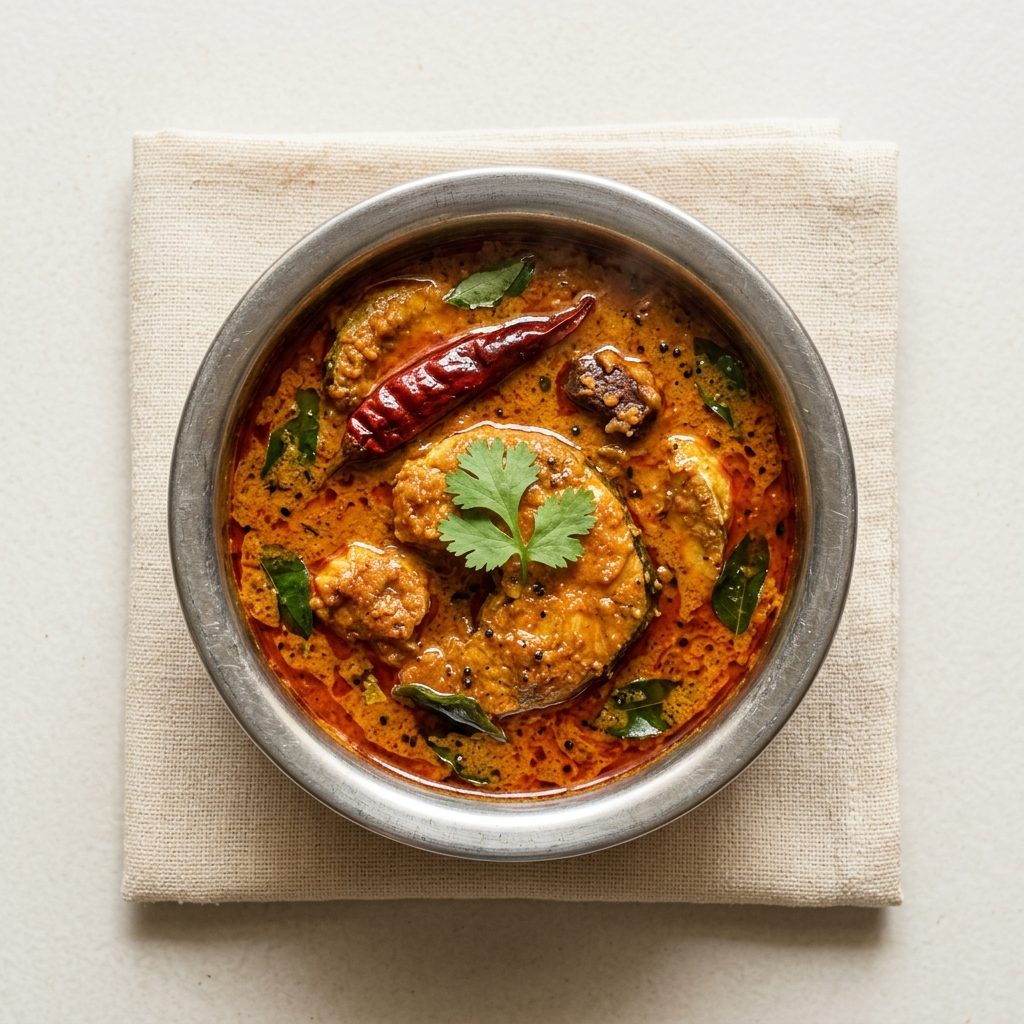
The other defining ingredient is coconut, used three ways. As fresh grated coconut in thoran and poriyal, as thick coconut milk in Kerala stews and curries, and as coconut oil for cooking. Coconut milk carries meaningful fat, which is why a Kerala fish curry and a Bengali fish curry can be different foods despite starting with the same fish.
Lentils appear everywhere but arrive differently. Sambar, rasam, pappu and kootu are all pulse-based, and they are eaten poured over rice rather than served in a separate bowl. The dal nutrition guide covers how much this changes what you actually get from a serving.
The east: fish, mustard and a lighter hand with fat
Bengali and Odia cooking is rice-based, fish-forward and built on mustard.
Mustard oil, mustard paste, panch phoron, poppy seeds, freshwater fish. Everyday Bengali home cooking is often lighter than its reputation suggests: a plain dal, a vegetable bhaja, a fish jhol and rice is not a heavy meal. The reputation comes from the festival food and the sweets, which are dairy-heavy, since Bengal built an entire sweet tradition on chhena.
Fish is the structural difference for anyone tracking. In Bengal, Odisha, Kerala, coastal Karnataka and Goa, fish is an everyday protein rather than a weekend event, and it changes the whole protein picture of a household without anybody thinking of it as a diet choice.
The west: three different cuisines in one label
West India is where the idea of a regional average falls apart completely.
Gujarati food is largely vegetarian, uses groundnut oil, and adds jaggery to savoury dishes, so dal and shaak carry a sweetness that surprises everyone else. Thepla, dhokla, undhiyu, khichdi.
Maharashtrian food splits again between coastal Konkani cooking with coconut and fish, and the drier interior with bhakri, pitla, zunka and thecha.
Rajasthani food evolved around scarce water and long shelf life, which produced dal baati churma, gatte ki sabzi and a heavy reliance on ghee and dried pulses.
Goan and Konkani cooking uses coconut, kokum, vinegar and plenty of seafood, with a Portuguese line running through vindaloo and balchao.
Four cuisines, one region, almost nothing in common. Calling any of them west Indian food tells you nothing useful about what is on the plate.
What this actually means if you are tracking
Four practical consequences.
- Learn where the fat sits in your own cuisine. Ghee on rotis in Punjab, coconut milk in Kerala, oil in a Gujarati shaak, mustard oil in a Bengali jhol. It is a different hiding place in every region.
- Know how your staple is served. Countable breads are easy to log. Rice ladled onto a plate needs a portion habit, which the guide to Indian portion sizes covers.
- Do not import advice from another region. Guidance written around roti and paneer does not transfer cleanly to a rice and fish household.
- Look at your own protein sources honestly. Fish, curd, paneer, dal, pulses and eggs all count, and which of them you actually eat is largely a function of where you grew up.
Why a food database cannot collapse India into one menu
Most Indian nutrition data was built from a north Indian restaurant menu, because that is the food that travelled, got printed in English and became shorthand for Indian food abroad.
That leaves out most of what the country eats. Pesarattu, kori gassi, undhiyu, aloo posto, puttu, avial, sol kadhi, bisi bele bath, gutti vankaya, panchmel dal. These are not obscure. They are somebody’s Tuesday.
Holding them properly means more than adding names to a list. Each needs its own portion units, its own gram conversions, and its own regional aliases, since the same dish carries different names in different states. That naming problem is a whole subject of its own, covered in the piece on why one Indian dish has fifteen spellings. Sehat carries 1,820 dishes across every region for exactly this reason, because a database that only knows butter chicken and dal makhani is not an Indian food database. It is a menu.
India is not one cuisine and never was
The variety is the point. Different grains, different coasts, different climates and a few thousand years of people cooking what grew nearby.
No region’s food is better or worse for you than another’s. Every one of them has light everyday meals and rich celebration food, and every one of them can be tracked once you know what your own plate is made of.
Eat your region’s food. Just know what is in it.
Calorie figures on this page are typical ranges, not lab values. Indian recipes vary enormously between kitchens, so a number that is right for one house is wrong for the next. Sehat keeps a confidence level and a source note on every entry rather than pretending a single figure is the truth. This is general information, not medical advice.
Common questions
What is the main difference between north and south Indian food?
The staple and the fat. North Indian meals are built around wheat breads with dairy and ghee running through them. South Indian meals are built around rice, with coconut, tamarind, curry leaves and fermented batters like idli and dosa. Both use lentils heavily, but they arrive as dal in the north and as sambar or rasam in the south.
Which cooking oil is used in which part of India?
Mustard oil dominates in Bengal, Odisha, Bihar and parts of the north. Ghee is the traditional fat of Punjab, Rajasthan and much of the north. Coconut oil is standard in Kerala and coastal Karnataka. Groundnut and sesame oil are common in Gujarat, Maharashtra and Tamil Nadu. All cooking oils carry roughly 120 calories per tablespoon.
Is south Indian food healthier than north Indian food?
Neither region is healthier than the other. South Indian cooking uses more fermentation and less dairy, north Indian cooking more wheat and dairy, and both include light everyday meals and rich festival food. What matters is the specific dish, the cooking fat and the portion, not the region it comes from.
Do Indians in different states eat different amounts of protein?
Sources vary more than totals. Fish is an everyday protein in Bengal, Odisha, Kerala, coastal Karnataka and Goa. Dairy and paneer carry more of the load in the north and west. Lentils and pulses appear everywhere, as dal, sambar, pappu, kootu or usal. Regional habits change where protein comes from rather than whether it is there.
Why do calorie apps only have north Indian dishes?
Because most Indian food databases were built from a north Indian restaurant menu, which is what travelled and got written down in English. That leaves out much of what the country actually eats every day, including regional staples like pesarattu, undhiyu, aloo posto, kori gassi and puttu, each of which is a distinct dish with its own portions.
Dishes mentioned
In the app
All of this, without the arithmetic.
The world's most complete Indian calorie counter.
Over 10,000 foods and spellings.
Log dal, roti and biryani by voice, in Hinglish, in the portions your kitchen actually uses. An AI coach reads your day and guides you. No coaches. No calls. No spam.
Download free on the App StoreAndroid is on the way.
Indian food
Why one Indian dish has fifteen spellings
Gajar halua, gajar halwa and gajar ka halwa are one dish. Why Indian food names fragment across spellings and regions, and what a search box has to do about it.
Nutrition
A guide to dal, and what is actually in your katori
Toor, moong, masoor, chana, urad, rajma and chole compared on protein, fibre and calories. Why dal makhani sits higher, and what a katori really gives you.
Macros
Carbs in Indian food, and how many you actually need
Which Indian staples are carb-dense, how roti, rice, poha and upma compare, and the honest answer for anyone eating two rotis with every meal.