High protein Indian breakfasts you can make on a weekday
The short answer
The Indian breakfast protein gap is real. Poha, upma, idli and toast land around 5 to 8 grams. Besan chilla, moong dal chilla, paneer bhurji, egg bhurji, a sattu drink, a curd bowl or poha loaded with peanuts and sprouts each get you to 15 to 25 grams in under fifteen minutes.
Key takeaways
- The standard Indian breakfast lands around 5 to 8 grams of protein, which is roughly a third of what a first meal should carry.
- Besan and moong dal are the two fastest ways to build protein into a breakfast, at roughly 20 to 24 grams per 100 grams dry.
- A besan chilla holds roughly 12 to 15 grams of protein and takes six minutes from batter to plate.
- Sattu mixed into water with lemon and salt is a two minute breakfast carrying roughly 10 to 12 grams of protein.
- Adding peanuts, sprouts and a boiled egg to poha roughly triples its protein without changing the dish.
Look at what most of India eats before nine in the morning. Poha, upma, two idli, bread and jam, a paratha, a cup of chai. All fine food. Almost none of it carries protein.
A standard Indian breakfast lands somewhere around 5 to 8 grams. That leaves the entire day’s protein to be crammed into lunch and dinner, which is why so many people who eat plenty of food still end the day fifteen or twenty grams short.
Fixing breakfast is the single easiest change in an Indian diet, because breakfast is the most repetitive meal of the week. Change it once and it stays changed.
The protein gap at breakfast, and why it matters
Breakfast is where the protein shortfall starts, and it compounds.
Aim for 20 to 25 grams at breakfast if you train and 15 to 20 if you do not. The typical Indian first meal comes in at a third of that. Protein spread evenly across meals is easier to eat and easier to use than protein dumped into one large dinner, and it holds appetite better through the morning.
The good news is that the ingredients are already in your kitchen. Besan, moong dal, sattu, curd, eggs, paneer, peanuts. Nothing here needs a specialty store. If you want the underlying numbers, macros explained for an Indian diet covers how protein fits into the rest of the day.
Every recipe below is genuinely doable on a weekday morning. Quantities serve one unless stated.
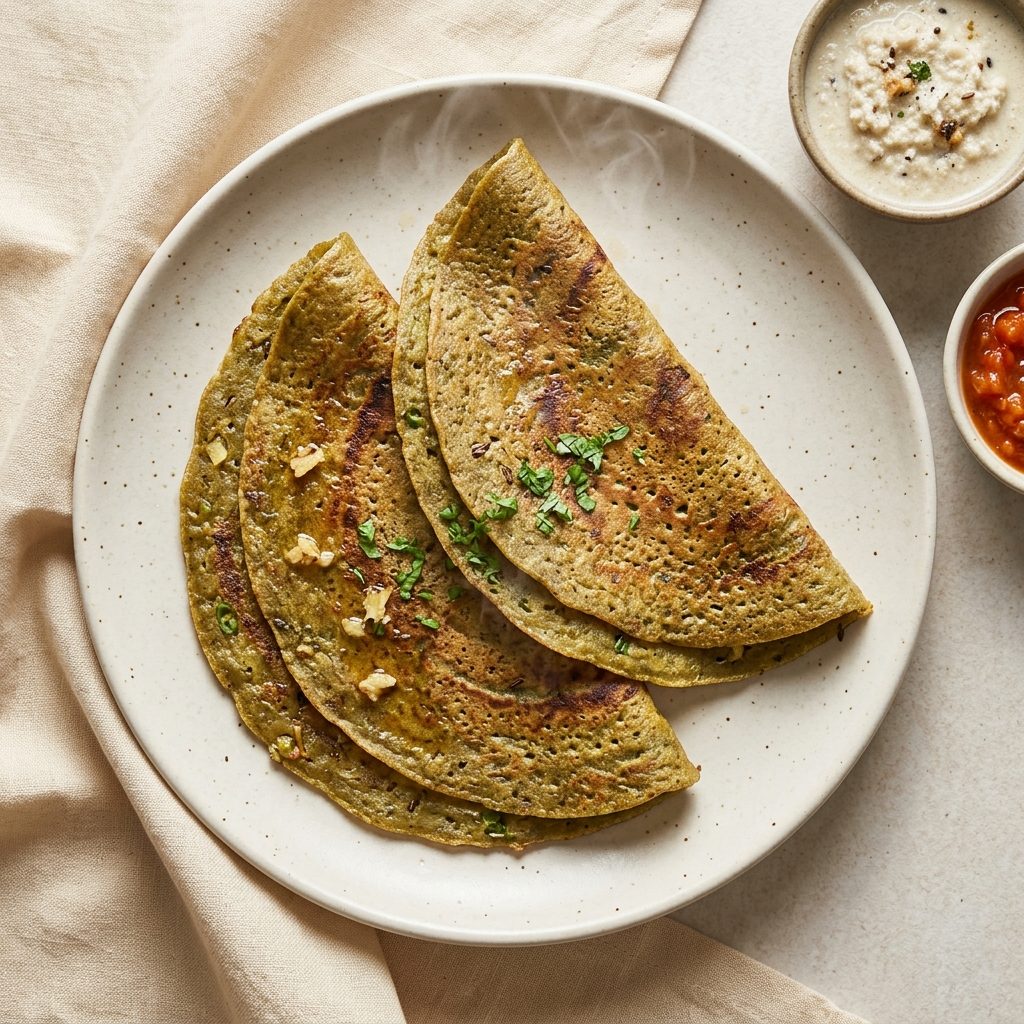
Besan chilla, six minutes (vegetarian)
Besan is roughly 20 to 22 grams of protein per 100 grams, which makes chilla the most efficient breakfast in the Indian repertoire.
Ingredients. 60 g besan, 120 ml water, half a small onion chopped, half a tomato chopped, 1 green chilli, 2 tbsp chopped coriander, half tsp ajwain, quarter tsp haldi, salt, 1 tsp oil.
Method.
- Whisk the besan into the water until completely smooth. Batter should coat a spoon and drip off slowly.
- Stir in everything else. No resting needed if you whisked properly.
- Pour a ladle onto a hot non stick tawa and spread thin. Drizzle the oil around the edge.
- Two minutes, flip when the edges lift, one minute more.
Protein. Roughly 12 to 15 grams for a single large chilla. Two chillas and a katori of curd puts you comfortably over 20.
Moong dal chilla, the pesarattu version (vegetarian)
Green moong ground into a batter gives you a chilla with more protein and more fibre than besan, and it holds you longer.
Ingredients. 100 g whole green moong soaked six hours or overnight, 1 inch ginger, 1 green chilli, quarter tsp jeera, salt, 1 tsp oil. Makes two.
Method.
- Drain the soaked moong and blend with the ginger, chilli, jeera, salt and a little water into a batter about the thickness of dosa batter. This takes one minute in the morning if you soaked the night before.
- Spread thin on a hot tawa, oil around the edge.
- Two to three minutes on the first side until it lifts cleanly, one minute on the second. Scatter chopped onion on top before you flip if you want it the pesarattu way.
Protein. Roughly 15 to 18 grams across the two chillas. Blend enough for three days and keep the batter in the fridge, it works fine through day three.
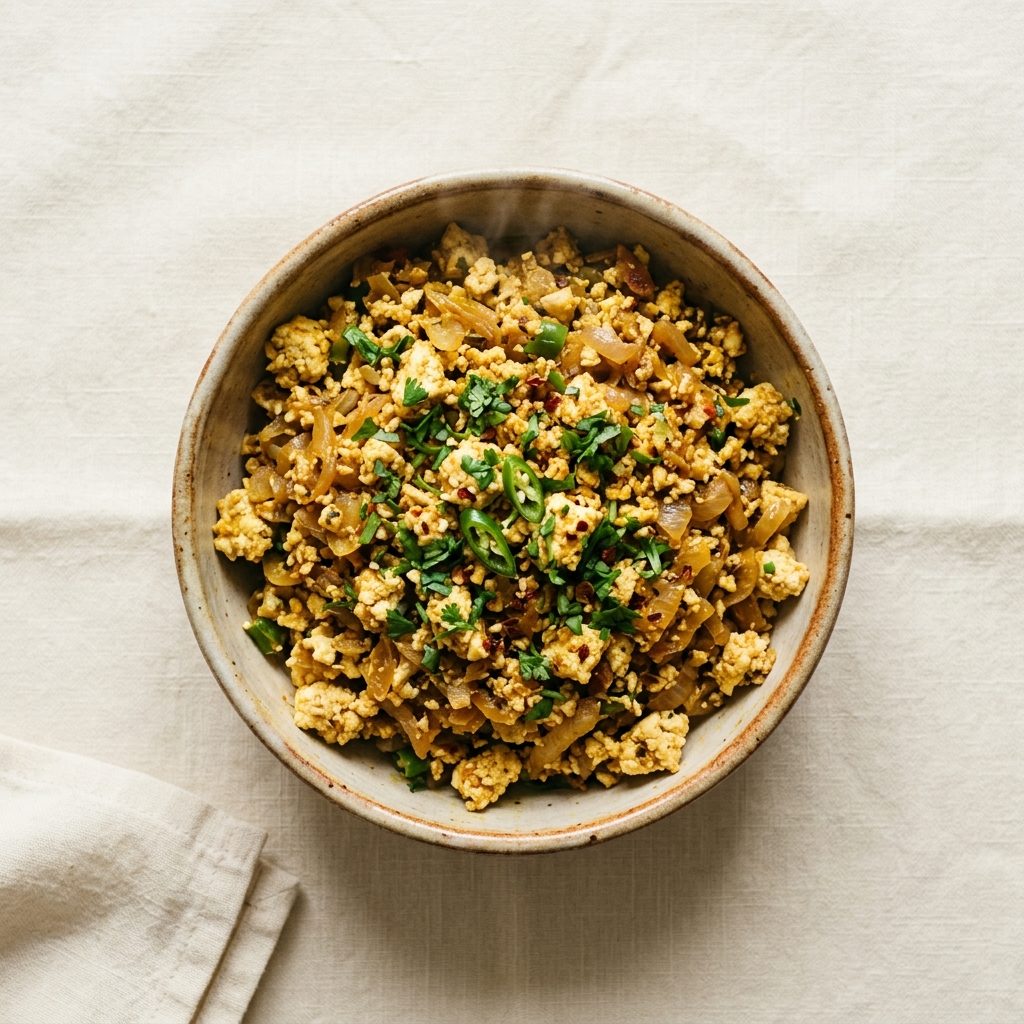
Paneer bhurji, ten minutes (vegetarian)
The highest protein vegetarian breakfast on this list, and it needs no preparation the night before.
Ingredients. 150 g paneer crumbled, half an onion, 1 tomato, 1 green chilli, quarter tsp jeera, quarter tsp haldi, quarter tsp red chilli powder, 1 tsp oil, salt, coriander, lemon.
Method.
- Crackle the jeera in the oil, soften the onion and chilli for two minutes.
- Tomato, haldi, chilli powder, salt. Three minutes until it collapses.
- Fold the paneer in and count to ninety. Any longer and it goes tough.
- Coriander and lemon off the heat.
Protein. Roughly 25 to 28 grams. Eat it with one roti or a slice of toast. More paneer methods sit in paneer recipes that keep the protein, and paneer bhurji has the standard portions.
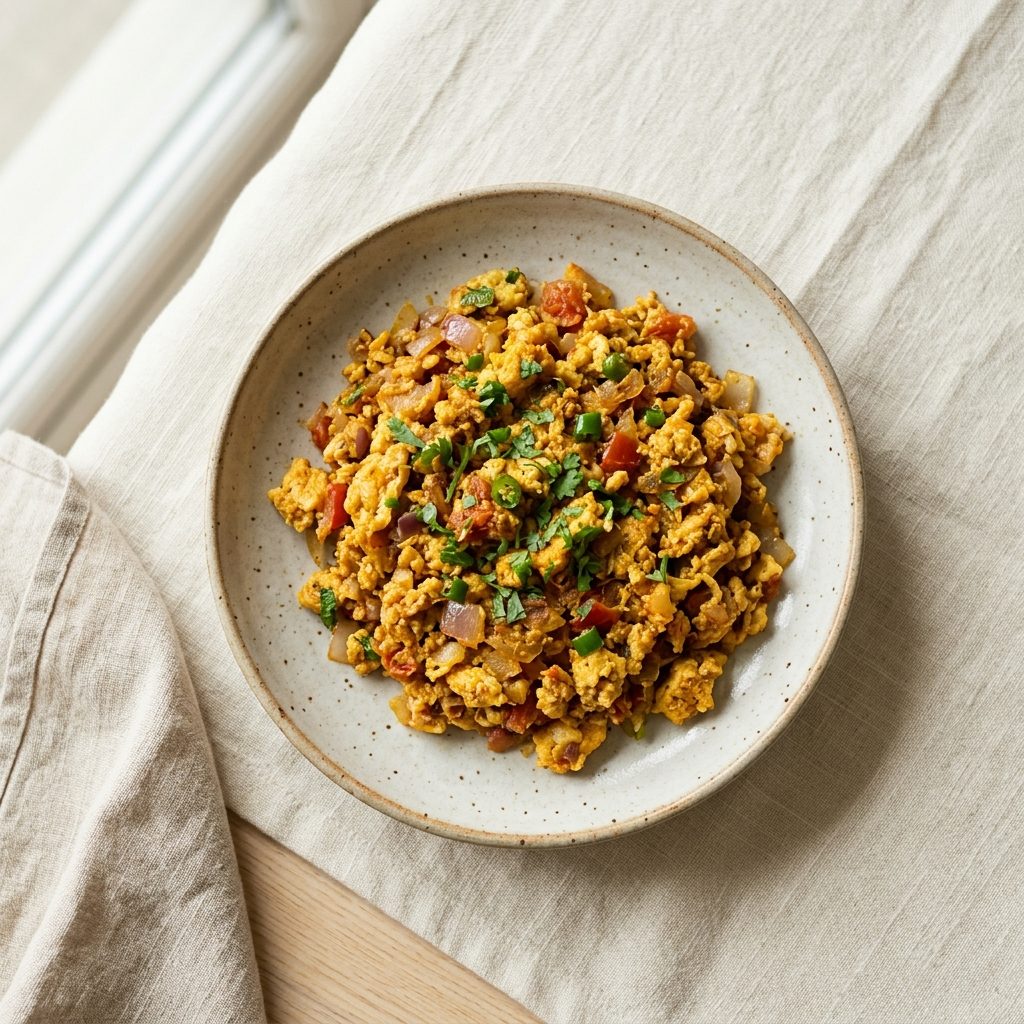
Egg bhurji, five minutes (non-vegetarian)
Nothing beats it on speed to protein ratio.
Ingredients. 3 eggs, half an onion chopped, half a tomato chopped, 1 green chilli, quarter tsp haldi, quarter tsp red chilli powder, 1 tsp oil, salt, coriander.
Method.
- Soften the onion and chilli in the oil for two minutes.
- Tomato and spices, two minutes.
- Beat the eggs with salt, pour in, stir constantly on low heat. Pull it off while it still looks slightly wet.
Protein. Roughly 18 to 20 grams. Add a fourth egg white and you are past 22 without adding fat. The egg bhurji page covers usual serving sizes.
Sattu sharbat, two minutes, no cooking (vegetarian)
Roasted chana flour whisked into water is the fastest protein breakfast in the country, and it has been eaten in Bihar for generations.
Ingredients. 50 g sattu, 300 ml cold water, juice of half a lemon, quarter tsp black salt, quarter tsp roasted jeera powder, chopped mint, a chopped green chilli if you like it savoury.
Method.
- Put the sattu in a glass with two tablespoons of water and work it into a smooth paste. This step prevents lumps and takes ten seconds.
- Add the rest of the water while whisking.
- Lemon, black salt, jeera powder, mint. Stir and drink.
Protein. Roughly 10 to 12 grams. For the sweet version, skip the salt and lemon and use jaggery instead. Pair it with a boiled egg or a handful of peanuts on days you need more.
Curd and fruit bowl, three minutes (vegetarian)
Curd is the most available protein in an Indian fridge and it needs no attention at all.
Ingredients. 250 g thick curd, ideally hung for thirty minutes if you have it. 1 chopped banana or half a cup of chopped papaya, 20 g roasted peanuts or almonds, 1 tbsp mixed seeds, 1 tsp honey if you want it sweet.
Method.
- Whisk the curd smooth.
- Fold in the fruit.
- Nuts and seeds on top at the last moment so they stay crisp.
Protein. Roughly 12 to 16 grams, higher if the curd is thick set or hung. Draining plain dahi in a muslin for half an hour roughly doubles the protein per spoon, and you can do it while you shower.
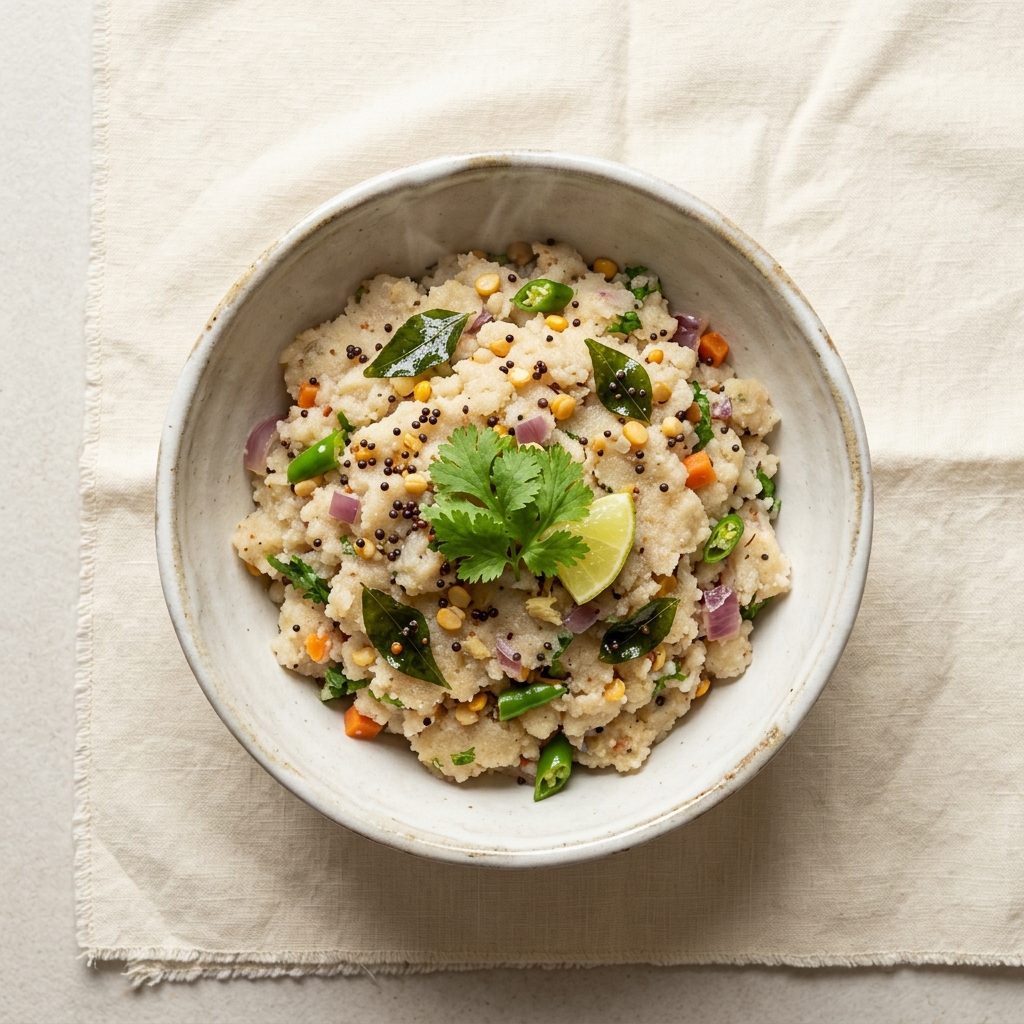
Poha with peanuts and sprouts (vegetarian)
Poha does not have to be abandoned. It has to be loaded.
Ingredients. 80 g thick poha, 30 g roasted peanuts, 60 g sprouted moong, half an onion, 1 green chilli, 8 curry leaves, half tsp mustard seeds, quarter tsp haldi, 1 tsp oil, salt, lemon, coriander.
Method.
- Rinse the poha in a colander until just soft, then leave it to drain. Do not soak it in standing water.
- Splutter the mustard seeds in the oil with the curry leaves and chilli, add the onion, two minutes.
- Add the sprouts and a splash of water, cover for two minutes so they soften.
- Haldi, salt, then the drained poha. Toss gently, cover one minute.
- Peanuts, lemon and coriander at the end.
Protein. Roughly 12 to 15 grams, against 4 to 6 for a plain plate. Add a boiled egg or a katori of curd and it clears 20.
Making it survive an actual weekday
The recipes are not the hard part. Mornings are.
Three things make the difference between a plan and a habit:
- Do the one minute of prep the night before. Soak the moong. Hang the curd. Chop the onion. Everything above is fast in the morning only if that one step already happened.
- Rotate three, not seven. Pick a chilla, a bhurji and a no cook option. Three is enough variety for a week and few enough to stop being a decision.
- Log it once and reuse it. Breakfast is the most repeated meal you eat. Save the entry properly the first time, and every morning after that is one tap. In Sehat that also means you can say aaj breakfast mein do besan chilla aur ek katori dahi and it lands correctly, which takes about four seconds.
Front load the protein and the rest of the day gets easier
Most people trying to hit a protein target are fighting it at nine at night, staring at the gap and wondering what they can eat that is not another bowl of dal.
Move twenty grams to breakfast and that fight disappears. The evening stops being a rescue mission. Lunch stops carrying the whole day.
It is the same food, in a different order.
Calorie figures on this page are typical ranges, not lab values. Indian recipes vary enormously between kitchens, so a number that is right for one house is wrong for the next. Sehat keeps a confidence level and a source note on every entry rather than pretending a single figure is the truth. This is general information, not medical advice.
Common questions
How much protein should an Indian breakfast have?
Aim for 20 to 25 grams of protein at breakfast if you train, and 15 to 20 if you do not. Most Indian breakfasts land around 5 to 8 grams, which pushes the whole day's protein into dinner where it is harder to eat. Front loading protein at breakfast is usually the easiest fix in an Indian diet.
What is the highest protein Indian breakfast?
Paneer bhurji and egg bhurji sit at the top, both landing around 20 to 25 grams per serving. Moong dal chilla and besan chilla follow at roughly 12 to 18 grams depending on size and filling. A sattu drink is the fastest option at roughly 10 to 12 grams for two minutes of effort.
Is poha a good breakfast for protein?
Plain poha is low in protein, usually around 4 to 6 grams per plate, because flattened rice carries very little. It becomes a reasonable protein breakfast once you add roasted peanuts, a handful of sprouted moong and a boiled egg or a katori of curd on the side. The base dish stays the same.
What can I eat for breakfast to build muscle in India?
Eggs, paneer, curd, sattu, besan chilla and moong dal chilla all work well, ideally with a grain alongside for the carbohydrate. A practical weekday version is two besan chillas with paneer inside and a glass of milk, which lands around 30 grams of protein without any special ingredients.
Are idli and dosa high in protein?
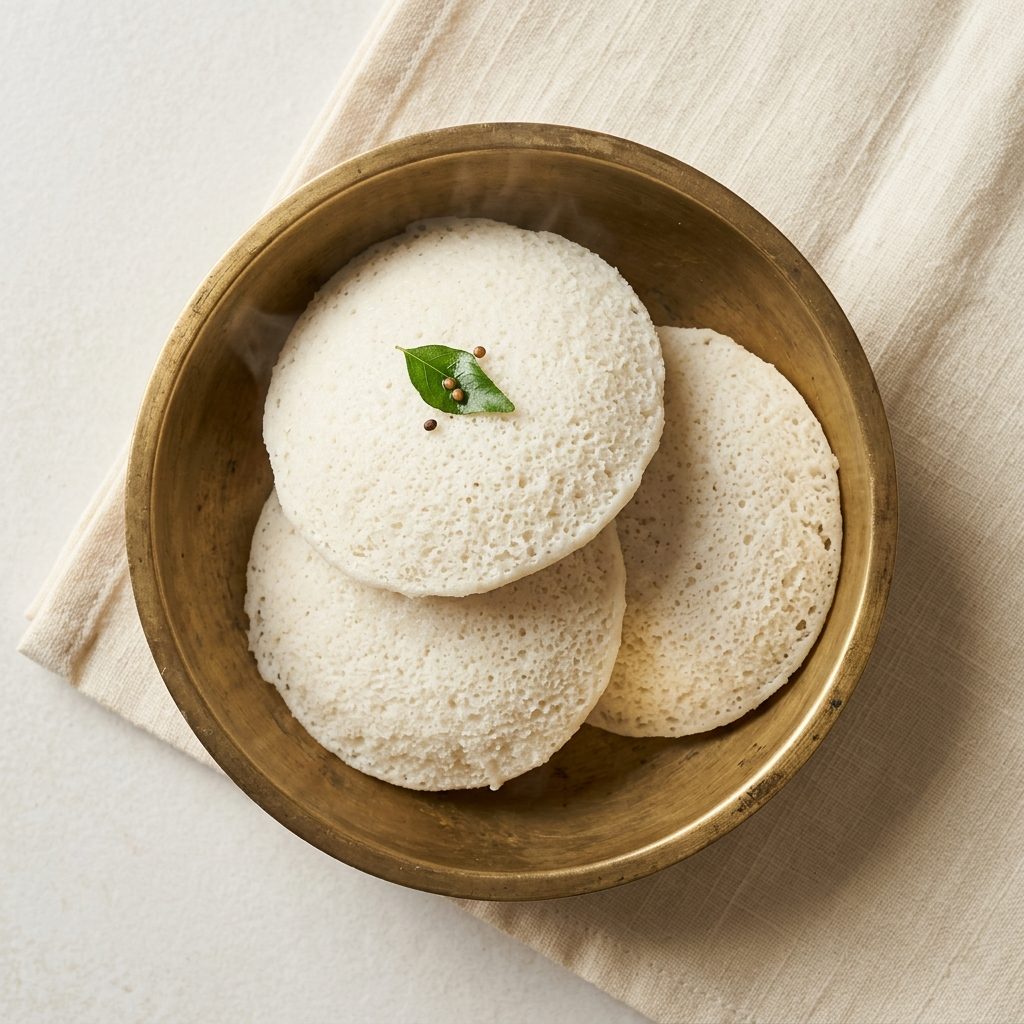
Not particularly. Idli and dosa batter is mostly rice with some urad dal, so two idli land around 4 to 6 grams of protein. Sambar adds a little. To turn them into a protein breakfast, either increase the dal ratio in the batter, or add a side of egg, paneer or curd rather than relying on the idli itself.
Dishes mentioned
In the app
All of this, without the arithmetic.
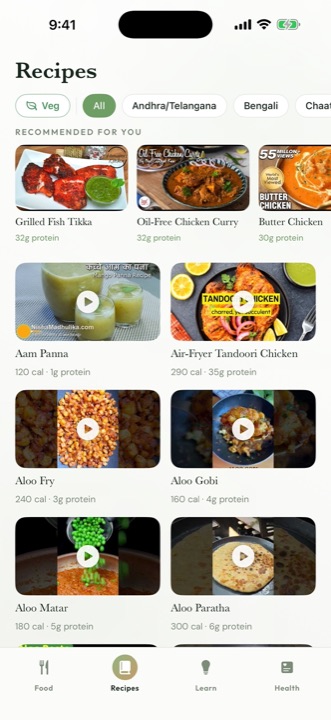
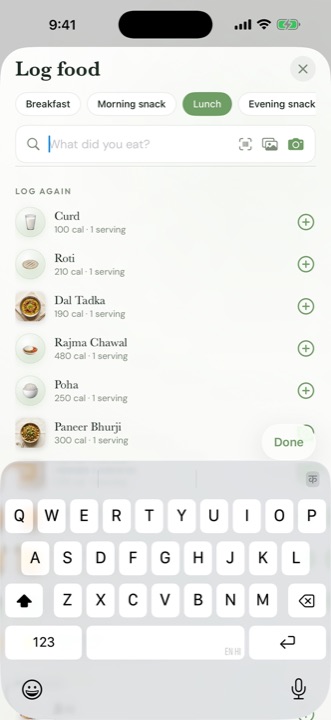
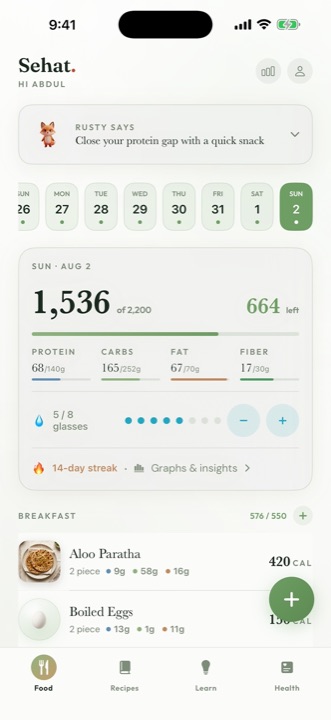
The world's most complete Indian calorie counter.
Over 10,000 foods and spellings.
Log dal, roti and biryani by voice, in Hinglish, in the portions your kitchen actually uses. An AI coach reads your day and guides you. No coaches. No calls. No spam.
Download free on the App StoreAndroid is on the way.
Nutrition
What actually makes an Indian breakfast healthy
Poha, upma, idli, dosa, paratha, chilla, eggs and curd looked at honestly. Why a carb-only breakfast leaves you hungry by eleven, and six upgrades that work.
Recipes
Eight high protein Indian recipes that are not chicken breast
Eight real Indian recipes built around protein, four vegetarian and four not. Soya curry, sattu paratha, paneer bhurji and chicken tikka, with full method.
Macros
How to hit your protein target on a vegetarian Indian diet
The real protein sources in Indian vegetarian food, ranked, with a worked day that reaches 100 grams. Plus why dal alone will never get you there.