Paneer recipes that keep the protein and lose the cream
The short answer
Paneer holds roughly 18 to 20 grams of protein per 100 grams, but restaurant paneer dishes bury it under cream, cashew paste and butter. Cook paneer as tikka, bhurji, chilla, skewers, a lighter palak paneer or a salad bowl and you keep the protein while cutting most of the added fat.
Key takeaways
- Paneer holds roughly 18 to 20 grams of protein per 100 grams, so a 150 gram serving is a proper protein anchor on its own.
- The calories in restaurant paneer dishes come mostly from the gravy, not the paneer. Cashew paste, cream and butter can double the plate.
- Paneer never needs frying. It is already cooked, so heat only makes it tougher.
- Soaking paneer in warm salted water for ten minutes is the single best fix for hard, squeaky paneer.
- Thick curd does everything cream does in a marinade or gravy, and adds protein instead of fat.
Paneer has a strange reputation. Half of India treats it as diet food because it is protein, and the other half avoids it because it is fattening. Both are describing the gravy, not the paneer.
A hundred grams of paneer carries roughly 18 to 20 grams of protein. That is real. What sits around it in a restaurant kitchen is cream, cashew paste, butter and a generous pour of oil, and that is where a light protein dish quietly becomes the heaviest thing on the table.
The fix is not less paneer. It is less of everything else.
Why restaurant paneer dishes run so heavy
The paneer is rarely the problem. The base is.
A standard restaurant gravy for a paneer dish starts with a paste of soaked cashews, sometimes melon seeds, blended with cream or malai. Then butter. Then a finishing swirl of more cream on top. A single serving can carry two tablespoons of added fat before you count the oil the onions were fried in.
- Cashew paste. Roughly 550 to 600 calories per 100 grams, and a restaurant gravy may hold 30 to 40 grams of it per portion.
- Cream. A tablespoon adds real calories and no protein.
- Butter and oil. A tablespoon of either is roughly 100 to 120 calories. Most restaurant gravies use two or more per serving.
- Deep fried paneer. Frying the cubes before they go in the gravy adds fat and toughens the paneer at the same time.
Stack all of that and a katori of a rich paneer gravy can land two to three times higher than the same paneer in a simple onion tomato base. This is the same effect that shows up across eating out and Indian restaurant food, and it is why the same dish name can mean wildly different things.
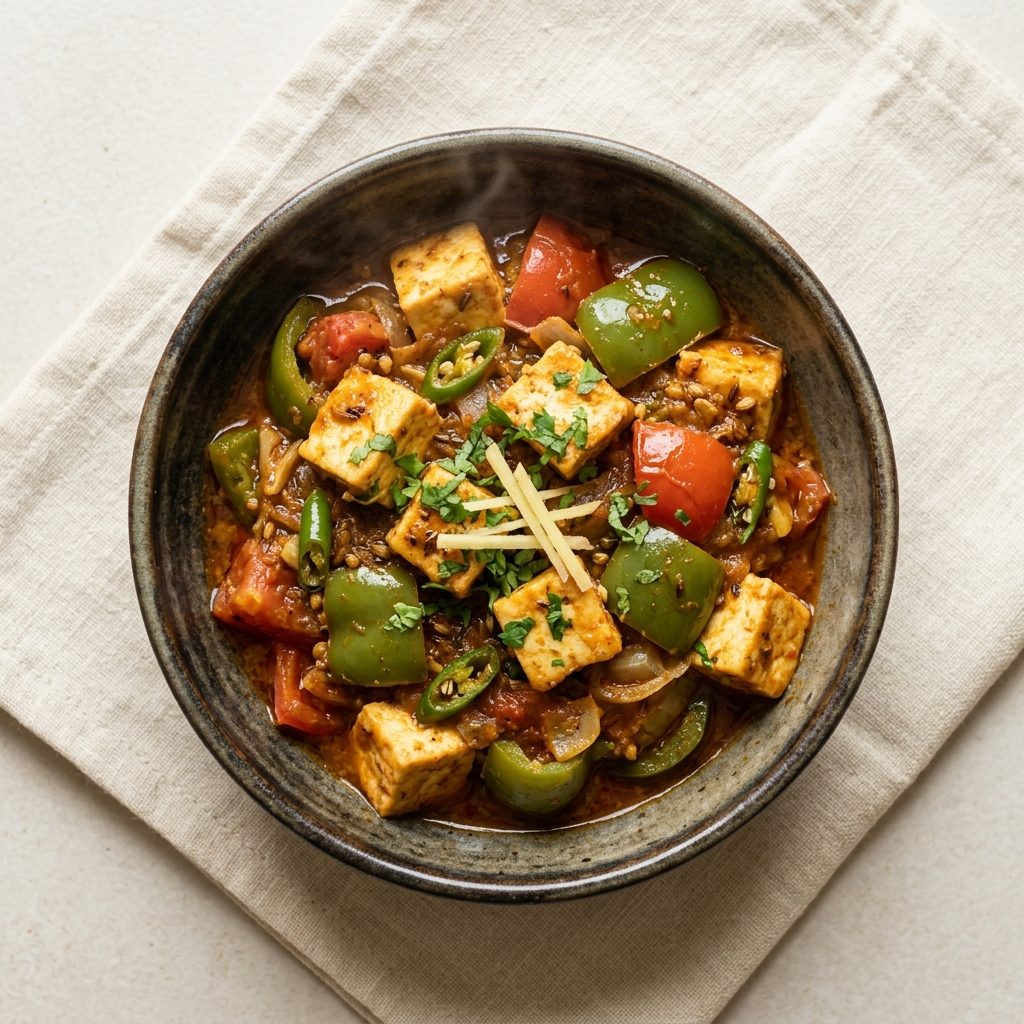
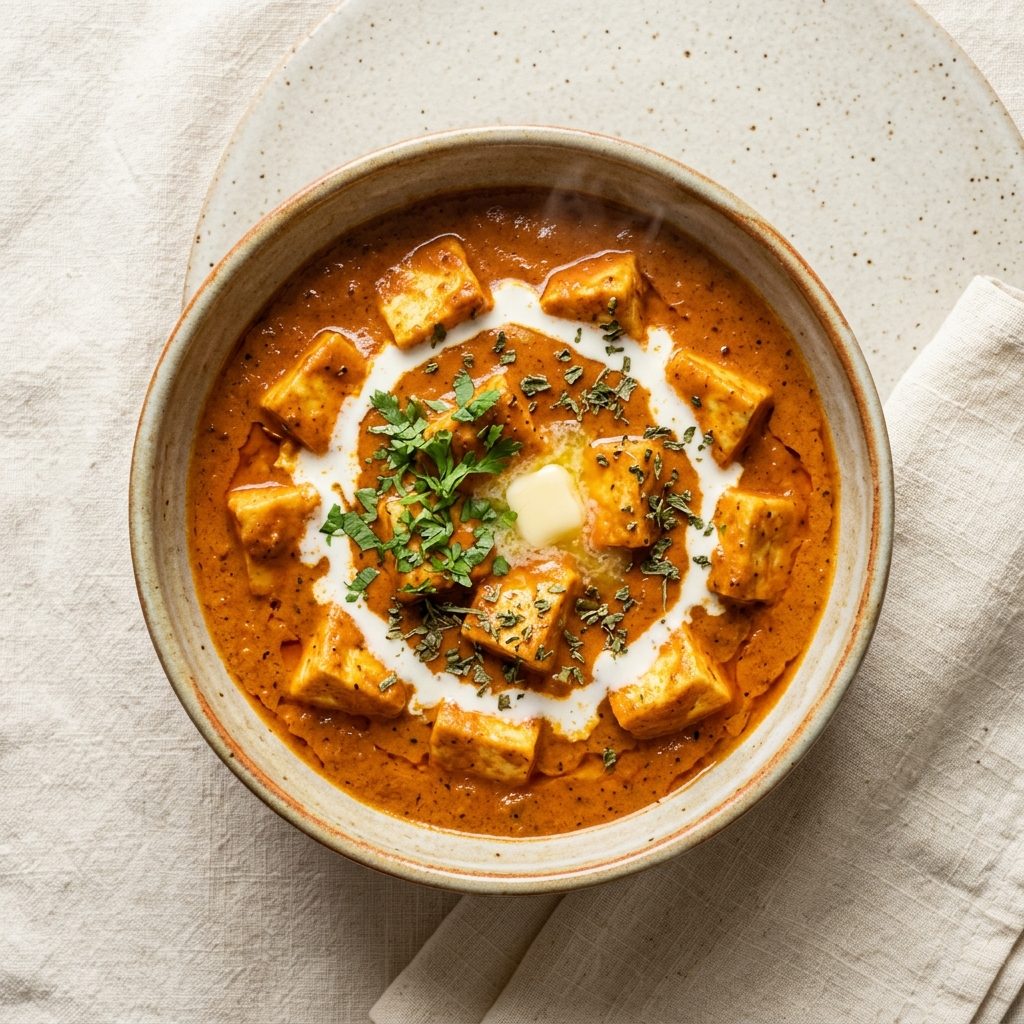
Look at paneer butter masala next to kadai paneer. Same protein, very different plate.
How to cook paneer so it stays soft
Paneer is already cooked. Every extra minute of heat is squeezing water out of it.
Four rules cover almost every failure:
- Soak it first. Ten minutes in warm salted water, not boiling. Cold shop paneer comes out noticeably softer. This one step fixes most squeaky paneer.
- Add it last. Build the gravy fully, then fold the paneer in for the final two minutes on a low flame.
- Never boil it in gravy. A simmer is fine. A rolling boil turns it to eraser.
- Do not fry it. If you want colour, sear it dry on a hot tawa for 40 seconds a side and stop there.
If you are cooking paneer straight from the freezer, thaw it fully in the fridge first, then soak. Frozen paneer dropped into hot gravy will always be tough.
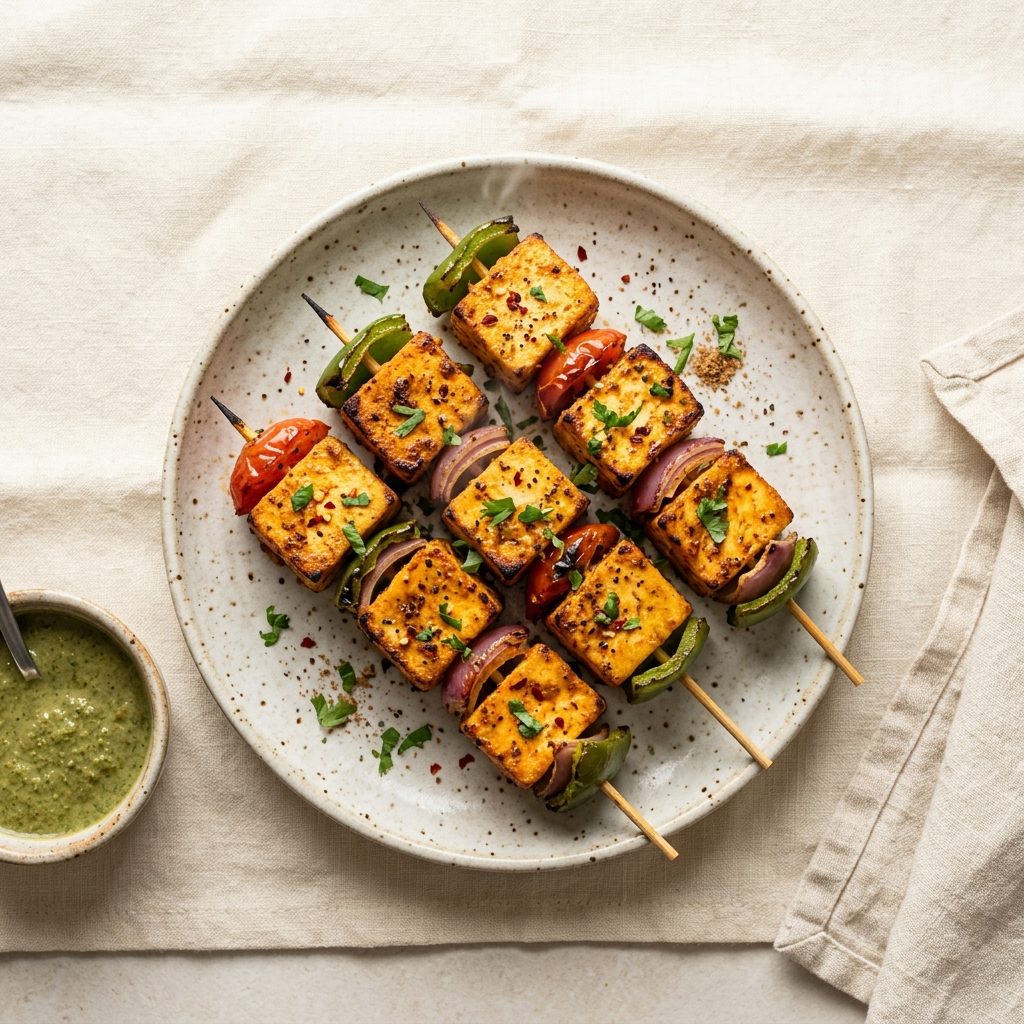
Paneer tikka, the reliable one (vegetarian)
Tikka is the highest protein per calorie way to eat paneer, because the marinade is curd rather than cream.
Ingredients. 300 g paneer in 3 cm cubes, 150 g thick curd hung for 30 minutes, 1 tbsp besan, 1 tbsp ginger garlic paste, 1 tsp red chilli powder, 1 tsp kasuri methi, half tsp garam masala, 1 tsp mustard oil, salt, 1 capsicum and 1 onion in squares. Serves two.
Method.
- Dry roast the besan for one minute, then whisk it into the hung curd with every spice and the oil. The marinade should be thick enough to sit on a spoon.
- Coat the paneer and vegetables. Rest 30 minutes in the fridge. Paneer does not need overnight.
- Skewer alternately. Oven at 220 C for 12 minutes, air fryer at 200 C for 8, or a very hot tawa turning every two minutes.
- Chaat masala and lemon at the end, never before.
Protein. Roughly 28 to 32 grams per serving including the curd. This is a full protein anchor, not a starter.
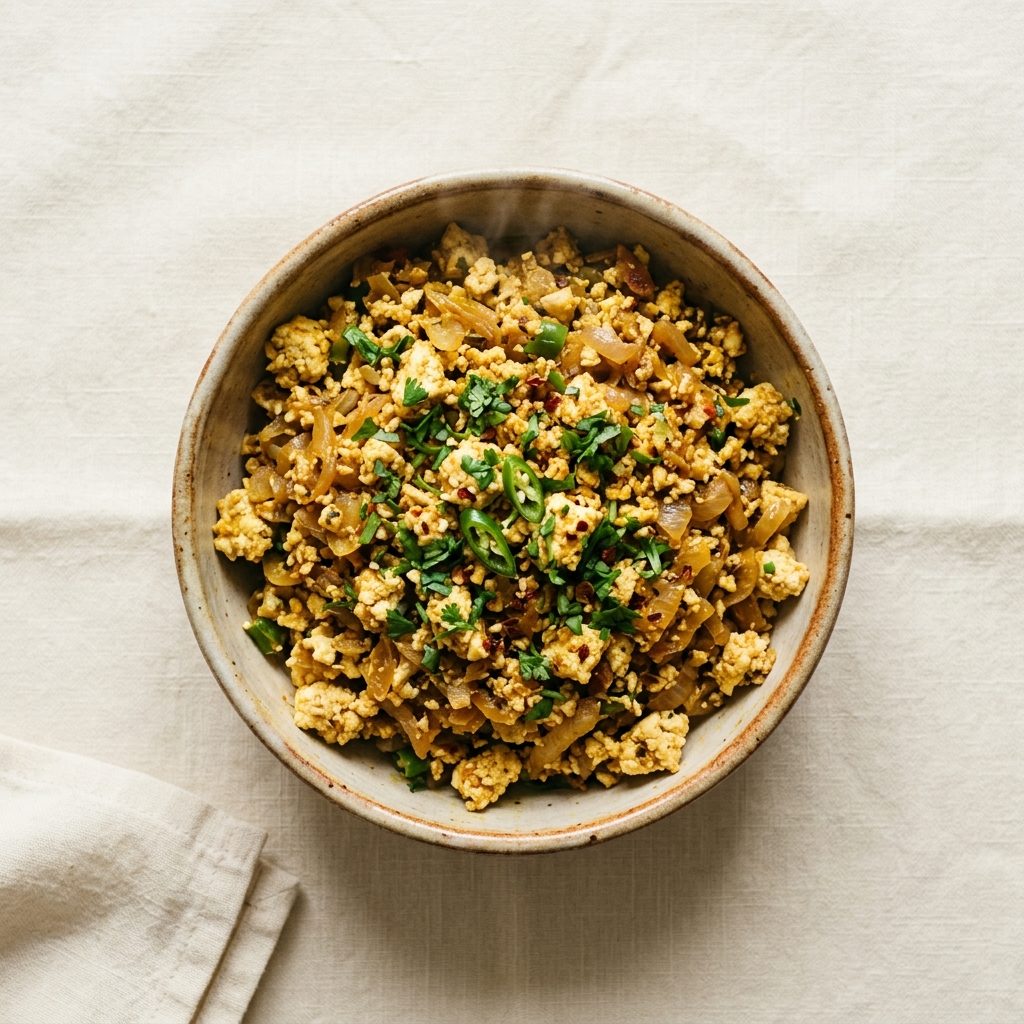
Paneer bhurji, twelve minutes flat (vegetarian)
Bhurji is the fastest way to eat 150 grams of paneer without a single spoon of cream.
Ingredients. 300 g paneer crumbled, 1 onion chopped, 1 tomato chopped, 1 green chilli, half tsp jeera, half tsp haldi, half tsp red chilli powder, 2 tsp oil, salt, coriander, lemon. Serves two.
Method.
- Crackle the jeera in the oil, soften the onion and chilli for 3 minutes.
- Tomato, haldi, chilli powder, salt. Cook 4 minutes until it breaks down.
- Crumble the paneer in. Two minutes on low, stirring gently.
- Off the heat, then coriander and lemon.
Protein. Roughly 28 to 32 grams per serving. Two rotis alongside and dinner is done. The paneer bhurji dish page has the usual serving sizes.
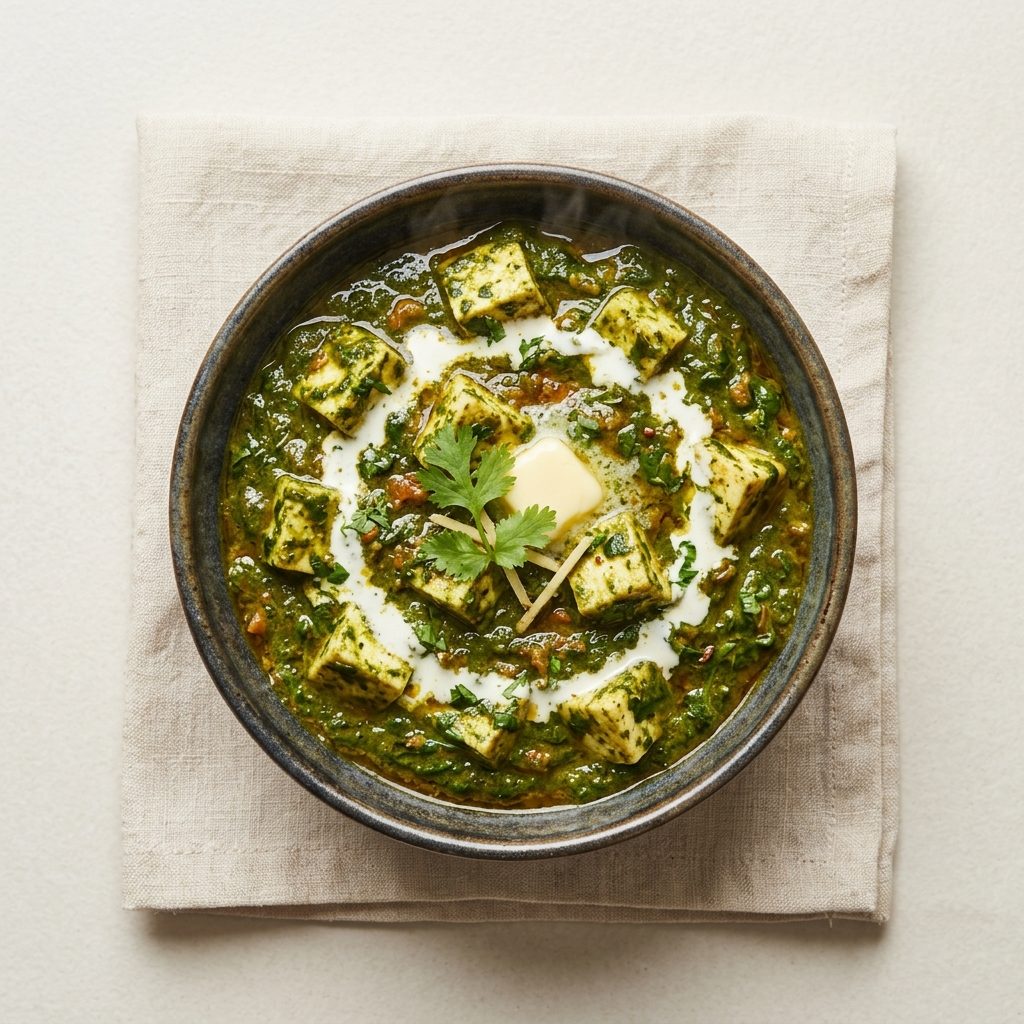
Palak paneer, done without the cream (vegetarian)
Spinach already gives the gravy body. The cream in most palak paneer is habit, not necessity.
Ingredients. 400 g palak, 250 g paneer cubed, 1 onion chopped, 2 tomatoes, 1 tbsp ginger garlic paste, 2 green chillies, 1 tbsp oil, 1 tsp jeera, half tsp garam masala, 2 tbsp thick curd, salt. Serves two to three.
Method.
- Blanch the palak for 90 seconds, then straight into cold water. This keeps it green.
- Blend with the green chillies to a coarse puree. Do not make it smooth, texture is the point.
- In the oil, crackle jeera, brown the onion, add ginger garlic, then tomato. Cook until the oil separates.
- Add the palak puree and a little water. Simmer 5 minutes.
- Take it off the heat, stir in the curd so it does not split, then fold in soaked paneer cubes. Garam masala, done.
Protein. Roughly 20 to 24 grams per serving, and the spinach adds useful iron and fibre. Compare with the richer version on the palak paneer page.
Paneer chilla, breakfast that holds until lunch (vegetarian)
A besan chilla stuffed with paneer is two protein sources in one pan.
Ingredients. 100 g besan, 200 ml water, half tsp haldi, half tsp ajwain, salt, 1 chopped onion, 1 chopped tomato, coriander. For the filling, 150 g crumbled paneer with chaat masala and green chilli. Makes three chillas.
Method.
- Whisk the besan into the water until there are no lumps. The batter should pour like thin cream. Rest 10 minutes.
- Stir in the onion, tomato, coriander and spices.
- Spread a ladle thin on a hot non stick tawa, quarter teaspoon oil around the edge.
- When the top sets, scatter the paneer over one half, fold, press, 30 seconds a side.
Protein. Roughly 15 to 18 grams per chilla. Two of these is a proper breakfast, and more of the same idea sits in high protein Indian breakfasts.
Tandoori paneer skewers, the fifteen minute version (vegetarian)
When there is no time to marinate, a green mint paste clings well enough to work immediately.
Ingredients. 250 g paneer in thick fingers, 1 cup mint and coriander leaves, 2 green chillies, 3 tbsp thick curd, 1 tsp ginger garlic paste, half tsp chaat masala, 1 tsp lemon juice, salt, 1 tsp oil. Serves two.
Method.
- Blend the mint, coriander, chillies, lemon and ginger garlic to a thick paste with no water.
- Fold into the curd with salt and oil.
- Coat the paneer fingers, rest 10 minutes while the oven or air fryer heats.
- Air fryer at 200 C for 8 minutes, or grill on a tawa in a single layer, turning once. Finish with chaat masala.
Protein. Roughly 24 to 27 grams per serving. Works as dinner with a salad or as something to keep in the fridge for the next day.
Paneer salad bowl, no cooking at all (vegetarian)
On the nights when nothing is happening in the kitchen, raw paneer with a hot tadka poured over it is a complete meal in six minutes.
Ingredients. 200 g paneer in small cubes, half a cucumber, 1 tomato, half an onion, a handful of roasted chana, mint. For the tadka, 2 tsp mustard oil, half tsp jeera, 1 dried red chilli, pinch of hing. To dress, 3 tbsp thick curd, lemon, black salt, roasted jeera powder.
Method.
- Toss the paneer and vegetables with black salt, lemon and roasted jeera.
- Whisk the curd loose and fold it through.
- Heat the tadka until the chilli darkens, pour it over the bowl, stir once.
- Roasted chana on top at the last moment.
Protein. Roughly 24 to 28 grams per serving with the curd and chana included.
The one habit that matters more than the recipe
Buy paneer in 200 gram blocks rather than 500 gram ones, and portion it the day you buy it.
Almost every paneer dish that goes wrong nutritionally goes wrong at the gravy, and almost every paneer dish that goes wrong on portion goes wrong because a big block was sitting in the fridge and half of it went into the pan. Decide the amount before you cook, not while you are cooking.
The protein was never the hard part.
Calorie figures on this page are typical ranges, not lab values. Indian recipes vary enormously between kitchens, so a number that is right for one house is wrong for the next. Sehat keeps a confidence level and a source note on every entry rather than pretending a single figure is the truth. This is general information, not medical advice.
Common questions
How much protein is in 100 grams of paneer?
Roughly 18 to 20 grams of protein per 100 grams for standard full fat cow milk paneer. Buffalo milk paneer sits slightly lower in protein and higher in fat. Low fat or tofu style paneer varies a lot by brand, so the pack is the only reliable guide. Paneer also carries meaningful calcium.
Is paneer good for weight loss?
Paneer works well in a calorie deficit because it is high in protein and very filling, which makes portions easier to hold. The thing to watch is not the paneer, it is what it is cooked in. A hundred grams of paneer in a light onion tomato gravy and the same paneer in a butter and cashew gravy are two very different meals.
Why does my paneer turn rubbery when I cook it?
Paneer is already a cooked product, so any further heat squeezes water out and tightens the protein. Add it in the last two minutes of cooking, keep the flame low, and never boil it in a gravy. If the paneer was cold and firm to start with, soak it in warm salted water for ten minutes before you cook.
Which is better for protein, paneer or chicken?
Chicken carries more protein per 100 grams, roughly 25 to 27 grams against paneer at 18 to 20, and far less fat. Paneer wins on convenience, needs no cooking to be safe, and suits vegetarian diets. For a vegetarian building protein intake, paneer plus curd plus pulses covers the same ground that chicken covers for someone who eats meat.
Can I eat paneer every day?
For most people yes, in normal portions of around 100 to 150 grams. It is a whole food with useful protein and calcium. The practical limits are cost, the saturated fat if you eat large amounts of full fat paneer daily, and lactose tolerance. Anyone with a specific medical condition should ask their doctor rather than a website.
Dishes mentioned
In the app
All of this, without the arithmetic.

The world's most complete Indian calorie counter.
Over 10,000 foods and spellings.
Log dal, roti and biryani by voice, in Hinglish, in the portions your kitchen actually uses. An AI coach reads your day and guides you. No coaches. No calls. No spam.
Download free on the App StoreAndroid is on the way.
Nutrition
Paneer or chicken, which is the better protein?
An honest comparison of paneer and chicken on protein, fat and calories per gram of protein, plus where tofu and soya fit and why the preparation matters more.
Macros
How to hit your protein target on a vegetarian Indian diet
The real protein sources in Indian vegetarian food, ranked, with a worked day that reaches 100 grams. Plus why dal alone will never get you there.
Recipes
Eight high protein Indian recipes that are not chicken breast
Eight real Indian recipes built around protein, four vegetarian and four not. Soya curry, sattu paratha, paneer bhurji and chicken tikka, with full method.