Indian meal prep that survives a work week
The short answer
Indian meal prep works when you prep components, not finished plates. Dals, rajma, chana and a base onion tomato gravy keep for three to four days. Rotis, fried food and dahi based dishes do not. One base gravy plus three cooked proteins gives you four different dinners from a single two hour session.
Key takeaways
- Prep components, not finished plates. A base gravy plus three cooked proteins beats five identical boxes.
- Dals, rajma, chana and cooked gravies keep three to four days in the fridge. Rotis, fried items and curd based dishes do not.
- One onion tomato base gravy made in bulk becomes rajma, chana masala, paneer curry and egg curry with three minutes of work each night.
- Cool food fully before it goes in the fridge. Warm food in a sealed box is the main reason prepped dal spoils by Wednesday.
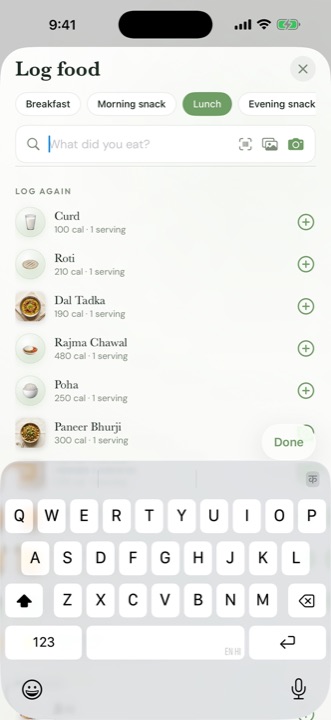
- Prepped repeat meals make logging almost instant, because you save the entry once and reuse it all week.
Most Indian meal prep advice is imported wholesale from somewhere else. Five identical boxes of grilled protein, rice and vegetables, stacked in a fridge, eaten cold by Thursday with no enthusiasm at all.
That model does not survive contact with Indian food, for one simple reason. Our meals are assembled, not plated. A gravy, a grain, a side, something fresh on top. Prepping the assembled plate is the mistake. Prepping the components is the whole answer.
Two hours on a Sunday, done properly, buys you four dinners that do not taste like leftovers.
What actually keeps and what does not
Some Indian dishes improve in the fridge. Others are ruined by it. Knowing which is which is most of the skill.
| Keeps well, three to four days | Keeps two days | Do not prep |
|---|---|---|
| Dal, rajma, chole, chana | Cooked rice | Rotis and parathas |
| Onion tomato base gravy | Dry sabzi like bhindi or aloo | Anything deep fried |
| Boiled and drained pulses | Chicken or paneer in gravy | Raita and curd dishes |
| Cooked chicken, boiled eggs | Palak based gravies | Salads dressed in advance |
| Chutneys, ginger garlic paste | Poha and upma mixes | Sabzi with fresh coconut |
The pattern is simple. Slow cooked, spiced, liquid dishes keep. Fresh, crisp, dairy heavy and fried things do not. Rajma on day three is genuinely better than rajma on day one. A roti on day three is a coaster.
The two hour Sunday sequence
Work in the order below and the machines do most of the waiting for you.
- Minute 0. Soak nothing. You should have soaked the rajma and chana the night before. If you forgot, use the pressure cooker for longer and move on.
- Minute 0 to 5. Put the rajma on to pressure cook. Separate cooker or a separator for the chana.
- Minute 5 to 35. Make the base gravy. This is the one long job and it needs your attention. Method below.
- Minute 35 to 50. While the gravy cooks down, boil eight eggs, or marinate and roast a tray of chicken or paneer. Oven does this unattended.
- Minute 50 to 65. Chop for the week. Onions in one box, tomatoes in another, ginger garlic paste in a jar with a film of oil on top. Wash and dry the greens.
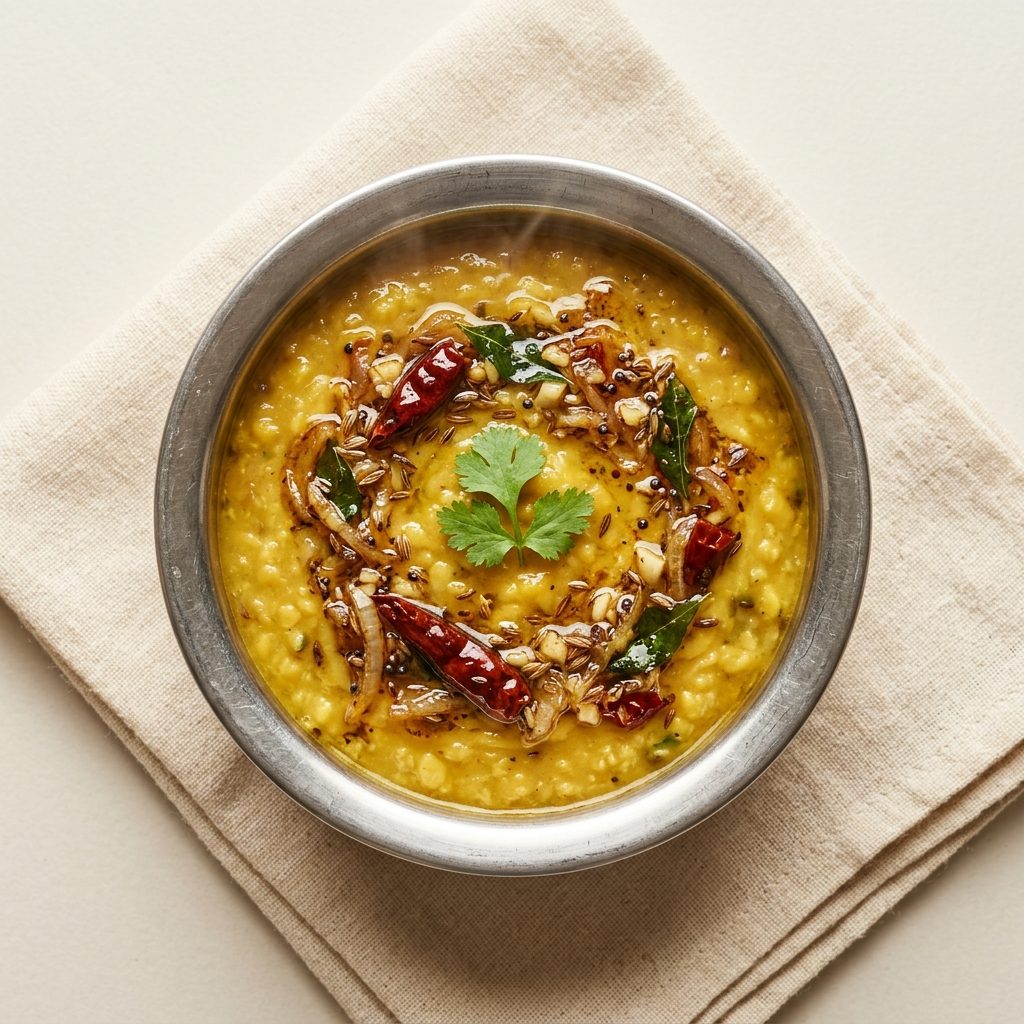
- Minute 65 to 80. Cook one dal, plain, no tadka. Tadka goes on at serving time so it stays alive.
- Minute 80 to 100. Knead a large atta dough, split into four balls, wrap each. Cook a pot of rice if your week needs it.
- Minute 100 to 120. Cool everything on the counter, then box and label. Wipe down and stop.
Nothing here needs skill. It needs order, and it needs you to start the cooker before you start chopping.
The base gravy that becomes four different dishes
This is the single highest leverage thing in the whole session. One pot of masala, four dinners.
Ingredients. 6 large onions finely chopped or coarsely blended, 8 tomatoes pureed, 4 tbsp ginger garlic paste, 4 tbsp oil, 2 tsp jeera, 2 tsp haldi, 3 tsp red chilli powder, 3 tsp coriander powder, 2 tsp garam masala, salt.
Method.
- Heat the oil, crackle the jeera, add the onions with a pinch of salt. Cook on medium for 15 to 20 minutes until deep golden. This is not a step to rush. Undercooked onion is why home gravies taste raw.
- Add the ginger garlic paste, cook 2 minutes until it stops smelling sharp.
- Add the tomato puree and every powdered spice except the garam masala. Cook 12 to 15 minutes until the oil separates and pools at the edges.
- Stir in the garam masala, cool completely, then portion into four boxes.
Each box is one dinner. Through the week:
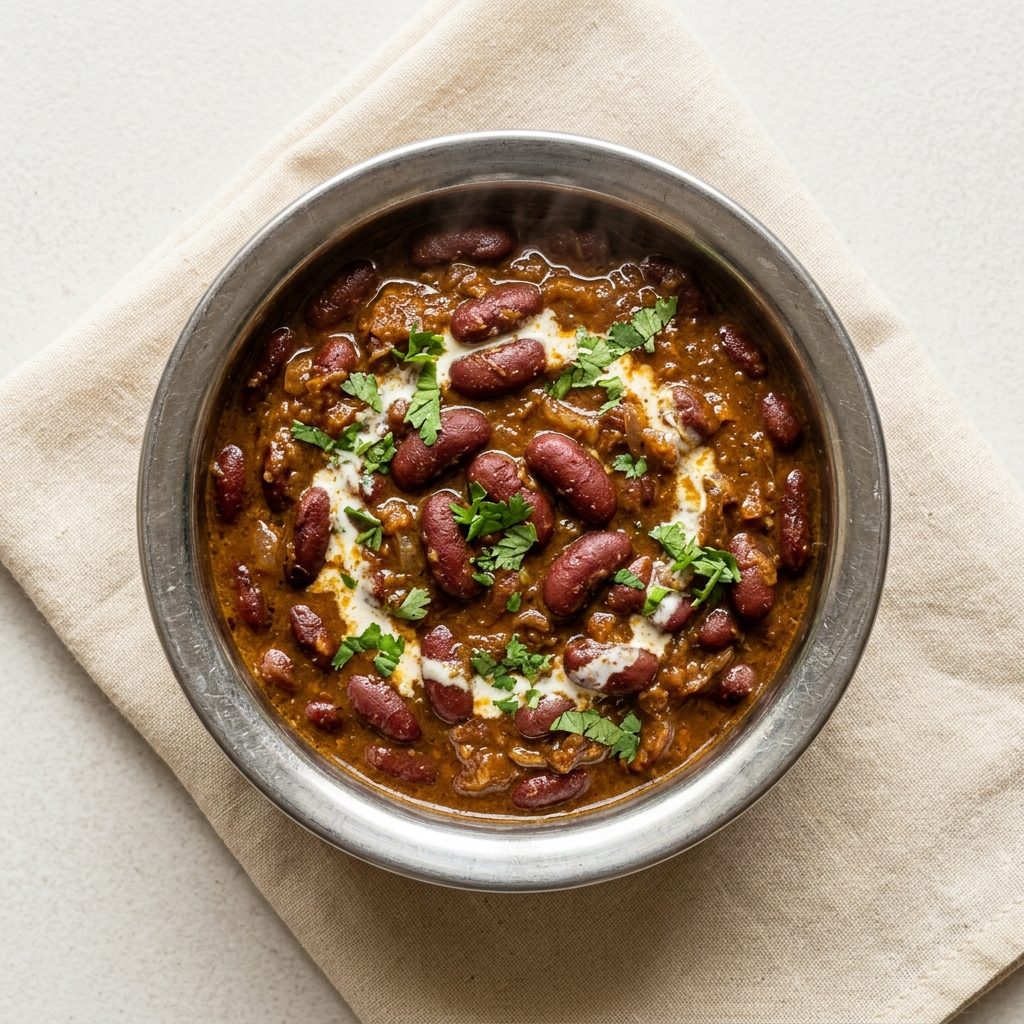
- Monday. Base plus cooked rajma plus water. Simmer 8 minutes. Rajma done.
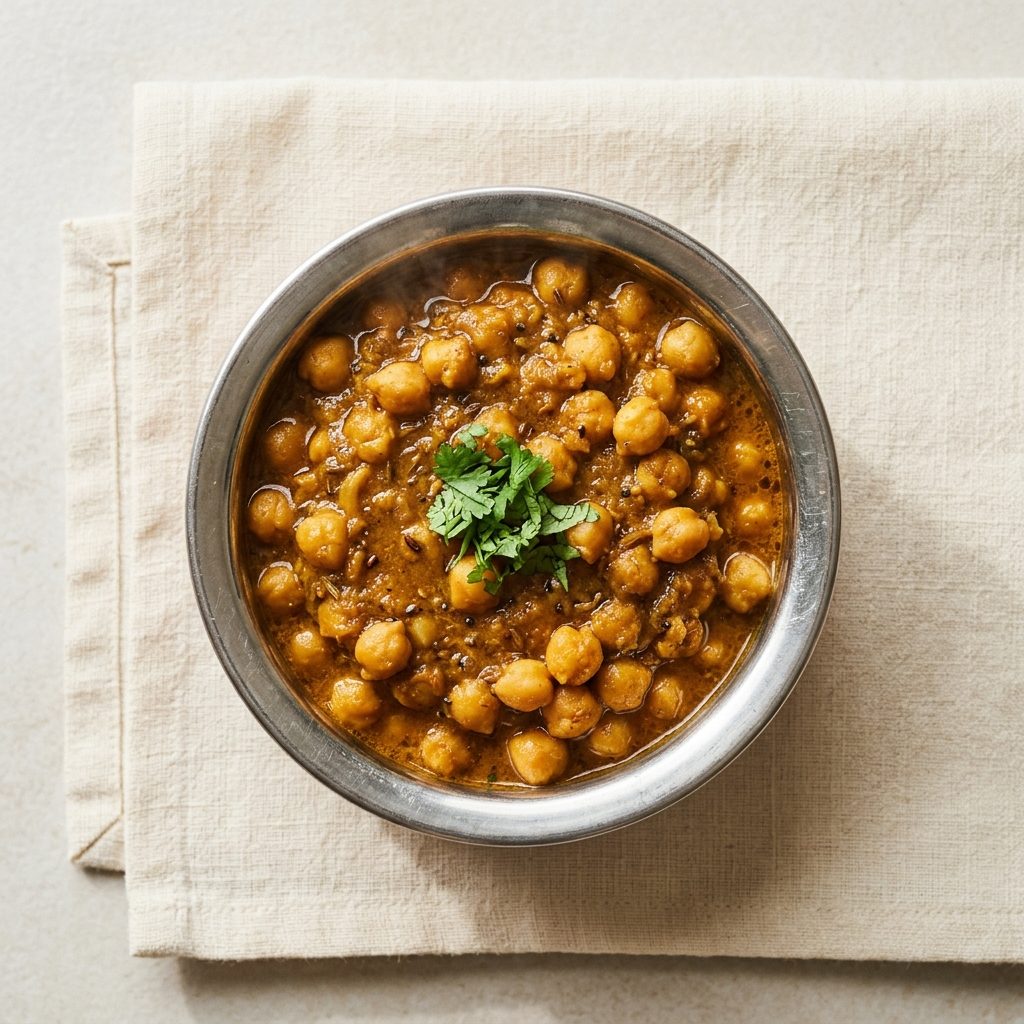
- Tuesday. Base plus boiled chana plus a squeeze of lemon and amchur. Chana masala.
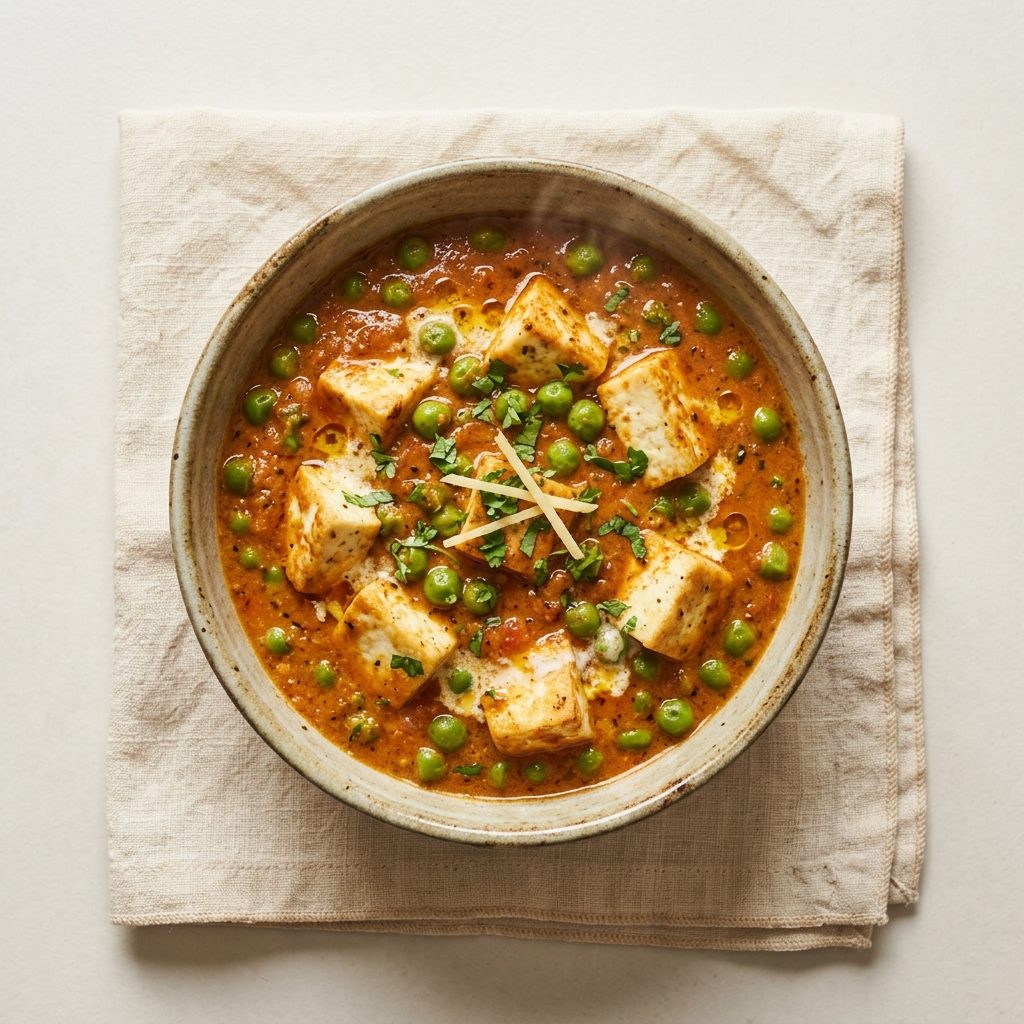
- Wednesday. Base plus paneer cubes and a spoon of curd, folded in off the heat. Matar paneer if you add peas.
- Thursday. Base plus halved boiled eggs, simmered 5 minutes, coriander on top. Egg curry.
Four dishes that taste different, from one pot of work. Swap in soya chunks or roast chicken and the list gets longer.
Storing and reheating without ruining it
Three rules cover almost every prep failure.
Cool it fully before it goes in the fridge. Warm food in a sealed box creates condensation and a warm pocket that takes hours to drop, and that is where prepped dal goes sour by Wednesday. Spread it out, let it come to room temperature, then seal.
Store in the portion you will eat. Not one large box you dig into every night. Repeated reheating of the whole batch is what kills both safety and texture.
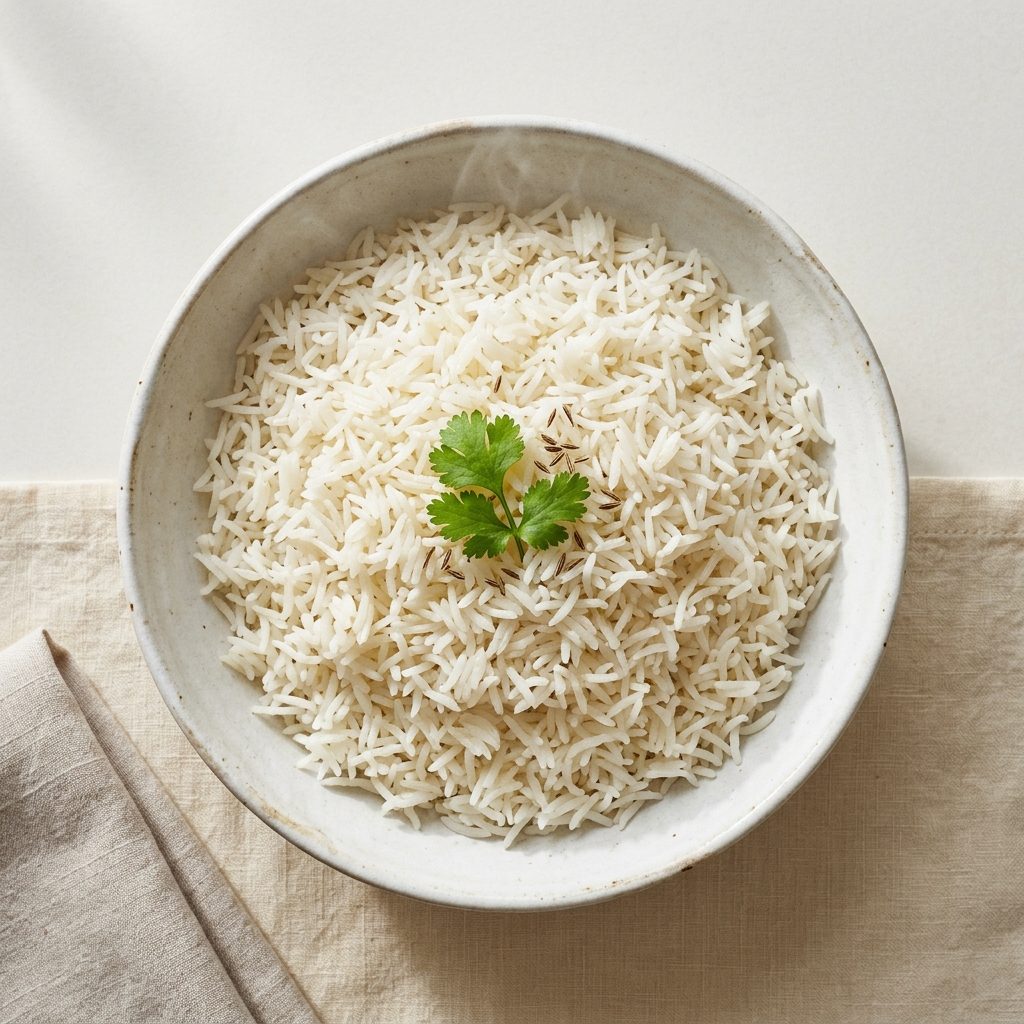
Reheat on a flame, not just in the microwave. Gravies reheat far better in a pan with a splash of water, thirty seconds longer than you think. Rice reheats best with a sprinkle of water and a lid. If you microwave, cover it and stir halfway.
Freeze anything you will not eat within four days. Dal, rajma, chana and base gravy all freeze well for a month. Label the box with what and when, because everything looks the same frozen.
Three complete prepped meals
The gym week dinner. One katori rajma from the base gravy, two rotis rolled fresh from prepped dough, a bowl of salad, curd on the side. Assembly time roughly eight minutes. This lands as a genuinely high protein dinner if you add a boiled egg or a hundred grams of paneer, roughly 30 to 35 grams of protein per serving.
The office tiffin. Dal, rice, a dry sabzi cooked that morning in ten minutes, and a boiled egg or paneer cubes packed separately. Pack the curd in its own small box so it does not warm through the day.
The late night arrival. Base gravy, paneer, and khichdi. Rice and moong dal in the cooker with turmeric, three whistles, a ghee tadka on top. Fifteen minutes from walking in to eating, and lighter than anything you would order.
For nights when even that feels like too much, the ideas in light Indian dinners need almost no prep at all.
Why prepped meals make tracking almost instant
Here is the part nobody mentions. Meal prep is not just a time saver in the kitchen, it is a time saver in the log.
Tracking Indian food is slow when every meal is new. Something different each night means searching, choosing portions and estimating cooking oil from scratch every single time. That friction is what ends most food logs by week three, as the usual tracking mistakes shows.
Prep flips it. When Monday, Tuesday and Wednesday all start from the same base gravy and the same katori, you enter the meal properly once, save it, and reuse it. In Sehat that means one tap on a saved meal instead of a fresh search, and because the recipe genuinely was the same each night, the number is more honest too.
Work out your cooking oil per serving once, when you make the base gravy. Divide the four tablespoons across the four dinners it produces. That single calculation covers half your week.
Start with one pot, not a system
If two hours sounds like a project, do not do two hours. Do the base gravy and nothing else.
That one pot alone will change more weeknights than a fridge full of labelled boxes you stop opening by Wednesday. Add the dal next week. Add the eggs the week after.
The best prep routine is the smallest one you will still be doing in a month.
Calorie figures on this page are typical ranges, not lab values. Indian recipes vary enormously between kitchens, so a number that is right for one house is wrong for the next. Sehat keeps a confidence level and a source note on every entry rather than pretending a single figure is the truth. This is general information, not medical advice.
Common questions
How long does cooked Indian food last in the fridge?
Cooked dal, rajma, chana and vegetable gravies keep three to four days at normal fridge temperature if they are cooled fully before storing and reheated properly. Rice keeps two days. Dishes with fresh curd, coconut or leafy greens are best eaten within two days. Anything fried loses texture within a day even if it stays safe.
Can you meal prep rotis for the week?
Not well. Rotis go leathery in the fridge within a day. The better approach is to prep the dough, keep it covered in the fridge for two to three days, and roll fresh in the three minutes the sabzi is reheating. If you must prep cooked rotis, freeze them stacked with butter paper between and reheat straight on a tawa.
What is a base gravy in Indian cooking?
A base gravy is a cooked masala of onion, tomato, ginger, garlic and dry spices, made in bulk and stored to use as the starting point for many different dishes. Restaurants have used the method for decades because it removes the longest step from every order. At home it turns a forty minute curry into a ten minute one.
Is meal prep worth it for Indian food?
Yes, if you prep components rather than complete meals. Indian dinners are usually assembled from a gravy, a grain and a side, which suits component prep perfectly. The gain is not just time. Repeat meals also make calorie tracking far faster, because the same saved entry covers most of the week.
How do I stop prepped Indian food from getting boring?
Change the finish, not the base. The same rajma becomes a different dinner with a fresh ghee and garlic tadka, a squeeze of lemon and raw onion, or a spoon of green chutney. Tadka takes ninety seconds and does more for variety than cooking a different dish from scratch.
Dishes mentioned
In the app
All of this, without the arithmetic.
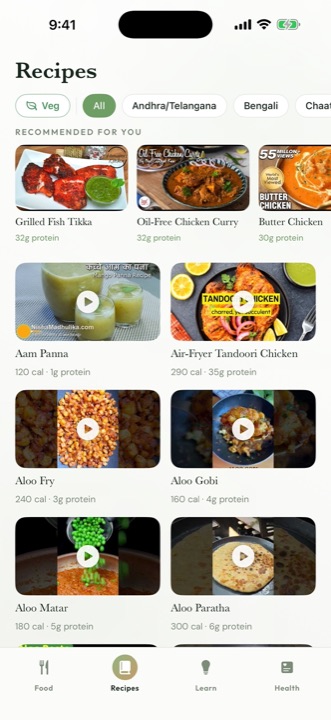
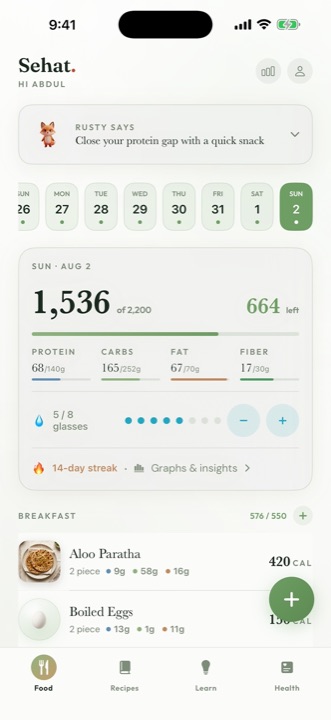
The world's most complete Indian calorie counter.
Over 10,000 foods and spellings.
Log dal, roti and biryani by voice, in Hinglish, in the portions your kitchen actually uses. An AI coach reads your day and guides you. No coaches. No calls. No spam.
Download free on the App StoreAndroid is on the way.
Calorie tracking
How to count calories in Indian food
A practical method for tracking dal, roti, sabzi and biryani without weighing anything. Portions, honest ranges, and the four habits that make a log actually stick.
Recipes
Eight high protein Indian recipes that are not chicken breast
Eight real Indian recipes built around protein, four vegetarian and four not. Soya curry, sattu paratha, paneer bhurji and chicken tikka, with full method.
Calorie tracking
How to build a calorie deficit on an Indian diet
A calorie deficit does not require giving up dal, roti or rice. How to size one sensibly, adjust cooking fat and portions, and keep it going past week three.